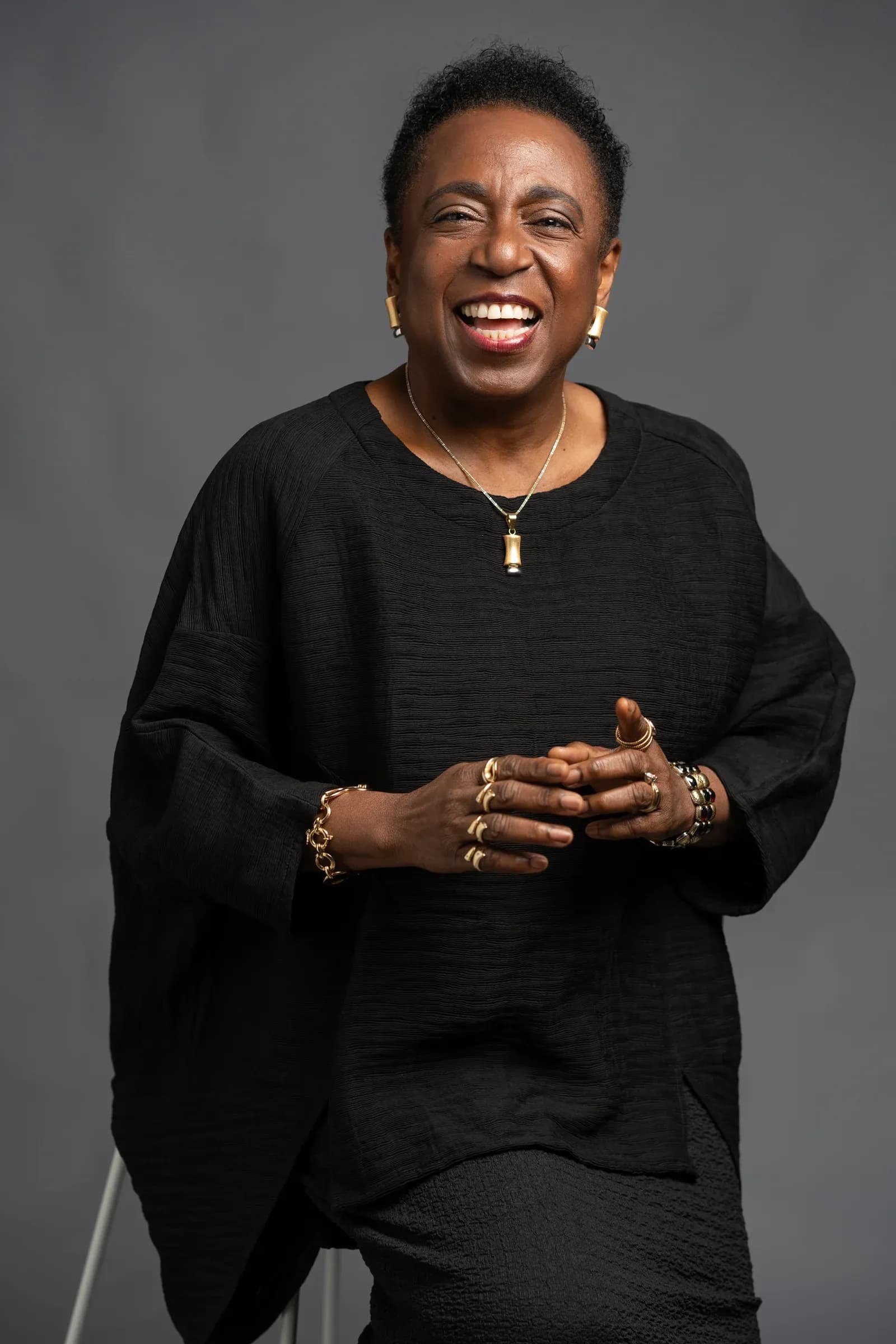
Dame Neslyn Watson-Druée DBE introduces cover star Yetunde Hofmann, whose love-based leadership began with a meal nobody stayed to share, and a London week that opens with Anti-Bullying Week.
Dame Neslyn Watson-Druée DBE introduces cover star Yetunde Hofmann, whose love-based leadership began with a meal nobody stayed to share, and a London week that opens with Anti-Bullying Week.
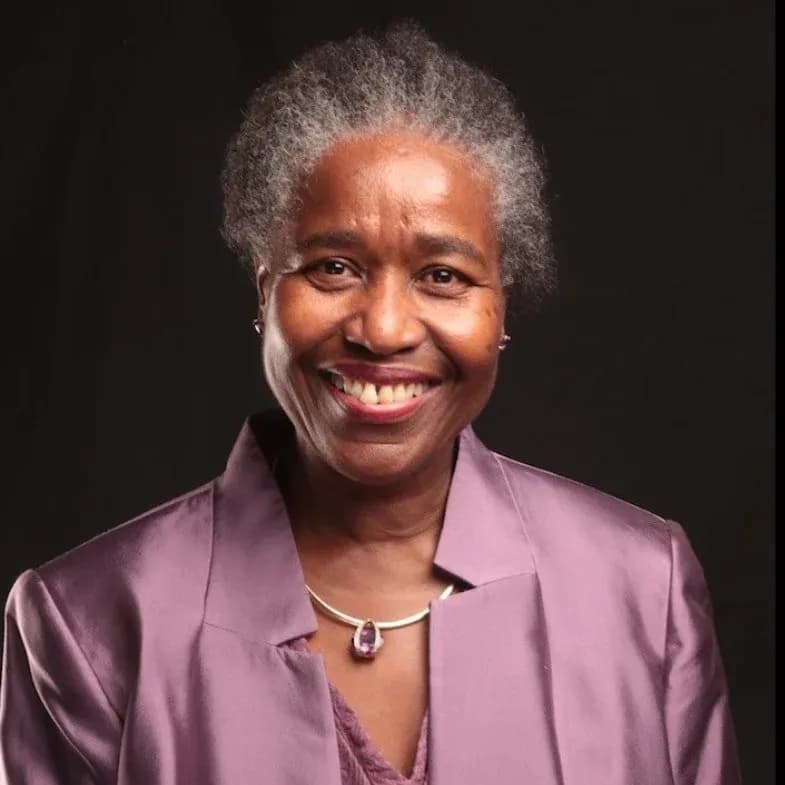
By Dame Neslyn Watson-Druée, DBE
Every one of us remembers a moment when we said nothing. A remark in a meeting that should have been challenged. A colleague left off the email chain, the lunch invitation or the promotion conversation. A child who came home from school with a story we did not hear all the way through. From Monday 16th November, schools across England, Wales and Northern Ireland mark Anti-Bullying Week under the theme Break the Silence, a theme shaped by more than 200 children and young people. I want this edition to carry their theme into our boardrooms, our hospitals and our homes.
Yetunde Hofmann and Love-Based Leadership
Our cover star, Yetunde Hofmann MBA ChCCIPD FRSA, knows what silence costs. She grew up in Nigeria, the youngest of five children of a science professor and a wedding dress designer, and she was bullied at boarding school by girls who, in her words, have no influence on her life today. As a student in England, she travelled from Norwich to London to buy the ingredients for a Nigerian meal she cooked for two fellow students. They filled their plates and carried them back to their own room. She ate alone, said nothing, lost days of piano practice and failed her Performer's Diploma a few days later. She names that evening as the start of her journey to self-acceptance.
Yetunde Hofmann: Leading With Love, Purpose and Joy
Yetunde Hofmann on love-based leadership, founding Solaris for Black and Brown women leaders and the faith that carried her through every rejection.
By Dame Neslyn Watson-Druée, DBE
Yetunde Hofmann MBA ChCCIPD FRSA was invited to more than 100 job interviews before anyone offered her a job. When the offer came, it was for a personnel officer role in Uttoxeter, a town she had never heard of. Today she sits on the board of FTSE 250 food producer Cranswick plc and runs a global leadership academy, and she wants every leader to bring one question into the boardroom: 'What would be the loving thing to do here?'
Her answer to that question is love-based leadership. She does not mean sugar-coating. She means separating the behaviour from the person, giving candid feedback that helps the other person win and doing the right thing over the popular thing, even at the risk of being unpopular. She sees love as a capability every leader can develop, not simply an emotion.
She grew up in Nigeria, the youngest of five children of a science professor and a wedding dress designer and maker, and spent more than 35 years in corporate roles leading strategic, commercial and operational transformation. In 2021 she founded the Solaris Executive Leadership Development Academy for Black and Brown professional and executive women, drawing on her own experience of being the only one in the room. She says more than 220 leaders have now graduated from the Academy.
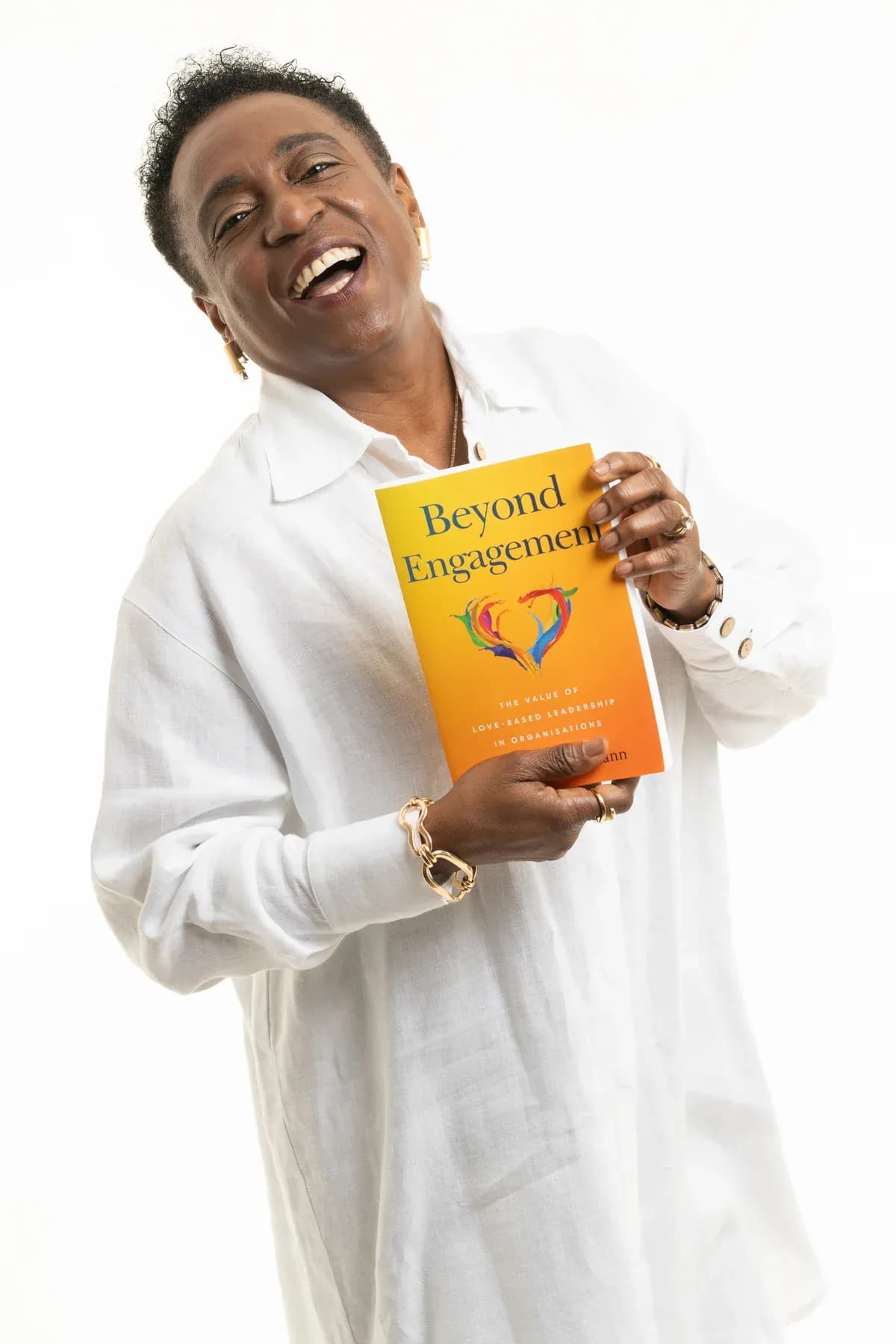
She is Managing Director of Synchrony Development Consulting and author of Beyond Engagement: The Value of Love-Based Leadership in Organisations. She also runs The Enjoyable Life Series, whose annual conference, 'What's Your Story?', raises funds for Dress for Success Greater London and Quo Vadis Trust. She is a Chartered Companion of the CIPD and a Fellow of the Royal Society of Arts, and in 2021 HR Magazine placed her 12th among its HR Most Influential Thinkers. She is also a Freeman of the Worshipful Company of HR Professionals.
Answering Dame Neslyn Watson-Druée's questions, she goes back to a Nigerian meal she cooked for fellow students who walked away with their plates, a woman in an Ethiopian slum who taught her what contentment looks like, and the faith that has carried her through every rejection.
Yetunde, your leadership philosophy is rooted in love, purpose, joy and belonging. Can you take us back to the earliest experiences in your life that shaped these values and explain how they continue to influence your decisions today?
I grew up in Nigeria, the youngest of five children. My father was a science professor and my mother a talented wedding dress designer and maker. I was very loved by my parents and my siblings. Education mattered in our home, and my father, who was not at all a rich man, went without in so many ways so that my siblings and I would have a great education.
I always knew I wanted to make a difference in the world, but I was not sure how I would do it. My Christian faith, which became central to me as a teenager, also shaped me.
Self-acceptance is the other half of purpose, and the two combined lead to joy. Becoming self-accepting took time. I tried to fit in with others at school, at university and even in the early stages of my career, and it did not work for me. It was tiring. Yielding to the resting place of self-acceptance helped me become more grounded. Combining that with knowing what I want to do in the world, my purpose of making a difference in others' lives, built my resilience from the inside out. This is the joy I am able to tap into.
I was also bullied at boarding school in Nigeria by girls who have no influence on my life today, and yet I let them have that influence back then. Over the years I have come to appreciate that spending time and investing time with those who edify you, who build you up and who want the best for you is better than trying to get into the tents of those who do not appreciate you.
I remember when that shift began. I was studying for my first degree and preparing for my Performer's Diploma. I am a classical pianist, but I am the type of pianist who needs to practise and work hard, not a naturally gifted virtuoso. I was trying my best to make friends with others in my year, and there was a couple who shared a room on the same floor of my university residence. I wanted them to like me, so I invited them to a special Nigerian meal I would cook, so they could learn about my culture. I travelled all the way from Norwich to London to buy the ingredients, as you could not get them easily in Norwich, and spent a great deal of time cooking for them.
This was only a couple of days before the practical stage of my diploma. When the food was ready, I invited them to join me. They brought their plates, dished up their food and left with their full plates to eat in their room. They did not sit with me. I was all alone. I was rejected, and I said nothing.
The next day I went back to the piano, having lost a few days of practice. I sat my exam and, of course, failed. I had not put in the work, and I had prioritised a relationship over what was important. That experience started the ball rolling. I had several more over the years, but that is the one I remember as the beginning.
Every exceptional leader has pivotal moments that change the trajectory of their life. Looking back, what were the three defining experiences that transformed you from a talented professional into the purpose-driven leader you are today?
The first was a trip to Ethiopia, where I met a most remarkable woman. She lived in a slum community, in a room about 4ft by 6ft, with her four children. She would wake in the early hours of the morning to rummage through the local rubbish dump for food and for things she could sell for food. And yet she was generous. She made popcorn and coffee for me and the colleagues I travelled with. She was not envious of who we were or what we had. She was proud of being able to provide for her children, and she was content.
That had a remarkable impact on me. So many of us, me included, who have been blessed with much, and I know it is all relative, can be discontent, and yet she, who had so little, was content. She showed me that material possessions do not lead to joy, and that the power of community and sisterhood, genuine, mutually dependent and supportive sisterhood, is unmatched.
The second was joining a global organisation as global head of development for the wrong reasons. I had been courted and headhunted, only to find when I joined that it was probably one of the most toxic environments you could ever imagine working in. And yet, in that darkness, there was some light: a great line manager who was not only my boss but my sponsor, mentor, agent and advocate, and one great colleague with whom I have stayed connected ever since. In spite of all the challenges and toxicity, I was able to deliver some excellent work, and its impact remained in the company for years after I left.
The third was running a global transformation programme for a large FTSE company, driving change across 160 countries with a super talented and diverse team. I saw the impact we had, the behaviours, good and bad, the styles of leadership, good and bad, the fear that came from a resistance to change that enveloped many, and so much more.
I have had more, but these are the three I would really call out.
People often see the accolades, board appointments and leadership influence. What personal struggles, setbacks or periods of adversity or self-doubt have taught you the most about resilience and self-belief?
When I was starting out in my career, I could not get a job. I had the degrees and the contacts, and I applied for so many roles. I was invited to over 100 interviews and faced rejection after rejection after rejection. Each time, I would get up, wipe the tears from my eyes, cry on the shoulders of my best friend, and keep going. I believed that one day my breakthrough would come, that my God would come through for me. He did.
I knew I had something to offer, but it had to be to the right audience and in the right way, and when the time was right it would happen. It took time. Many times I felt despondent. Many times I wanted to give up. Then I reminded myself that the only way to win was to keep going, no matter how many setbacks. Each no was closer to a yes.
My yes came when I least expected it. I responded to a role advertised in the newspaper, for a manufacturing company headquartered in the North of England. It was not my ideal location, as I had hoped to live and work in London. I had the first interview, then the second, then the third, and before I knew it I had an offer for a role as a personnel officer in Uttoxeter, a place I had never heard of before that interview. I took it, and I have never looked back.
I have had ups and downs since then, and that is life. Those experiences remind you to keep going and never to give up.
You speak openly about love-based leadership as a leadership capability rather than simply an emotion. In a world often driven by performance metrics and competition, what does love-based leadership look like in practice, and why do you believe it is so important today?
Love-based leadership is the most critical and most courageous form of leadership the world needs today. It is a willingness to separate the behaviour from the person and to speak candidly and directly, without sugar-coating. It is a willingness to walk with integrity in the face of adversity or the risk of being unpopular, and to stand up for what you know to be true. It means doing the right thing for what and whom it will benefit, rather than doing the popular thing.
In practice, it is honesty in the delivery of feedback, given in a way that wants the other person to win rather than meeting a personal need or gratification. It is being willing to make a decision that serves the team over the individual and executing in a way that does not diminish who the individual is. It is the willingness to think consequentially and behave contextually without compromising your values. It is the basis of stewardship.
Through Solaris, you have championed the advancement of Black professional and executive women. What inspired you to create the programme, and what barriers do you believe still remain for Black women aspiring to the highest levels of leadership?
Solaris is for Black and Brown professional and executive women in organisations. My own experience as a senior Black woman, all that I went through and all that I see in others, is what led me to establish it.
When you are the only one in rooms, at tables and in meetings, it can be a lonely place, and the more senior you become, the lonelier it can be. It takes fortitude and belief, plus the support of friends, sponsors and mentors, who at times may look nothing like you. A programme where you can learn with leaders like you, from all walks of life, in a setting with no judgement and no censure, can be invaluable. It pays dividends not only for you but for your teams and your organisation.
I founded Solaris in 2021. It is now a global love-based leadership development academy with four programmes, which support women leaders at different stages of their life, leadership and career, along with a buoyant alumni community, a suite of offerings for continuing professional development and annual conferences focused on love-based leadership. We attract leaders from all over the world. When I look back on my own career and life, it is an academy I wish I had had the opportunity to be part of.
More than 220 leaders have graduated. Of our delegates, 98% say the experience has had a positive impact on their lives, over 70% say it has been life changing and more than 65% have had a positive job or role change. Every graduating leader and alumna has found the community and sisterhood an amazing experience, and for those who have gone through challenging times, being able to lean into that sisterhood has been invaluable.
The impact also reaches beyond the leaders who attend. Graduates and alumnae have gone back into their own companies to develop in-house leadership programmes. The HSBC EmPowHer Programme, for example, was designed and delivered by Solaris alumnae and has reached more than 180 further leaders in their company. Others have set up coaching circles, mentoring programmes, teaching sessions for their teams and networks, all as a result of being part of the Academy. What is especially beautiful is the ethos of love as a leadership capability, which is the spine and platform of the Academy.
When young Black women encounter your story for the first time, what do you hope they learn from your journey that perhaps you did not have the opportunity to learn early in your own career? What key messages do you wish to give to organisations regarding developing people?
I hope they learn that resilience comes from within. It is rooted in joy, which is the product of love and purpose combined. I hope they learn that belief in themselves and their capabilities, and a willingness to be uncomfortable, will help them succeed at their own goals, not at someone else's wish for them.
I wish they would realise that life will work out for them, and that a desire to fit in at all costs will not serve them well. Stand on your own two feet. Believe in you. You are enough. Comparison is the thief of joy.
It is also important to meet people where they are. That in itself is an expression of love. We all want to be met where we are: 'Get to know me. Listen. Show me you are listening, and then from there let us walk forward and further together.'
My key message to organisations about developing their people is this. When you address the needs of your customers and clients, you apply a CRM approach and philosophy: you meet their specific needs and tailor your offering. The same philosophy should be applied to your people. To tap into the talent and potential of all your people, look at the specific needs they have and address them. Meeting the needs of a particular demographic does not take away from others. It adds to others and helps you meet the needs of all your people, which can only be good for your people, all of them, for your customers and clients and ultimately for your top and bottom line.
Through The Enjoyable Life Series, you raise funds for important charities. Which charitable, community or social-impact causes are closest to your heart, and what first connected you emotionally to those issues?
The Enjoyable Life Series is my non-profit social impact organisation. It started in 2014 with monthly workshops called Episodes, and in 2017 we pivoted to running annual storytelling conferences. Dame Neslyn has herself come and told a most powerful and inspiring story at one of them. It was a story that moved and inspired my son. We started out raising money for The Passage and Dress for Success Greater London, and later moved to raising money for Dress for Success Greater London and Quo Vadis Trust.
I was blown away by Dress for Success Greater London when I heard its Chief Executive speak at a dinner I attended. It meets the needs of women whose lives have not turned out the best for them, and helps them get back on their feet by preparing them for interviews, clothing them and teaching them. These are women who will have lost a great deal of confidence through life's setbacks. I was inspired, and I felt compelled to do something. I believe that as leaders, our role in life is to help others, those we know and those we do not.
With Quo Vadis Trust, I was inspired by the ambition of its CEO, whom I met at a Servant Leadership conference and who later attended the Academy. Her selflessness, the joy of her team and, most importantly, the difference they were making in the lives of the people they served were compelling. Being homeless is a life I would not wish on anyone, and QVT provides homes for people trying to find their way back into society.
Your vision speaks of a world without poverty and inequality. In your view, what responsibilities do business leaders have in addressing these societal challenges, and where do you believe leadership can make the greatest difference?
Change starts with you and me. It is the conversation, the decision and the impact we make. It is the appreciation that every decision we make has a consequence. Every business leader should think and decide consequentially. Before going ahead, think it through: if this works, what will the outcome be, and who will be impacted, when and how? If it does not work, what then? Thinking of the stakeholders affected by our decisions, within and beyond our four walls, is critical.
If leaders walked in love, if they asked 'what would be the loving thing to do here?' in board meetings and in critical decisions about restructuring, where and how to go to market, payment terms, operations, talent, community and society, the work to reduce and eradicate poverty and inequality would be much easier and much further advanced.
The one difference each leader could make is to pursue the development of love as a leadership capability, and then to walk and work from there. That would make a world of difference.
Your 'What's Your Story?' platform encourages people to share who they are rather than what they do. Why is storytelling such a powerful force for leadership, inclusion and human connection?
Storytelling unites the head and the heart. It moves people, and it connects and relates regardless of culture, background or outlook. It has been around for ages and will be around for ages to come. When a story is personal and relates to life, its ability to speak to another person cannot be underestimated. What is most powerful is hearing a story from someone who, on first meeting, is the very last person you would expect to tell that particular story.
In your career, when have you had to take a stand for something you believed in despite personal or professional risk, and what did that experience teach you about courage?
I have always believed in speaking my truth. When I have withheld it, I have paid a price, not outwardly but inwardly.
I remember standing up for what I believed at a board meeting, on a previous board I sat on, as the lone voice going against the grain. It was a most uncomfortable place to be, and it can be lonely. I spoke my mind knowing the risk was that I might be frozen out. The greater pain, and I knew it, would have been the knowledge that if I did not speak up and stand up, I would not be able to look at myself in the mirror. It had to be done.
After achieving significant professional success, what continues to drive you every morning? What are you most passionate about now that perhaps matters even more than career achievement?
My family drives me now: my husband, who is my very best friend, my boys, who are now married, and my grandson. Above all, my faith drives me. Knowing that each day, as I grow older, my breath is a blessing is what keeps me going.
So does my desire to make a difference to others. When I have the opportunity to see the wins others have thanks to the small contribution I make, it gives me a joy and pleasure that are inexplicable and indescribable.
If, fifty years from now, people were reflecting on the contribution of Yetunde Hofmann to leadership, business and society, what would you most want them to say about the difference you made in the lives of others?
Oh wow. I would want them to say that this was a leader in whom joy was instilled by seeing others succeed and win at their goals, and that there is more love in the world, and in how we go about our work, life and leadership, thanks to the sacrifices she made and the encouragement she brought to people. She imparted, she shared, she enabled, she cajoled, she cried, she tried. Above all, she stood up for who she is and whose she is.
Through my work, I want people to accept who they are, to meet themselves, to tap into the depths of joy they have within and to release their own God-given and blessed potential. I want simply to be remembered as an enabler. She was because we are and we are because she was.
You have built a career around helping others discover their own potential. What and who have helped you discover yours, and what lessons from them do you carry with you every day?
Various people I have met along the way have helped me. I remember my first primary school teacher, when I was three. She loved me and was so very kind. Then there was my brother, who taught me to play the piano, and my two piano teachers, one in Nigeria and one in Brighton, England, who walked with me as I prepared for exams, encouraged me and put me through competitions. I remember taking part in the Brighton Piano Festival and placing fourth.
Over time there were line managers who saw the best in me. I also learned valuable lessons on what not to do from badly behaved line managers.
I learned to be willing to take a risk on someone with an unproven track record but visible potential when a former CEO of mine handed me the biggest project I have done to date. It was a global project spanning geography and cultures. A project examining and transforming the operating model of a company and through this revising its structure, go-to-market strategies, pricing, supply chain, footprints, growth drivers and so much more. It was the type of project you would immediately seek to assign to a finance, supply chain or sales and marketing professional. It was assigned to me. He believed I could do it, he aligned the Board and his team behind his decision, and with his belief in me, I rose to the occasion.
My faith has driven me and continues to drive me above all. There is so much that can be drawn from the Bible and the Word of God. I believe that in Jesus giving His Life for me, a nobody, I must be worth a little something and this gives me tremendous comfort.
In Conversation with Dame Neslyn: How Do You Break the Silence on Bullying at Work?
Anti-Bullying Week opens on 16th November with the theme Break the Silence. Dame Neslyn Watson-Druée explains why bullying grows in silence at work too, and what you can change in your own team this week.
By Dr Marina Nani
Photo: Courtesy of Dame Neslyn Watson-Druée
Anti-Bullying Week opens on Monday 16th November across England, Wales and Northern Ireland, with the theme Break the Silence. More than 200 children and young people helped to shape it, and many of them described the same thing: the silence that surrounds bullying, and how hard it is to ask for help.
Adults know that silence too. In a 2026 survey of 1,000 UK workers, two in five said they had been bullied or had experienced negative behaviour at work. In another survey this year, only three in five employees said they felt safe using formal channels to report bad behaviour, and 41% worried they would be identified even when they reported anonymously.
I sat down with Dame Neslyn Watson-Druée DBE, Editor-in-Chief of Rich Monday Paper+ London Edition, former NHS Chair, Thinking Environment practitioner and author of From Impossible to Possible, to talk about what breaking the silence means for you as a leader.
Steven Madonia's debut fantasy novel ties magic to willpower and identity
In The Tablets of Tetran: The Phantom Labyrinth, a lifelong artist and musician writes about trauma, trust and the cost of power, through a magic system that fails when a character's will does.
By Dr Marina Nani
Photo: Courtesy of Sulnir Publications
Steven Madonia has spent most of his life making art. He teaches music, works as a visual artist, writes short stories and poetry, and designs Dungeons & Dragons campaigns from his home in North Babylon, New York. By his own account, very little of that work took risks.
'As a lifelong artist and musician, I've always made what I would call "safe art",' he says. 'Here, I decided to tell an honest story involving love, darkness, and the cost of power.'
The result is The Tablets of Tetran: The Phantom Labyrinth, his first novel and the opening book of a new fantasy saga, published by Sulnir Publications and available in Kindle, paperback and hardcover editions on Amazon. Madonia says its themes of trauma, trust and the burden of responsibility are deeply resonant in his own life, and he believes readers today connect strongly with those subjects. He is also clear that the book was fun to write and explore.
Madonia drew the map of Tetran before he wrote the story
The novel took about a year to develop. Madonia started with the world map, which he calls essential to his worldbuilding, and built the story across it afterwards. His years designing Dungeons & Dragons campaigns, where the ground has to exist before the players arrive, show in that order of work.
His process puts detailed worldbuilding, character development and emotional authenticity first. Fantasy gives him room to write about overcoming personal trauma, understanding other people's perspectives and finding hope in difficult circumstances, all of which run through the book.
Champions of Tetran's deadly trials win wealth, power and secret land
Tetran holds an annual tradition of deadly trials that draws warriors and competitors from different races and backgrounds. Survivors who earn the title of champion gain considerable wealth, political influence and access to secret territories closed to ordinary citizens. Some competitors enter to give their families financial security. Others want forbidden knowledge, legendary artifacts or a route to extraordinary power.
The novel follows three strangers, Rin, Yot and Nomir, who arrive with different motives and personal histories. Facing life-threatening challenges, they have to work through conflicting beliefs and learn to trust one another while each carries an emotional burden of their own. Rin brings a second mystery into the competition: a haunting past and a determination to recover the legendary objects that give the book its title.
The tournament gives the novel its structure. The magic system is where Madonia has done his most original work.
Aethra ties a character's power to their psychology
Tetran's magic is called aethra, the manifestation of a person's will. Each person's aethra has its own color, which reflects the alignment of their soul, and those who can weave it develop abilities such as phantasmal conjurations, enhanced physical strength and heightened perception.
Madonia built the system entirely around human psychology. The more a person's internal convictions come alive, the more depth their abilities gain. The rule also works in reverse: if a weaver's will deteriorates or their personality changes, they can lose control of their powers or lose them altogether. That turns the villains of Tetran into a psychological threat as much as a physical one. Dark weavers attack willpower and identity directly, so in a fight their real target is a person's sense of self.
Color shapes the rest of the system, and classes such as conjurers and channelers depend on a weaver's color. Color-coded magic already has a place in the genre, with Lightbringer the best-known recent example, but in Tetran color is tied to the alignment of the soul, and the power behind it rises and falls with a character's state of mind.
Because the characters' powers change with their emotional development, their experiences and their decisions, the magic also records who each of them is becoming. Through it, Madonia asks questions about identity, responsibility and what the pursuit of power costs the people who chase it.
Madonia believes magic needs a cost and has to feel magical
Asked what most fantasy books get wrong about their magic, Madonia comes back to two demands that pull against each other.
'I think in general, magic needs a cost and naturally needs to feel magical! Those can be challenging things to juggle. Magic needs to feel surprising yet sensible. It needs to feel sensational and fantastical. Those are difficult things to manage together,' he says.
Aethra is his answer to that problem. In Tetran, the price of power is paid in conviction and identity, and a character who loses either one can lose the magic with it.
The fantasy books that shaped Tetran's magic
Madonia's first pick for readers who want an unusual magic system is a manga series rather than a novel. He credits Hunter x Hunter and its nen system with inspiring him through its rules, ideas, structure and depth.
His second pick is Harry Potter, which he calls a foundational series for him and describes as rich and expansive, while admitting the choice might be a bit of a cliché.
Early readers called the novel 'emotionally gutting'
Madonia ran the book past beta readers, who used the words 'evocative', 'emotionally gutting' and 'authentic' to describe it, and he says early readers found it exciting and surprising.
Readers who sign up to his email list at sulnirpublications.com receive a free high-quality scan of the Tetran world map, early access to his future works and monthly challenges.
'I hope you enjoy the emotional journey of The Tablets of Tetran: The Phantom Labyrinth as much as I enjoyed writing it,' he says.
The Tablets of Tetran: The Phantom Labyrinth is available in Kindle, paperback and hardcover editions on Amazon.
Featured Book
The Tablets of Tetran
The Phantom Labyrinth
by Steven Madonia
In the world of Tetran, an annual tradition of deadly trials draws warriors and competitors from different races and backgrounds. Survivors who earn the title of champion win wealth, political influence and access to secret territories closed to ordinary citizens. Three strangers, Rin, Yot and Nomir, enter the trials with their own motives and histories, and must learn to trust one another to survive. Rin also carries a haunting past and a determination to recover the legendary Tablets of Tetran. At the heart of the novel is aethra, a magic system built on human psychology, in which a person's power grows with their convictions and can be lost when their will breaks. The book opens a new fantasy saga.
We may earn a commission from purchases made through this link.
Frequently asked questions
Which fantasy books have the most interesting magic systems?
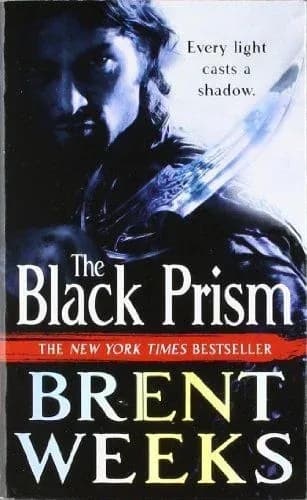
Reader lists most often cite Brandon Sanderson's Mistborn, Brent Weeks's Lightbringer, R. F. Kuang's Babel, Patrick Rothfuss's The Kingkiller Chronicle, V. E. Schwab's Shades of Magic and Ursula K. Le Guin's Earthsea. What these books share is magic with clear limits and real consequences, so readers can follow how it works and feel what it costs. Newer titles, including independent debuts, keep experimenting with magic tied to emotion, identity or willpower.
Which fantasy series has the best magic system?
There is no single answer, but Brandon Sanderson's Mistborn tops most reader polls and forum threads because its rules are precise and its powers have firm limits. Readers who prefer magic that stays mysterious often choose Ursula K. Le Guin's Earthsea instead. The best system for any reader depends on whether they want to understand the magic or be surprised by it.
What are some unique fantasy magic powers?
The most distinctive powers usually come from an unusual source or an unusual cost: magic fueled by swallowed metals, by colors of light, by the meaning lost in translation, or by a person's willpower and sense of self. The most memorable ones change the person who uses them, or demand something that cannot easily be won back.
What are some cool magic systems?
Well-loved examples include allomancy in Mistborn, where users burn ingested metals for specific powers; chromaturgy in Lightbringer, where drafters turn colored light into solid matter; the silver-working of Babel, which draws power from what is lost between languages; and true names in Earthsea, where knowing a thing's real name gives power over it. In manga, the nen system of Hunter x Hunter is admired for its strict rules and personal ability types.
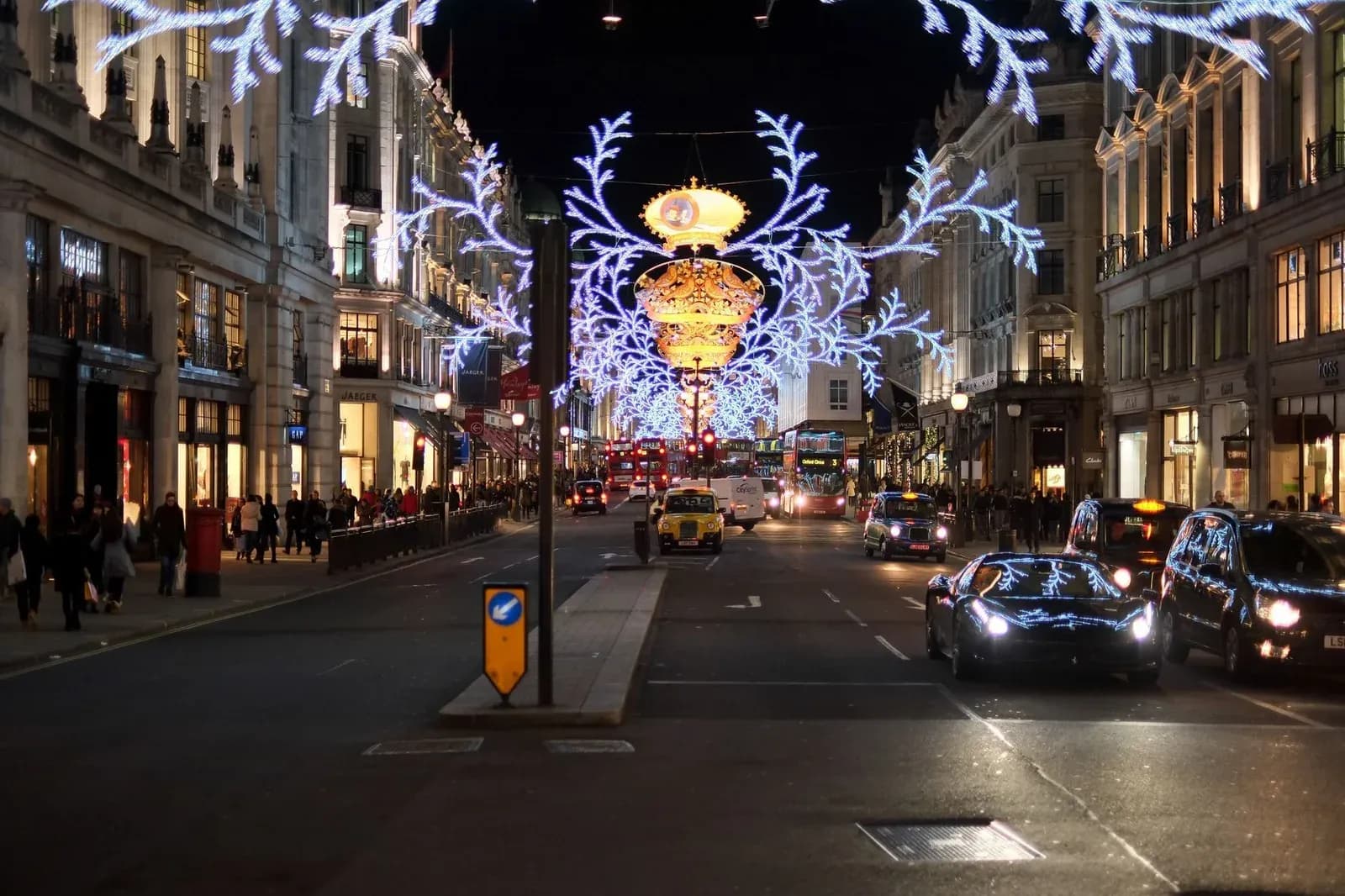
London Calling: The Week Starting 16th November 2026
Winter Wonderland opens in Hyde Park, three new ice rinks arrive, the London Jazz Festival plays its final week and every surviving Van Eyck portrait comes to Trafalgar Square. Eight things to do in London this week.
This is the week London turns festive in earnest. Hyde Park Winter Wonderland opens its gates, three more ice rinks arrive, the London Jazz Festival plays its final seven days and two of the season's biggest exhibitions open on the same Saturday. It is also Anti-Bullying Week, and the city gives you plenty of chances to show the children in your life what kindness looks like. Here are eight ways to spend it.
Anti-Bullying Week and Odd Socks Day
Anti-Bullying Week runs from Monday 16th to Friday 20th November across England, Wales and Northern Ireland, with the theme Break the Silence. More than 200 children and young people helped to choose it. On Monday 16th November, Odd Socks Day, children wear mismatched socks to celebrate what makes each person unique.
Make it count: wear odd socks to work on Monday and tell your colleagues why. Then ask one child in your life an open question, such as 'Is anyone being left out at school?', and listen to the whole answer.
The Final Week of the EFG London Jazz Festival
The 34th EFG London Jazz Festival, which opened on Friday 13th November, runs until Sunday 22nd November across more than 60 venues. On Tuesday 17th November, Cuban pianist Roberto Fonseca and cellist Vincent Segal play Cadogan Hall, and on Thursday 19th November saxophonist and composer Soweto Kinch returns to the Barbican with the London Symphony Orchestra. On Saturday 21st and Sunday 22nd November, the Barbican recreates Peter Cat, the Tokyo jazz club that Haruki Murakami ran before he became a novelist, with tickets from £34.
Insider tip: the Guildhall Jazz Festival puts on 19 free performances at Milton Court Concert Hall on 18th, 20th, 21st and 22nd November, including the National Youth Jazz Orchestra.
Hyde Park Winter Wonderland Opens
Hyde Park Winter Wonderland returns on Thursday 19th November and runs every day except Christmas Day until Sunday 3rd January 2027. It opens at 12pm on Thursday 19th and Friday 20th November, and from 10am to 10pm on most days after that. Entry must be booked in advance and costs £1 off-peak, £5.50 standard or £8.25 peak, with rides and shows charged separately.
Book smart: a November weekday is the cheapest and calmest time to go. The nearest stations are Hyde Park Corner, Knightsbridge and Marble Arch.
Three New Ice Rinks Open
London's skating season grows this week. The Queen's House ice rink in Greenwich opens on Wednesday 18th November among the historic buildings of the Royal Museums Greenwich site. On Thursday 19th November, the riverside rink at Hampton Court Palace and the rink outside the Natural History Museum in South Kensington both open, with the Natural History Museum rink running until 3rd January 2027. Skate at Somerset House, open since 11th November, has tickets from £11 to £28.50.
Make it count: skate with someone you have not seen for a while. An hour on the ice is impossible to spend on your phone.
Van Eyck: The Portraits at the National Gallery
On Saturday 21st November, the National Gallery opens Van Eyck: The Portraits, bringing together every surviving portrait by the 15th-century Netherlandish master Jan van Eyck for the first time. Alongside the gallery's own Arnolfini Portrait, loans arrive from Berlin, Vienna and Bruges. Standard tickets cost £18, and the exhibition runs until 11th April 2027.
Why go: these paintings almost never travel, and the gallery describes this as the only time they can be seen together. Faces painted nearly 600 years ago still look back at you as if they are about to speak.
Peggy Guggenheim in London at the Royal Academy
Also on Saturday 21st November, the Royal Academy of Arts opens Peggy Guggenheim in London: The Making of a Collector. It tells the story of Guggenheim Jeune, the London gallery she ran before she became one of the great collectors of the 20th century, through more than 80 works. Tickets cost £17, and the exhibition runs until 14th March 2027.
Why go: Guggenheim backed artists long before the art world agreed with her. It is a weekend to think about whose talent you could back early.
Where We Grow at the Foundling Museum
On Tuesday 17th November, the Foundling Museum in Bloomsbury opens Where We Grow: Nature, Nurture and Childhood, an exhibition on how children grow and what helps them flourish. The museum tells the story of the Foundling Hospital, founded in 1739 to care for children whose mothers could not keep them. Tickets cost £13.50, including museum admission, and the exhibition runs until 18th April 2027.
Make it count: it is a moving visit for parents and grandparents during Anti-Bullying Week, and a good place to talk with older children about how every child deserves to feel safe.
Last Chance: Building the Bank at the Bank of England Museum
Friday 20th November is your last chance to see Building the Bank: 100 Years On, a free exhibition at the Bank of England Museum on the creation of the Bank's Threadneedle Street building. It is a short visit that fits into a lunch break in the City.
Before you go: Christmas at Kew is closed on Monday 16th November, so if you planned an evening on the light trail, book another date.
Your Week in One Line
Wear odd socks, listen to jazz, look into a face painted 600 years ago and say something kind to someone who needs to hear it. London is giving you a week to be seen and to make sure others are seen too.
London Calling: Business and Networking Events for the Week Starting 16th November 2026
Global Entrepreneurship Week arrives, B2B Marketing Live and Sales Innovation Expo fill ExCeL for free, and HR, finance and risk leaders gather across the capital. Eight business events in London this week.
Six weeks before the year ends, the conversations that shape your 2027 budget, your next hire and your next client are already under way. This week London hosts the UK side of the world's biggest celebration of founders, two free shows at ExCeL for anyone who sells or markets, and a cluster of summits for HR, finance and risk leaders. It is also Anti-Bullying Week, a good moment to look at the culture of your own team. Here are eight events worth your time.
Global Entrepreneurship Week
When: Monday 16th to Sunday 22nd November. Where: across London and the UK. Cost: most events are free.
Now in its 19th year, Global Entrepreneurship Week brings around 10 million people in about 200 countries and territories together through workshops, pitch competitions and networking events. In the UK, the Centre for Entrepreneurs coordinates the programme, and events run from university campuses to local libraries.
Go if: you have an idea you have been sitting on, or you want to meet founders at every stage, from first sale to first funding round.
RiskMinds International
When: Monday 16th to Thursday 19th November. Where: InterContinental London The O2.
An annual conference for risk managers in banking and finance. On Wednesday 18th November, its Governance, Conduct and Compliance Summit brings together more than 100 practitioners working on conduct and compliance.
Go if: you are responsible for risk, conduct or regulation and want to compare notes with peers before 2027 planning begins.
CONNECT CFO and HR Leadership Summits
When: Tuesday 17th and Wednesday 18th November. Where: Allianz Stadium, Twickenham. Cost: complimentary passes for qualified senior executives.
Two parallel autumn summits run by Quartz Network, one for finance leaders and one for HR leaders. Both combine talks from experienced leaders with pre-arranged one-to-one meetings with solution providers matched to your priorities.
Go if: you lead finance or people and want a focused two days of peer conversations rather than a crowded exhibition floor.
Reinventing HR Summit and the FutuHRistIC Festival
When: Tuesday 17th to Thursday 19th November, within the wider FutuHRistIC festival from 17th to 20th November. Where: The Bentley Hotel, Harrington Gardens, South Kensington.
Now in its 12th year, the Reinventing HR Summit sits inside FutuHRistIC, a four-day festival for HR leaders, internal communicators and employee engagement specialists. HR Vision London also runs on 17th and 18th November for senior people leaders.
Go if: you lead people and want fresh thinking on culture, engagement and how to build teams where everyone feels safe to speak up.
B2B Marketing Live and Sales Innovation Expo
When: Wednesday 18th November, 9.30am to 4.30pm, and Thursday 19th November, 9.30am to 4pm. Where: ExCeL London. Cost: free with registration.
Two co-located shows that make this the UK's biggest gathering of business-to-business marketing and sales professionals of the year. B2B Marketing Live expects more than 4,000 marketers and 150 speakers, and Sales Innovation Expo more than 5,000 attendees and 120 speakers.
Go if: you sell to other businesses, or you market a company that does, and want two days of practical sessions on demand generation, pipeline and closing more deals.
FIMA Europe
When: Tuesday 17th and Wednesday 18th November. Where: The Tower Hotel, St Katharine's Way.
A conference for the people who manage financial data at investment banks and asset managers, held in the shadow of Tower Bridge.
Go if: your work depends on clean, well-governed financial data and you want to compare approaches with peers.
APSCo Business Forum London
When: Thursday 19th November, 3pm to 5pm, with registration from 2.30pm. Where: London.
An afternoon forum from the Association of Professional Staffing Companies, the trade body for recruitment businesses, with time to network over refreshments.
Go if: you run or lead a recruitment business and want to know how your peers are approaching hiring demand in 2027.
International Men's Day
When: Thursday 19th November. Where: your own workplace.
International Men's Day falls in the middle of Anti-Bullying Week this year. It is a chance to talk openly with the men in your team about health, wellbeing and the pressure to keep problems to themselves.
Go if: you lead a team. Book a walk or a coffee with each person you manage this week and ask how they are, then give them the time to answer properly.
Make Your Week Count
Before you go to any event, choose two people you want to meet and one question you want answered. Follow up within 48 hours. And in a week dedicated to breaking the silence, notice who in your own team has stopped speaking in meetings. The best business conversation you have this week may happen at your own desk.
It is late on a weekday evening, and you are still answering emails about other people's projects. You know your team's targets for the quarter, the date of the next board meeting and the state of the budget to the nearest thousand. This morning you noticed that a colleague looked tired, and you made a note to ask how she is.
Then a friend asks how your own career is going, and you hear yourself say 'fine' or 'busy'. Neither word is an answer. Somewhere along the way, the work you do for everyone else crowded out the question of where you are going yourself.
Around the world, only one employee in five feels engaged at work, and in 2025 that share fell to its lowest level since 2020. If you have felt that something is missing from your working life without being able to say what, you are far from alone, and a feeling like that is worth twenty minutes of your attention.
Today there are 52 days left of 2026. The first step towards using them well takes a pen, a sheet of paper and the courage to answer that question properly.
Score Your Career in Twenty Minutes
Write eight words down the left-hand side of the page: pay, skills, visibility, sponsors, control, energy, meaning and room to grow. Give each one a score from 1 to 10 for how things stand today. A score of 1 means the measure is failing you, and a 10 means you would change nothing. Write the first number that comes to mind and leave it as it is. Nobody else will see the page.
Pay, Skills and the People Who Back You
Start with pay. Your salary was set on the day you were hired or last promoted, and the market has moved since then. Your employer reviews your pay against its own budget, and nobody compares it with the market unless you do. Look up three current job adverts for roles like yours. Give yourself 8 or more if you sit in the top half of their salary range and 4 or below if you sit under it. Our guide to closing your own pay gap shows you where to find the figures.
Skills come next. Employers around the world expect 39% of their workers' core skills to change by 2030, so a role that has taught you nothing new this year leaves you a little further behind each month, even when your reviews are good. Name the skills you have today that you did not have in January. Three or more earn a high score, and none earns 3 or lower.
Sponsors complete this group. A mentor gives you advice. A sponsor is a senior person who puts your name forward for a role when you are not there to speak for yourself. In a study of more than 4,000 high-potential employees, more women than men had mentors, yet the women were less likely to advance, and one reason was that fewer senior people put them forward. Count the senior people who would recommend you for a bigger role tomorrow without being asked. Two or more earn a high score, one earns a 5 and none earns a 2. The professional relationships you build now are where sponsors come from.
How Your Working Days Feel
Control comes first here. A long-running study of more than 10,000 British civil servants found that those with little say over how they did their work were almost twice as likely to develop heart disease as those with a great deal of say, while the demands of the job made no difference to the risk. If you set most of your own priorities, give yourself 8 or more. If your day is decided for you hour by hour, give yourself 3 or lower.
For energy, picture Sunday evening. The World Health Organization describes burnout through three signs. The first is exhaustion. The second is a growing distance from your job or cynicism about it. The third is the sense that you are less effective than you used to be. Burnout builds over months and is easy to miss in a busy year. If you look forward to Monday most weeks, give yourself 8 or more. If all three signs are familiar, give yourself 3 or lower. Our guide to small daily routines gives you eight ways to rebuild your reserves.
Meaning is easier to test than to define. Name one person whose week was better this month as a result of your work: a client, a patient, a customer or someone on your team. If a name comes at once, give yourself 8 or more. If you cannot think of anyone, give yourself 3 or lower.
Room to grow is the last score. A role you enjoy can still leave you with nowhere to go. Name the role you could hold in this organisation two years from now and the person who could give it to you. If you can name both and that person has discussed it with you, give yourself 8 or more. If the only way up is for someone to leave, give yourself 4 or below.
Your Lowest Score Is Where You Begin
Leave the eight numbers as they are, as a total hides the detail. Circle your highest score and your lowest. The highest is the strength to protect in any move you make. The lowest is where you grow first, unless energy scored 4 or below, in which case you begin with energy, since every other change draws on it.
Some numbers on the page may sting. A 3 next to pay or sponsors can feel like a verdict on years of effort, and it is not one. It records where you stand on one evening in November, and a number on paper can be changed in a way that a vague unease never can.
You have spent years keeping other people's work on track. You remember your team's deadlines, notice when a colleague is struggling and fight for budgets that are not yours. Tonight, for twenty minutes, the person you looked after was you.
Take one step on your circled score this week: look up the salary range, ask for the meeting or put your name down for the course.
Keep the page where you will see it, and on New Year's Eve, score yourself again with the same pen. The next time a friend asks how your career is going, you will have a better answer than 'fine'. You will know where you stand and what you are doing about it. Nobody else can build this career for you, and from tonight you are building it on purpose.
It is Friday afternoon, and the annual review form is open on your screen. The first box is headed 'Key achievements this year'. You remember the project that landed last month and the presentation that went well in October. January feels as if it happened to someone else, and the cursor blinks in the empty box.
You did far more than you can recall today. The client you won back in March, the hire you made in spring and the problem you solved in the summer have all faded, and the form will go in thinner than the year you worked.
There are 51 days left of 2026 and seven Fridays before the year closes. A Friday wins file costs you five minutes at the end of each week and gives you a written record of your year, so that the next review form you open becomes the easy part of the conversation.
What Goes Into a Friday Wins File
Open a document, a notebook or a folder in your email and give it a plain name. Every Friday before you log off, write three lines about the week.
The first line is a result, with a number wherever you can find one: the contract signed, the hours saved, the complaint resolved or the budget kept. The second line is something you learned or did for the first time, such as a new system, a difficult conversation handled well or a meeting you chaired. The third line is the evidence other people gave you: a thank-you email, a client's comment or a colleague's message. Copy their words exactly and add the date.
A typical entry might read: 'Friday 13th November. Finished the supplier review two days early and cut the renewal cost by £18,000. Chaired my first meeting with the finance director. Note from Sam: "That summary saved me an hour."' Three lines take less time than reading one long email, and seven Fridays from now you will have twenty-one entries that did not exist this morning.
Small entries count. A week in which you unblocked a colleague and tidied a messy process deserves its three lines as much as a week with a headline result. Many of the things that make you valuable never appear in a target, and the file is where they are written down.
Keep the file somewhere you control, and not only on a work system you could lose access to if you change jobs.
Why Your Memory Works Against You at Review Time
Memory favours the recent and the vivid. Managers writing an annual review tend to give the last few weeks far more weight than the months before them, a pattern psychologists call recency bias. Your own memory works the same way when you fill in the self-assessment. A strong March has little chance against a difficult October unless March is written down.
There is a cost you feel as well as one you can measure. Walking into a review unable to name your achievements leaves you defending the year instead of describing it, and that feeling stays with you long after the meeting ends.
Women face a second gap. In experiments with thousands of people who took the same reasoning test, women described their own performance less favourably than men who had scored exactly the same. The gap remained when everyone was told their real scores, and it disappeared when people rated others instead of themselves. The difference lies in how you describe your own work, not in the work itself.
A wins file narrows both gaps. Dated entries in your own words replace a vague sense of the year with facts, and a fact is far easier to state plainly than a feeling about how you did.
Small Wins Keep You Going
The file does more than prepare you for a review. In a study of nearly 12,000 daily diary entries from 238 professionals, people felt most motivated and happiest on the days they made progress in meaningful work, even when the progress was small. Setbacks hit harder than progress lifted, so a single bad day could outweigh several good ones.
Writing your wins down each Friday makes your progress visible. On a week when everything seems to go wrong, open the file and read the last two months. You will find the problems you solved and the people you helped, and the bad week will shrink to its proper size.
Read it before a hard conversation too. A few minutes with a record of what you have already done steadies your voice when you need to ask for something.
From Friday Notes to Your Review
When the review form arrives, read the whole file first. Choose your three strongest results of the year and link each one to a figure the business cares about. Send the list to your manager a few days before the meeting, so that the conversation starts from your evidence and not from the last month. The same entries supply the numbers you need when you ask for a pay rise, update your CV or answer the interview question about your proudest achievement. If visibility was a low number when you scored your career, the file also gives you something concrete to share with the people above your manager.
If you lead a team, show each person how to keep a file of their own. Everyone arrives at their review with evidence, and you write fairer reviews with less effort.
The first entry is the hardest to write. You may feel that your week was too ordinary to record, or that writing down your own successes sounds like boasting. It is neither. It is an accurate account of work you have already done, kept by the one person who saw all of it.
Start this Friday. Before you close your laptop, write three lines about the week, and then add three more about the strongest moments of 2026 that you can still recall.
Think back to that empty box on the review form and the cursor blinking in it. Next time, you will open the form with a year of Fridays beside you, and the woman described on the page will be the woman who did the work.
The presentation is over, the room is emptying and you catch a colleague at the door. 'Any feedback?' you say, as lightly as you can. She smiles and tells you it was great, really clear, and you walk back to your desk with a compliment and nothing to work on.
Part of you is relieved. Another part suspects that there is something everyone in that room noticed and nobody said, and that it will appear months from now in a review you cannot argue with. The words you need exist in the heads of the people around you. The question you used was the wrong key to the door.
There are 50 days left of 2026, and you can change that with one word. Stop asking for feedback and start asking for advice, put the same question to three people and listen to what comes back.
Why 'Any Feedback?' Gets You So Little
Feedback sounds like a report card. When you ask for it, the other person looks backwards at what you have already done and starts to grade it, and most people are too kind to give a colleague a low mark to her face. The result is a pleasant sentence with nothing inside it.
Advice points the other way. When you ask what you should do next, the other person thinks about your future instead of your past, and the future is something they can help you change. In one experiment, people who were asked for advice on a job application letter suggested 34% more areas to improve and 56% more ways to improve than people asked for feedback on the same letter. A later field experiment covering more than 27,000 comments in workplace reviews found the same pattern, and independent raters judged the advice more useful.
The work being judged was identical in every case. Only the word changed, and the word changed what people were willing to say.
The Blind Spots Only Colleagues Can See
You know some things about yourself better than anyone else can, such as how anxious you feel before a board meeting or how tired you are by Thursday. Other things are harder to see from the inside. Studies comparing people's self-ratings with ratings from friends and colleagues have found that you are about as accurate as the people who know you well, but not more accurate. On the most flattering and most uncomfortable traits, such as how intelligent, creative or difficult you seem, the people around you often see more clearly than you do.
Women face an extra gap. In an analysis of more than 200 performance reviews from four companies, 57% of women received vague praise such as 'You had a good year', against 43% of men. Men were also more likely to have their feedback tied to business results, 60% against 40% for women. Vague praise feels kind in the moment, but it leaves you without the specific direction a promotion depends on.
You cannot wait for the review system to fix that. You can fix your own supply of useful information this month.
Three People and One Question
Choose three people who see your work from different angles: your manager or someone senior, a peer who works alongside you, and someone who reports to you or a client who relies on you. Three views are enough to show you a pattern, and one person alone may simply be having a difficult week.
Put the same question to all three, in person or in a short message: 'What is one thing I could do differently over the next three months that would make the biggest difference to my work?' The words 'one thing' make the question easy to answer. 'Next three months' points the answer forwards. 'Biggest difference' shows the other person that you are serious and want more than a compliment.
Give each person a few days to think if they need them. When the answer comes, listen to the end without explaining or defending yourself. If the advice is general, follow it with 'What would that look like in practice?' Then thank them and mean it, as people who give you something useful once will give you more if they see you value it.
Some answers will sting. A colleague may tell you that you rush other people in meetings, or that your emails are hard to follow, or that you take on too much yourself. Write the words down exactly as you heard them. You can decide later what to do with them, but you cannot use advice you have softened in your memory.
What to Do With Three Answers
Read the three answers side by side. When two or three people point to the same thing in different words, you have found a blind spot, and it is almost certainly worth more to your career than anything you would have chosen to work on alone. When an answer surprises you, it is often the most valuable of the three.
Choose one change and work on it for the next three months. Go back to the people who advised you after a few weeks and tell them what you tried. That second conversation does more than the first. It shows them that their advice mattered, and it turns three colleagues into three people who are watching your progress and willing to speak for you. If one of them is senior, you have also given a possible sponsor a reason to notice your growth.
Our guide to the Friday wins file gives you a place to record the change as it works, and your career audit shows you which part of your working life the advice touches.
You may feel exposed asking the question. Many women spend years being told they are doing well and still sense that the real conversation is happening somewhere else. Asking for advice brings that conversation into the room where you can hear it. The discomfort lasts a few minutes, and the information lasts for the rest of your career.
This week, send the question to one person before Friday, and to the other two by the end of the month.
Think back to the colleague at the door and the compliment you carried back to your desk. Next time, you will walk away with one sentence you can act on, and a colleague who now sees you as someone who wants to grow. That is worth far more than being told it was great.
Nearly nine in ten women rate kindness as very important in a long-term partner, more than any other quality. See where kindness lives in your own relationships and how to offer more of it.
It is half past nine on a wet Tuesday evening, and you have just come home from a day that went wrong from the first meeting. Your coat is soaked, your phone is on four per cent and you have not eaten since noon. On the kitchen counter you find a plate under a saucepan lid and a note beside it: 'Yours is in the oven. I moved your car so you can get out in the morning.' You read it twice, and your shoulders drop for the first time since breakfast.
Nobody photographs a note like that, and it will never appear in an anniversary speech. When you think about the people you have loved longest, these are still the moments you remember: the friend who drove two hours with soup when you were ill, the father who warmed the car before school and the partner who learned how you take your tea.
Kindness is the quality you look for first in the people you love, in the people around you and in yourself. Women all over the world put it at the top of the list.
What Women Value Most in a Partner
In one of the largest surveys ever run on the subject, about 64,000 women in 180 countries rated what mattered to them in a long-term partner. Nearly nine in ten, 88.9 per cent, rated kindness as very important, which put it above every other quality. Supportiveness followed at 86.5 per cent, intelligence at 72.3 per cent, education at 64.5 per cent and confidence at 60.2 per cent. An attractive body was very important to 22.3 per cent of women, and financial security was rated only moderately important.
A separate experiment gave more than 2,700 students in Eastern and Western countries a fixed budget to 'buy' the qualities of a lifelong partner. Women and men both spent the largest share of it, about a quarter, on kindness.
Why Kindness Matters More Than Looks or Money
A long relationship is made of thousands of ordinary days, and kindness shapes how those days feel. Looks and money are pleasant on the good days. Kindness is what you need on the day you are ill, frightened, grieving or plainly wrong.
Kindness also shows you how you will be treated when you have nothing to offer. A person who is attentive only when you are at your best is enjoying your company. A person who is kind when you are at your worst is showing you their character.
You notice kindness most when it is missing. A home without it can have a good income, a beautiful kitchen and a full diary, and it will still feel cold.
Kindness in a Long-Term Relationship
Kindness in a couple rarely looks dramatic. It lives in the small moments when one of you reaches for the other: a comment about the rain, a sigh over an email or 'come and look at this'. Each of those is a request for attention, and the answer can be warm, absent or irritated.
A study that followed newlyweds for six years found a striking difference. The couples who were still together had responded warmly to these small requests about 86 per cent of the time. The couples who had divorced had responded about 33 per cent of the time.
You can use that finding tonight. When someone you love says 'listen to this', put your phone down and turn towards them. It takes five seconds, and those five seconds are what the lasting couples had in common.
Kindness From Friends, Family and Colleagues
The quality you look for in a partner is the same one you look for in a friend, a sister or a manager. You trust the colleague who covers for you when your child is ill and the friend who remembers the date of your hospital appointment. You relax around people who are pleased by your good news.
Watch how someone treats people who can do nothing for them, such as a waiter, a cleaner or a new junior at work. Kindness that appears only in front of an audience, or only towards useful people, is a performance. Kindness that stays the same in every room is a trait, and you can rely on it.
Kindness Towards Yourself
You may be generous with everyone except yourself. You forgive a friend's mistake in a minute and replay your own for a week.
The way you treat yourself shapes the way you love. In a study of 104 couples, people who were kind to themselves when they failed were described by their partners as more affectionate, more accepting and more willing to give the other person freedom. People who were hard on themselves were described as more controlling and more detached. Being kind to yourself is not selfish. It makes you easier to love and better at loving.
Write Your Own List Tonight
Take ten minutes this evening with a pen and a sheet of paper.
Write down the five qualities you value most in the people closest to you.
Mark where kindness comes on your list.
Note one moment from the past week when someone was kind to you, and thank them tomorrow.
Note one moment when you were kind to someone else.
Note one moment when you were kind to yourself. If you cannot find one, that is your starting point.
Fold the list and keep it in your diary or your bedside drawer until New Year's Eve.
The Kindness You Remember
The note on the kitchen counter took a minute to write. It held no poetry and cost nothing, and it showed you that someone had thought about your morning before you did. When nearly nine in ten women put kindness first, this is the feeling they are describing: being looked after by someone who pays attention.
You can look for that quality in the people you choose, and you can offer it to the people who chose you. Tonight, do one small thing for someone who has not asked for it.
On New Year's Eve, you unfold tonight's list and read it again. Kindness will still be the first quality you look for. After seven weeks of noticing it, kindness will also be the first thing you give.
On Sunday evening you found out that Christmas is at yours this year. His mother had been told, his brother had been told, and you heard it last, over the washing-up. You said something sharp, he said something defensive, and the house has been polite ever since.
On Thursday a bunch of red roses arrives at the door with a card: 'Sorry. Love you.' They are beautiful. You put them in your best vase, you thank him and you mean it. Then you sit at the kitchen table with the roses in front of you and realise that nobody has said a word about Sunday. Christmas is still at yours. The roses will last a week, and the question will last until December.
No woman turns down roses, and nobody should. What you want, though, is the conversation the roses were sent to avoid.
Why Flowers After a Row Change Nothing on Their Own
With a bunch of flowers, he apologises for the atmosphere. The flowers do not touch what caused it. Worse, they can close a subject before anyone has opened it: once you have thanked him for the roses, raising Sunday again can feel ungracious, and so the disagreement goes underground.
Most of the disagreements in a long relationship come back. About two in three are recurring differences over family, money, time and how you each want to live, and no single gesture settles them. They become easier only when both of you understand what sits underneath them, and that takes talking. Couples with young children manage about 35 minutes of real conversation with each other a week, so a row about Christmas rarely gets the time it needs.
The first three minutes decide most of what follows. In a hard conversation, the way it opens predicts how it ends about 96 per cent of the time. A conversation that opens with blame, sarcasm or 'you always' ends badly, however well it is meant.
Open with what you felt and what you need, and leave out what he did wrong. 'You never think about me' starts a defence. 'I felt left out when Christmas was decided without me, and I would like us to plan it together' starts a conversation. The facts are the same. The second version gives him something he can say yes to.
Choose the moment as carefully as the words. Eleven o'clock at night, a text message and a room with the children in it are the three worst places to begin. A walk works well, as you are side by side, looking ahead, and can talk without the pressure of eye contact. So does a cup of tea at the table once the house has settled.
Then listen for what sits underneath his side. You may find that his mother has been unwell and he is afraid this could be her last Christmas in good health, and that he said yes without thinking of anything else. You do not have to agree with how he decided. Once you understand why, you can plan the rest of Christmas together, and that is usually what you wanted in the first place.
Aim to agree one thing, not everything. 'We will host on Christmas Day, and Boxing Day is ours' is a good result for one evening.
If the conversation starts to go wrong, stop before it turns into Sunday again. When your heart is racing and your voice is rising, neither of you can take in what the other is saying. Say 'I want to finish this, so can we take half an hour and come back to it?', then make sure you do come back. A pause you return to is part of the conversation. A pause you never return to is another bunch of roses.
Say Thank You for the Roses, Then Talk
When the flowers arrive, accept them warmly. A gesture is an act of kindness, and it often comes from someone who wants to make peace but has not found the words. Then add the sentence that turns a gift into a beginning: 'Thank you, they are beautiful. Can we sit down tonight and talk about Sunday?'
The same holds when you are the one who got it wrong. Send the flowers if you like, and bring a coffee to the desk of the colleague you snapped at. The gift opens the door. The conversation is the apology.
By the time the last petals drop, the roses have done their job if they led you both to the kitchen table. What you want is not fewer roses. You want a partner who will put the phone face down, look at you and say, 'Tell me what Sunday was really about.'
If something has been left unsaid in your home since the weekend, ask for twenty minutes tonight and begin with how you felt. The roses can stay in the vase. They look lovelier when the air has cleared.
It is a cold Sunday afternoon, and you are walking along the river with your husband. For weeks you have been turning one question over: now that the children are at secondary school, should you go back to full-time work? You start talking, half expecting him to tell you what he thinks.
He does not. He asks, 'What would you miss if you said no?', and then he waits. You talk. He asks one more question and waits again. Two bridges later you hear yourself say, out loud and for the first time, what you want to do. He has not given you a single piece of advice. He has listened, and that was enough.
Most women can count on one hand the people who listen to them like that. They are the people you call first, and the ones you never forget.
What Happens When Someone Really Listens
Being listened to well changes more than your mood. When the person in front of you is attentive, warm and free of judgement, your anxiety drops and you think more deeply. You come away clearer about what you believe and more ready to say it. The answer was already in you. A good listener gives you the room to find it.
Listening also softens disagreements. When someone listens to understand instead of preparing a reply, the speaker feels more at ease and more connected to them, and reflects on their own view with far less defensiveness. Positions become less extreme on both sides, without anyone being talked round.
Over time, the effect reaches your health. Feeling understood, valued and cared for by your partner is linked to greater wellbeing, greater life satisfaction and better sleep. It is one of the gentler forms of kindness, the quality women value most in a partner, and one of the most powerful.
How to Listen Like That
Real listening is a skill, and it can be learned. It starts with your attention. Put your phone face down, or better, in another room. Turn your body towards the person speaking and look at them.
Let them finish. Most people listen with a reply half-formed in their head, waiting for a gap. Hold your reply back, and let a pause sit for a few seconds after they stop talking. The most important sentence often comes after the silence.
Ask questions that open the conversation up instead of closing it down. 'What was the hardest part?' and 'What would you miss?' invite the person to go deeper. 'Why did you not just say no?' sounds like a verdict, however gently it is meant.
Say back what you heard, in your own words: 'So the job itself excites you, and it is the school run that worries you.' Paraphrasing shows that you were following, and it gives the other person the chance to correct you or to hear their own thoughts more clearly.
Finally, listen with warmth as well as attention. Understanding someone's situation helps them only when they can feel that you care about it. A listener who hears every fact and none of the feeling has missed what matters most.
Why the Listener Gains Too
Listening is not only a gift you give. People who paraphrase what they hear are seen as more socially skilled and more attractive company than people who simply nod along. Good listeners are trusted with more, invited back more often and told the truth sooner.
It also makes a relationship easier to live in. When you know that you will be heard, you raise small worries before they grow into rows, and you have fewer of the conversations that end with flowers on the doorstep and nothing settled.
You can ask for this kind of listening as well as give it. If you need someone to hear you out before they offer an opinion, say so at the start: 'Can you just listen for a while? I am still working out what I think.' Most people are glad to be told how to help.
Go back to the river for a moment. By the time you reach home, the decision is made, and it is yours. You remember little of what your husband said that afternoon, as he said very little. You remember that he walked beside you, asked two good questions and left you room to think.
That is what you want when you ask to be heard: not a solution, not a lecture, but someone who makes space for you to find your own voice. Tonight, give one person you love twenty minutes of that kind of attention. Ask one question, wait, and see what they tell you.
Asked what they must have in a relationship, 63 per cent of single men chose a partner they can trust and confide in, more than any other quality. Here is how you recognise loyalty in a partner and how you offer it yourself.
It is ten past two in the morning, and you are standing in a hospital car park with your phone in your hand. Your father was taken in an hour ago, and the doctor has asked the family to stay close. You ring her and expect the voicemail. She answers on the second ring. 'I am already on the motorway,' she says. 'Your mum rang me. I will be with you in forty minutes.'
You had not asked her to come. You stand there with the phone against your ear, and for the first time that night your breathing slows.
Ask a man what he looks for in a woman, and he will often begin with her smile or her sense of humour. Ask him why he married the woman he married, and he is far more likely to describe a night like this one.
What Men Want in a Relationship
When 5,500 single adults in America were asked what they must have in a relationship, the men answered in a clear order. Sixty-three per cent chose a partner they can trust and confide in. Respect followed at 57 per cent. Physical attraction came third at 40 per cent, and a sense of humour came fourth at 37 per cent.
The preference is older than any dating app. University students have rated the same 18 qualities in a future husband or wife since 1939, and much has changed in that time. Men placed chastity tenth in 1939 and last in 2008. A woman's earning power rose from seventeenth place to twelfth. A dependable character stayed among the essentials through all of it, beside love and emotional stability.
You may recognise the order from your own life. You notice someone across a room for her looks. You ring her from a hospital car park for a different reason: you trust her.
Why Loyalty Matters More Than Looks
In a serious relationship you take risks you would take with nobody else. You sign a mortgage together, you raise children together and you let one person see you on the days you fail. Each of those steps hands your partner the power to hurt you, and trust is your confidence that she will never use it.
Trust also changes how your ordinary days feel. With a partner you trust, you stop checking, guessing and rehearsing conversations in your head. You have that energy back for your work, your children and your friends. If your partner is the one person who hears your worries, her discretion matters as much as her fidelity.
Loyalty shows in small, repeated behaviour long before any great test arrives, and you can see it in the first months of a relationship. A loyal partner does what she said she would do, including the small things, and her account of events stays the same whoever is listening. She keeps what you tell her to herself. She speaks well of you when you are not in the room, and she brings you bad news herself before you hear it from someone else.
Watch how she treats the people already in her life. A woman who is loyal to her friends and fair about her former partners is showing you how she will one day speak about you. One sign on its own proves little, and a pattern that holds across several months is worth your confidence. If you are dating, say early that loyalty matters to you, and our guide to saying what you want early shows you how to do it without scaring anyone off.
How to Be a Man She Can Trust
Trust runs in both directions, and the surest way to find a loyal partner is to be one. Women place trust near the top of their own lists: in the same survey, 77 per cent of single women called it a must.
Begin with the small promises. Ring when you said you would, and arrive when you said you would. Tell her first when there is bad news, a change of plan or a message from a former partner, so that she never has to find out another way. Keep what she tells you about her family, her work and her fears to yourself.
Speak well of her in company, and take any complaint to her in private, never to your friends. Behave on a night out as you would with her beside you. When you are the same man in every room, she never needs to check on you.
If you find trust difficult, start with yourself. The way you keep promises to yourself shapes how far you can rely on anyone else, and our guide to the science of self-trust explains where to begin.
Take ten minutes this evening with a pen and a sheet of paper. Write down three times in your life when someone turned up for you without being asked, and beside each one write the quality that person showed. Then write one small promise you will make to your partner and keep before the weekend. Fold the sheet into your wallet, and read it again on New Year's Eve.
Go back to the hospital car park for a moment. Forty minutes after your call, headlights turn in from the main road, and she walks towards you carrying your coat and a flask of tea she made before she left the house. She does not ask what the doctors have said. She takes your hand, and the two of you walk back inside together.
Years from now you will have forgotten what she wore that night and every clever thing she said at a dinner party. You will remember that she came, and that you never had to ask.
That is what you are looking for when you say you want someone you can trust. It is also what you can choose to be for her, starting tonight with one small promise kept.
It is Friday night, and you have finally got the table she has talked about for a year: the corner seat at the Italian place by the river, booked six weeks ago. You ordered the wine she likes without asking. She smiles, thanks you and touches your hand, and still the evening feels a degree cooler than it should.
Over dessert she tells you why. On Tuesday you promised to be home by seven so she could get to her book club, the one evening a month that belongs to her. You walked in at twenty to nine with a story about a call that ran over. 'I did not need the dinner,' she says gently. 'I needed you home at seven on Tuesday.'
Most men know that moment. You reach for the big gesture to cover the small promise you broke, and she remembers the promise.
Keeping Promises Versus Grand Gestures
People value a kept promise far more than the effort behind it would suggest, and they give almost no extra credit for doing more than was promised. In one set of experiments, a volunteer promised to help a stranger solve 10 puzzles. Keeping that promise earned far warmer feelings than breaking it. Solving 15 puzzles instead of 10 earned no extra gratitude at all. The same pattern held when people were promised concert seats in row 10 and were then moved closer to the stage: the better seats made them no happier than the seats they had been promised.
Your relationship works the same way. The restaurant, the weekend in Paris and the flowers at her office are pleasant surprises, and she will enjoy every one of them. She will judge you on whether you rang when you said you would ring, whether you arrived when you said you would arrive and whether 'I will sort it' meant the job was done by Saturday.
Time away together still matters, and our guide to the 777 rule shows busy couples how to make room for it. No weekend away makes up for the Tuesdays you missed. A broken promise costs more than a kept one earns, and each one is a small piece of evidence that your word bends when something more pressing comes along.
Small Promises in a Relationship
The same rule runs the other way, and it gives you one of the clearest signs of a woman worth building a life with. Watch what happens to her small promises. She says she will send you the name of her dentist, and the message arrives that evening. She says she will be ready at eight, and she is at the door at eight. She tells her sister she will help her move flat, and on Saturday morning she is there with boxes and tape.
None of it makes a story you would tell at a wedding. It tells you far more than any birthday surprise about how she will behave when life gets heavy: a redundancy, a sick parent, a baby who will not sleep. A woman whose word holds in small things is a partner you can plan a life around.
You will see the same pattern in your own home. The tea she brings you without asking does more for you on a hard Wednesday than the watch she bought you for your fortieth.
How to Keep Your Word
The surest way to keep your promises is to make fewer of them. Most broken promises start life as easy yeses: 'I will be back by six', 'I will look at the boiler this weekend', 'Of course I will come to your work drinks.' Before you say yes, picture the day and the hour and ask yourself whether you will be there. If the answer is probably, say probably, or name a time you can hold.
Put every promise you make at home in the same diary as your work meetings. You would never miss a meeting with a client out of plain forgetfulness, and the woman you live with deserves the same respect.
When you know you cannot keep a promise, tell her before the time passes, not after. A message at five that says 'The call has moved, I will be home at eight, I am sorry' is still a broken promise. It is far better than walking in at twenty to nine with a story. An early warning lets her change her plans, and a late excuse leaves her waiting by the door.
If you have broken a few promises lately, a grand gesture will not repair them. A run of small promises kept, one after another, will. Start this week with something you cannot fail to deliver, such as ringing at lunchtime on Thursday or collecting the children on Friday, and keep it to the minute. Trust grows from a long record of ordinary reliability, and that record is what men look for first in a partner.
The Tuesday after the dinner, you leave the office at six. The train is late, so you walk the last stretch fast, and you are on the doorstep at four minutes to seven. She is in the hall with her coat already on and her book under her arm. She looks at the clock, then at you, and she kisses you on her way out of the door.
Nobody else will ever hear about that evening. It cost you nothing but a little planning and the nerve to leave a meeting on time, and it gave her something the restaurant never could: proof that when you say seven, you mean seven.
That is what she will remember about you in twenty years. If she is the right woman, it is also what you will remember about her: not the surprises, but a lifetime of evenings when she was exactly where she said she would be.
Chronic Inflammation Explained: How the Response That Heals a Cut Turns Against You When It Never Switches Off
Chronic inflammation is linked to more than half of all deaths worldwide, and it usually gives no warning. Here is how it differs from the inflammation that heals you, and what keeps it running.
A paper cut turns red, warm and slightly swollen within minutes. That is inflammation doing its job, and within a few days the cut has healed and the redness has gone. The same defence system can also stay switched on at a low level for months or years, with no redness, no pain and no obvious warning. Doctors call this chronic low-grade inflammation, and scientists now link inflammation-related diseases such as heart disease, stroke, cancer, type 2 diabetes, kidney disease and fatty liver disease to more than half of all deaths worldwide.
The habits that keep it switched on can also switch it off. Once you understand how chronic inflammation works, you can spot the signs, find the triggers in your own life and change the ones that matter most.
What Inflammation Is and Why Your Body Needs It
Inflammation is your immune system's emergency response. When you cut your finger or catch a cold, damaged cells and invading microbes release chemical alarm signals. Nearby blood vessels widen and become leakier, which lets fluid and white blood cells flood the area. The extra blood flow makes the spot red and hot, the fluid makes it swell, and the chemical signals make it sore.
The first cells to arrive are neutrophils, which attack bacteria and clear away debris. Larger cells called macrophages follow to finish the clean-up and start the repair. Once the threat has gone, your body releases a second set of signals that shut the response down, and the tissue heals. Without this process, a small graze could turn into a dangerous infection.
Acute vs Chronic Inflammation
Acute inflammation is short, loud and useful. Chronic low-grade inflammation is long, faint and harmful. The two use many of the same cells and chemical messengers, but they behave in very different ways.
How long it lasts: acute inflammation lasts hours to days, while chronic inflammation runs for months or years.
What you notice: acute inflammation brings redness, heat, swelling and pain, while chronic inflammation often brings nothing more than tiredness, aches or a thickening waist.
Where it acts: acute inflammation stays at the injury, while chronic inflammation spreads through your bloodstream and reaches every organ.
How it ends: acute inflammation ends in repair, while chronic inflammation slowly damages tissue and can leave scarring behind.
Chronic inflammation starts in one of two ways. Sometimes the trigger never goes away, as with smoking, a diet high in ultra-processed food or a slow infection in your gums. Sometimes the shut-down signals fail, so your immune system keeps sending out inflammatory messengers such as interleukin-6 and tumour necrosis factor long after the job is done.
Autoimmune diseases such as rheumatoid arthritis, Crohn's disease and psoriasis are also forms of chronic inflammation, and they need specialist medical care. The low-grade, body-wide kind is different: everyday habits switch it on and off, which puts much of it within your control.
How Chronic Inflammation Damages Your Heart, Blood Sugar and Brain
Low-grade inflammation works slowly, and it affects almost every system in your body.
Heart and arteries. Inflammation helps fatty plaques build up inside your artery walls and makes them more likely to rupture, which is the event behind most heart attacks and strokes. In a large trial of more than 10,000 people who had already had a heart attack, a drug that lowered inflammation without changing cholesterol cut further heart attacks, strokes and cardiovascular deaths by about 15%. That result showed inflammation is a cause of heart disease, not just a sign of it.
Blood sugar and weight. Inflammatory messengers interfere with the way your muscles, liver and fat cells respond to insulin. Your pancreas then has to make more insulin to keep your blood sugar steady, and over time this insulin resistance can lead to type 2 diabetes. Fat stored deep around your organs releases its own inflammatory messengers, so weight gain and inflammation feed each other.
Liver and kidneys. Chronic inflammation is closely tied to fatty liver disease and to chronic kidney disease, two conditions that often develop for years before you notice anything wrong.
Mood and memory. Inflammatory messengers can affect your brain. About a quarter of people with depression show signs of low-grade inflammation in their blood, and more than half have mildly raised levels. In a study that followed more than 12,000 middle-aged adults for 20 years, those with the highest inflammation levels at the start had a steeper decline in memory and thinking skills over the following two decades.
Muscles and bones. Long-term inflammation is linked to faster loss of muscle and bone with age, which raises your risk of frailty and fractures.
What Is Inflammaging?
Inflammaging is the slow rise in background inflammation that comes with age. As you get older, your immune cells clear away damaged and worn-out cells less efficiently. Some of those ageing cells stay in your tissues and release inflammatory signals of their own. Your gut lining also becomes leakier, which lets fragments of bacteria slip into your bloodstream and keep your immune system on alert.
Age raises the baseline for everyone, but your daily habits can push it higher or help hold it down. Two people of the same age can have very different inflammation levels, and the difference often comes down to how they eat, sleep, move and handle stress.
Diet: a diet high in ultra-processed food, sugar, refined starch and processed meat, and low in vegetables, fruit, pulses and whole grains.
Belly fat: fat stored deep around your organs, which behaves like an organ that makes inflammatory messengers.
Sitting still: long hours without movement.
Poor sleep: regularly sleeping less than seven hours, or sleeping badly.
Chronic stress and loneliness: long periods of pressure, worry or social isolation.
Smoking and heavy drinking: both irritate tissues and disturb your gut bacteria.
Hidden infections: gum disease in particular.
Pollution: air pollution and some chemicals in your home and workplace.
An imbalanced gut: too few of the bacteria that help keep your immune system calm.
Each of them adds to the same load, and each one you change takes some of that load away.
Symptoms of Chronic Inflammation in the Body
Chronic inflammation often gives no clear symptoms at all, which is why so many people only find out about it when a related disease appears. When it does show itself, the signs are easy to blame on a busy life: tiredness that sleep does not fix, aching joints and muscles, digestive trouble, skin flare-ups, frequent colds, low mood, brain fog and a waistline that keeps growing.
A simple blood test for C-reactive protein, a protein your liver makes when inflammation is present, can show whether your levels are raised. The high-sensitivity version picks up the low levels that matter for heart health. Persistent symptoms can also point to other conditions, so speak to your GP if any of these signs last for more than a few weeks.
Simple Ways to Start Lowering Inflammation This Week
You do not have to change everything at once. These four steps act on several triggers at the same time, and each one takes only a few minutes a day.
Fill half your plate with plants. At lunch and dinner, make vegetables, salad, pulses or fruit cover half the plate. Their fibre feeds the gut bacteria that produce calming compounds, and their colourful plant chemicals help neutralise the damage inflammation causes. Our guide to the foods to eat and the foods to limit gives you a full shopping list.
Walk for ten minutes after your largest meal. Working muscles pull sugar out of your blood, which softens the spike that follows a meal. Read more about how short walks improve your blood sugar and mood.
Protect seven hours of sleep. A run of short nights raises inflammatory markers in your blood. Set a fixed time to switch off screens and keep it on weekdays and weekends alike.
Swap one processed snack a day. Replace crisps, biscuits or a sugary bar with a handful of walnuts or almonds, a piece of fruit or a spoonful of olive oil drizzled over vegetables.
What is the difference between acute and chronic inflammation?
Acute inflammation is the short, visible response to an injury or infection. It brings redness, heat, swelling and pain, lasts hours to days and ends once the tissue has healed. Chronic inflammation is a low-level response that continues for months or years, often without obvious symptoms, and slowly damages tissues such as blood vessel walls, joints and organs.
What are the symptoms of chronic inflammation in the body?
Chronic inflammation often has no clear symptoms. When signs do appear, they can include ongoing fatigue, joint and muscle aches, digestive problems, skin flare-ups, frequent infections, low mood, brain fog and weight gain around the middle. A blood test for C-reactive protein can show whether inflammation is raised. Anyone with symptoms that last more than a few weeks should see a GP, as the same signs can have other causes.
What is inflammaging?
Inflammaging is the gradual rise in background inflammation that happens with age. It occurs as the immune system becomes less efficient at clearing damaged cells, ageing cells release inflammatory signals and the gut lining becomes more permeable. Inflammaging is linked to heart disease, type 2 diabetes, frailty and memory decline, and diet, exercise, sleep and stress all influence how fast it progresses.
Does inflammation cause depression?
Inflammation does not cause every case of depression, but the two are closely linked. Around a quarter of people with depression have signs of low-grade inflammation in their blood, and inflammatory messengers can affect brain chemistry, mood and motivation. Researchers are testing whether lowering inflammation helps people with depression who have raised inflammatory markers. Anyone experiencing depression should speak to a GP.
This article is for general information only and is not medical advice. It does not replace a diagnosis, treatment or advice from your GP or another qualified health professional. Speak to your doctor before you make changes to your diet, exercise, medication or supplements, especially if you have a medical condition, are pregnant or breastfeeding, or take regular medication.
Signs of Chronic Inflammation in the Body and the Blood Test That Measures It
Chronic inflammation hides behind tiredness, aches and a growing waistline. Here are the signs to watch for, the checks you can do at home and how to read a CRP blood test.
Chronic inflammation rarely announces itself. It brings no fever and no visible swelling, and the signs it does produce are easy to blame on a busy diary, a bad week or simply getting older. Yet low-grade inflammation sits behind heart disease, type 2 diabetes and memory decline. Would you recognise the signs in yourself?
No single symptom proves that you have chronic inflammation. The pattern matters more. Several of the signs below appearing together and lasting for weeks is a reason to look closer.
Signs of Chronic Inflammation in the Body
Tiredness That Sleep Does Not Fix
When you have flu, inflammatory messengers act on your brain and make you feel drained, slow and keen to stay in bed. That response saves energy for fighting the infection. Low-grade inflammation triggers a milder version of the same response, and it can run for months. You wake up tired after a full night, your energy dips by mid-afternoon and rest does little to restore it.
Aches in Your Joints and Muscles
Persistent aches that feel like the start of flu, stiffness when you get out of a chair and sore muscles after ordinary activity can all reflect body-wide inflammation. Joints that are swollen, hot or stiff for more than half an hour in the morning need a GP appointment, as they can point to an inflammatory form of arthritis.
Bloating and Digestive Trouble
Your gut lining holds a large share of your immune cells, so inflammation often shows up in your digestion. Regular bloating, wind, constipation, loose stools and acid reflux are common signs. Blood in your stools, black stools or a change in your bowel habits that lasts three weeks or more needs a prompt visit to your GP.
Skin Flare-Ups
Your skin reflects what happens inside your body. Eczema, psoriasis, rosacea and adult acne can flare when inflammation rises, and cuts and grazes may take longer to heal.
Low Mood and Brain Fog
Inflammatory messengers reach your brain and affect the chemicals that control mood, motivation and concentration. You may notice that you feel flat for no clear reason, that you lose your train of thought or that ordinary tasks take more effort.
Frequent Colds and Slow Recovery
An immune system that stays busy with background inflammation responds less well to new threats. Colds that come one after another, or a cough that lingers for weeks, can be a sign that your defences are stretched.
Bleeding Gums
Gums that bleed when you brush or floss are a sign of gum inflammation. Gum disease is also a source of body-wide inflammation in its own right, so it works as both a warning sign and a trigger. A dental check-up is one of the simplest steps you can take.
A Waistline That Keeps Growing
Fat stored deep around your organs releases its own inflammatory messengers. A waist that keeps expanding, even when your weight on the scales changes little, is one of the clearest physical signs of raised inflammation.
Simple Checks You Can Do at Home
Measure your waist. Find the point halfway between your lowest rib and the top of your hip bone, which sits roughly level with your belly button. Breathe out normally and wrap a tape measure around your middle at that point. To work out your waist-to-height ratio, divide your waist measurement by your height, using the same units for both. A waist of 85cm and a height of 170cm gives a ratio of 0.5. UK health guidance says your waist should measure less than half your height, so a ratio of 0.4 to 0.49 is healthy, 0.5 to 0.59 means increased health risk and 0.6 or above means high risk. The check does not work during pregnancy. As a second guide, the NHS advises men with a waist of 94cm (37in) or more and women with a waist of 80cm (31.5in) or more to lose weight, and men at 102cm (40in) or more and women at 88cm (34in) or more to speak to their GP.
Keep a symptom diary for two weeks. Each evening, score your energy, sleep, aches, digestion and mood from one to five, and note what you ate and drank, how long you slept and how stressed you felt. Patterns often appear within a fortnight: a bloated, foggy day after a late night with wine, or stiffer joints after a week of takeaways.
Check your gums. Look for bleeding, redness or swelling when you brush, and book a dental check-up if you see it.
The CRP Blood Test
C-reactive protein, or CRP, is a protein your liver makes when inflammation is present. Its level in your blood rises within hours of an injury or infection, and it is the most widely used marker of inflammation in medicine.
There are two versions of the test. The standard CRP test picks up the high levels caused by infections, injuries and inflammatory diseases, and doctors use it to diagnose and monitor illness. The high-sensitivity CRP test, often written as hs-CRP, measures the same protein at much lower levels. It is the version that shows low-grade, body-wide inflammation and its link to heart disease.
How to Read Your hs-CRP Result
Heart specialists group hs-CRP results into four bands, measured in milligrams per litre (mg/L):
Below 1 mg/L: low inflammation and a lower risk of heart disease.
1 to 3 mg/L: average inflammation and an average risk.
Above 3 mg/L: raised inflammation, linked to roughly twice the heart disease risk of a result below 1 mg/L.
Above 10 mg/L: this level usually points to an infection, injury or active illness, so the result says little about long-term heart risk and the test should be repeated once you have recovered.
CRP can jump after a cold, a dental infection, a hard workout or a minor injury. For a reliable reading, take the test when you feel well and have not trained hard for a couple of days. Doctors often repeat a raised result two weeks later, and two readings give a truer picture than one. Your result means most when your doctor reads it alongside your cholesterol, blood pressure, blood sugar, weight and family history.
Other Blood Tests That Complete the Picture
CRP is the headline marker, but a few other routine tests help show whether inflammation is affecting your health:
ESR (erythrocyte sedimentation rate): a second, slower-moving marker of inflammation, often ordered alongside CRP.
Full blood count: a raised white blood cell count can reflect ongoing inflammation or infection.
HbA1c: your average blood sugar over the past two to three months, which shows whether insulin resistance is developing.
Liver function tests: a raised liver enzyme called ALT can be an early sign of fatty liver disease.
Cholesterol and triglycerides: these complete your heart risk profile and often rise alongside inflammation.
How to Get Tested in the UK
Your GP can order a CRP test when there is a medical reason, such as ongoing symptoms, a suspected infection or a possible inflammatory condition. The high-sensitivity version is not part of the standard NHS Health Check, which adults aged 40 to 74 in England are offered every five years. Many private clinics, pharmacies and home finger-prick kits offer hs-CRP for a fee. If you test privately, choose a service that uses an accredited UK laboratory and take your results to your GP so they can be read alongside the rest of your health.
When to See Your GP Straight Away
Low-grade inflammation develops slowly, but some symptoms need prompt medical attention whatever the cause:
weight loss you cannot explain
blood in your stools or vomit, or black stools
a fever, night sweats or a cough that will not clear
hot, swollen or very stiff joints
a change in your bowel habits that lasts three weeks or more
extreme tiredness that stops you getting through the day
Chest pain, sudden weakness on one side of your body or sudden difficulty speaking needs an emergency call to 999.
What to Do With What You Find
If several signs apply to you, or your hs-CRP sits above 1 mg/L, the next step is to find out what keeps your inflammation switched on. Our guide to the foods to eat and the foods to limit is a good place to start in the kitchen, and our piece on what affects your health over 50 looks at how the signs change with age.
Chronic inflammation often has no obvious symptoms, so a blood test is the most reliable way to check. A high-sensitivity C-reactive protein (hs-CRP) test measures low levels of inflammation, and a result above 3 mg/L suggests raised inflammation. Signs that can point to it include tiredness that sleep does not fix, joint and muscle aches, digestive problems, skin flare-ups, low mood, frequent infections and a growing waistline. A GP can advise on testing.
What causes high CRP levels?
CRP rises sharply with infections, injuries, surgery and inflammatory conditions such as rheumatoid arthritis and inflammatory bowel disease. Smaller, long-lasting rises are linked to excess belly fat, smoking, poor sleep, chronic stress, inactivity, gum disease and a diet high in ultra-processed food. A cold or a hard workout can also raise CRP for a week or two, so a raised result is often repeated two weeks later.
What blood tests show inflammation in the body?
The main test is C-reactive protein (CRP). Its high-sensitivity version, hs-CRP, detects the low levels of inflammation linked to heart disease. Doctors often add an erythrocyte sedimentation rate (ESR) test and a full blood count, and tests for blood sugar (HbA1c) and liver function can show whether inflammation is affecting metabolism. These tests show that inflammation is present but not its cause, so results need to be read by a doctor.
How do you calculate your waist-to-height ratio?
Measure your waist halfway between your lowest rib and the top of your hip bone, then divide that number by your height in the same units. A waist of 85cm and a height of 170cm gives a ratio of 0.5. A ratio below 0.5 is considered healthy, 0.5 to 0.59 means increased health risk and 0.6 or above means high risk. The measure is not suitable during pregnancy.
This article is for general information only and is not medical advice. It does not replace a diagnosis, treatment or advice from your GP or another qualified health professional. Speak to your doctor before you make changes to your diet, exercise, medication or supplements, especially if you have a medical condition, are pregnant or breastfeeding, or take regular medication.
What Causes Chronic Inflammation: The Everyday Habits That Keep Your Immune System on Alert
Inflammation that never switches off rarely has a single cause. Ultra-processed food, short nights, long hours in a chair and gums that bleed all add to the same load. Here is how each habit works and the first change that lightens it.
Nobody catches chronic inflammation the way you catch a cold. It builds from ordinary days: the sandwich eaten at the desk, the fourth coffee in place of a walk, the email answered at midnight, the glass of wine that becomes two. Each habit sends a small alarm signal to your immune system. On its own, the signal fades within hours. Repeated day after day, the signals keep your defences switched on long after any real threat has gone.
That build-up is why chronic inflammation so often has no single cause. It is a total, and every habit below adds to it or takes away from it. How many of them are part of your week?
Everyday Causes of Chronic Inflammation
Ultra-processed food. Packaged snacks, ready meals, processed meat, sweetened cereals and fizzy drinks are built from refined starch, sugar, cheap oils, salt and additives, with little fibre left in them. Your body digests them fast, and the rush of sugar and fat into your blood after each meal sets off a burst of inflammatory signalling. In a survey of more than 9,000 adults, the people who took most of their daily calories from ultra-processed food were more likely to have raised levels of C-reactive protein, the main blood marker of inflammation, than the people who ate the least.
Self-check: more than half of what you ate yesterday came out of a packet.
First change: cook one extra meal a week from fresh ingredients, even something as simple as an omelette with spinach and tomatoes.
Sugar and refined starch. White bread, white pasta, pastries, sweets and sugary drinks send your blood sugar up sharply and then down again. Each spike triggers chemical stress inside the cells that line your blood vessels, and the cells respond with inflammatory messengers. Regular spikes also push your liver to turn the excess sugar into fat, and a fatty liver is itself a source of inflammation.
Self-check: you feel sleepy or hungry again within two hours of a meal.
First change: swap one white staple a day for its wholegrain version, and eat the vegetables and protein on your plate before the bread or pasta.
Too little fibre. The bacteria in your gut ferment fibre into short-chain fatty acids, compounds that feed the cells of your gut lining and calm the immune cells beneath it. Without enough fibre, those helpful bacteria shrink in number, the lining weakens and fragments of bacteria slip through into your blood, where your immune system treats them as a threat. UK adults are advised to eat 30g of fibre a day, yet the average adult eats around 16g, and only about 4 in 100 reach the target.
Self-check: you eat fewer than five portions of vegetables, fruit and pulses on most days.
First change: add a tin of beans, lentils or chickpeas to two meals this week.
Belly fat. Fat stored deep around your organs behaves differently from the fat on your hips. As those fat cells swell, parts of the tissue run short of oxygen and some cells die. Immune cells move in to clear the damage and release inflammatory messengers that travel straight to your liver and on around your body.
First change: losing even a small amount of weight from your middle lowers inflammatory markers, so start with the habits below rather than a crash diet.
Long hours of sitting. Working muscles release their own messenger proteins, and several of them calm inflammation. When you sit for hours, those muscles fall idle, and the sugar and fat from your last meal stay in your blood for longer.
Self-check: you regularly sit for more than an hour without getting up.
Short or broken sleep. Sleep is when your immune system resets. After a single night of partial sleep loss, your immune cells produce more of the inflammatory messengers interleukin-6 and tumour necrosis factor the following morning, and the genes that drive inflammation switch on. Weeks of short nights keep that response running.
Self-check: you sleep less than seven hours on most nights, or wake unrefreshed.
First change: fix your wake-up time, seven days a week, and count back seven and a half hours to set your bedtime.
Chronic stress. Short bursts of stress hormones damp inflammation down. When stress runs for weeks, your immune cells stop responding to cortisol's braking signal, and the fight-or-flight nerves keep switching on inflammatory genes inside them.
Self-check: you find it hard to switch off in the evening, or you feel tense before the working day begins.
First change: take three minutes of slow breathing, in for four counts and out for six, before your first meeting and again before bed. Our guide to calming your nervous system in minutes gives you more techniques.
Loneliness. Feeling cut off from other people raises inflammation, and lonely people's immune cells show more activity in the genes that drive it. Your body reads isolation as a form of danger and prepares for injury that never comes.
Self-check: you go most days without a real conversation with someone who matters to you.
First change: put one call, coffee or walk with a friend in your diary each week and treat it like any other appointment.
Smoking. Tobacco smoke irritates your airways and damages the lining of your blood vessels, and smokers carry higher levels of inflammatory markers than non-smokers. Those levels start to fall once you stop.
Self-check: you smoke, even occasionally.
First change: contact your local NHS stop smoking service. You are far more likely to quit with its support than on willpower alone.
Heavy drinking. Alcohol damages the lining of your gut and lets fragments of bacteria pass into the blood that flows to your liver. Your liver reacts with inflammation, and heavy drinking over years can scar it. UK guidance is to drink no more than 14 units a week, spread over three or more days, with several drink-free days.
Self-check: you drink more than 14 units in a typical week, or you rarely have a day without a drink.
First change: choose two drink-free days each week and keep them fixed.
Gum disease. Bacteria living in inflamed pockets around your teeth leak into your bloodstream every time you chew or brush. Your liver answers with C-reactive protein, and treating gum disease lowers it.
Self-check: your gums bleed when you brush or floss.
First change: clean between your teeth every day with floss or interdental brushes, and book a check-up with your dentist or hygienist.
Air pollution. The fine particles in traffic fumes are small enough to travel deep into your lungs, and some pass into your bloodstream. Your immune system reacts to them as it would to any foreign body.
Self-check: you walk, run or cycle along busy roads most days.
First change: choose back streets and parks for your walk or run, and open a window or use an extractor fan when you cook.
How to Find Your Own Triggers
Go back through the twelve self-checks and count how many describe you. Then choose two of them: the one that applies to you most strongly and the one you could change most easily. Start with the easy one this week. An early success builds the confidence to tackle the harder habit next.
A two-week diary helps you see the pattern. Each evening, note what you ate and drank, how long you slept, how much you moved and how stressed you felt, and score your energy, aches and digestion from one to five. Within a fortnight you will often see which habits leave you stiff, bloated or foggy the next day.
How Inflammation Triggers Feed Each Other
A short night raises the hunger hormone ghrelin and lowers leptin, the hormone that signals you have eaten enough, so you reach for sugar the next day. Stress makes a drink at the end of the day feel necessary. Belly fat makes snoring and broken sleep more likely, and broken sleep makes the stress harder to carry. Each loop keeps the others turning.
The same loops work in reverse. An earlier night makes the walk after lunch easier. The walk lowers your blood sugar, steadier blood sugar softens the cravings, and fewer cravings mean less belly fat over time. Change one habit and you loosen several of the others with it.
Your Immune System's Off-Switch
Your immune system still has its off-switch. The same response that healed your last paper cut and then switched off is still working inside you, held on alert by signals you send it every day. Each meal built on plants, each early night, each walk after dinner and each honest conversation with a friend sends it the signal that the danger has passed. Choose the trigger you can change this week, and let your body finish the job it started.
Frequently Asked Questions
What causes chronic inflammation in the body?
Chronic inflammation usually builds from several everyday factors at once. The most common are a diet high in ultra-processed food, sugar and refined starch, too little fibre, excess belly fat, long hours of sitting, short or poor sleep, chronic stress, loneliness, smoking, heavy drinking, gum disease and air pollution. Autoimmune conditions and long-lasting infections can also cause it. Each factor sends alarm signals to the immune system, and together they keep it switched on at a low level for months or years.
Does sugar cause inflammation in the body?
Regular large amounts of sugar and refined starch can raise inflammation. Sharp rises in blood sugar after a meal trigger chemical stress in the cells lining blood vessels, which release inflammatory messengers in response. Excess sugar also pushes the liver to store fat, and a fatty liver adds to inflammation. Diets high in sugary drinks and refined carbohydrates are linked to higher levels of C-reactive protein, a blood marker of inflammation.
How do I know if I have chronic inflammation?
Chronic inflammation often causes no obvious symptoms, so a blood test is the most reliable check. A high-sensitivity C-reactive protein (hs-CRP) test measures low levels of inflammation, and a result above 3 mg/L suggests it is raised. A GP can advise whether the test is right for you and read the result alongside other health markers.
What are the signs of chronic inflammation?
Common signs include tiredness that sleep does not fix, aching joints and muscles, bloating and other digestive problems, skin flare-ups, low mood, brain fog, frequent colds, bleeding gums and weight gain around the middle. Many of these signs have other causes too, so anyone with symptoms that last more than a few weeks should see a GP.
This article is for general information only and is not medical advice. It does not replace a diagnosis, treatment or advice from your GP or another qualified health professional. Speak to your doctor before you make changes to your diet, exercise, medication or supplements, especially if you have a medical condition, are pregnant or breastfeeding, or take regular medication.
Fluid Retention Explained: Why Your Body Holds On to Water and the Six Places It Settles
Fluid retention is water collecting in the spaces between your cells. Here is how it happens, the six places it most often settles and the signs that swelling needs a GP.
Your socks leave a deep ring around your ankles by the evening. Your rings feel tight on a hot afternoon, and your face looks fuller in the mirror first thing in the morning than it does by lunchtime. All three are signs of fluid retention, the build-up of water in the spaces between your cells, which doctors call oedema. Most of the time it is harmless and goes down on its own. It can also be uncomfortable, it can move the scales by a kilo or more from one day to the next, and now and then it is a sign that your heart, kidneys or liver need attention.
Your body already runs its own detox for excess fluid, through your kidneys, your veins and your lymphatic system, and a few everyday habits help those routes work better. Here is how fluid retention happens, where it most often collects and what helps each pattern drain.
What Fluid Retention Is
Water makes up around half to 60% of your body weight. About two thirds of it sits inside your cells. Most of the rest is in your blood and in the fluid that bathes your tissues, called interstitial fluid.
Your smallest blood vessels, the capillaries, leak by design. Every day around 20 litres of fluid seeps out of them into your tissues, carrying oxygen and nutrients to your cells. Your capillaries draw about 17 litres straight back in. Your lymphatic system, a network of thin vessels that runs alongside your veins, collects the remaining three litres or so and returns them to your bloodstream near your collarbones.
Fluid retention happens when more fluid seeps out than your capillaries and lymph vessels take back. The extra water collects in your tissues, and you see it as puffiness, tightness or a dent that stays in your skin after you press it.
How Your Kidneys, Hormones and Lymph Decide Where Water Goes
Three systems set the balance between the water you need and the water you carry around.
Your kidneys set the total. Water follows sodium, so after a salty meal your kidneys hold on to extra water to keep the level of sodium in your blood steady. A hormone from your adrenal glands called aldosterone tells your kidneys to keep sodium, and a hormone from your brain called antidiuretic hormone tells them to keep water. Heat, dehydration and stress all raise the amounts of these hormones you release. Changes in oestrogen and progesterone across your menstrual cycle also affect how much salt and water your kidneys keep, which is why many women feel puffier in the days before a period.
Your blood vessels set how much leaks out. Gravity raises the pressure inside the veins of your lower legs when you stand or sit for hours, and that pressure pushes more fluid into your ankles and feet. Heat widens the blood vessels near your skin to release warmth, so more fluid escapes into the tissues around them.
Your lymphatic system sets how fast the extra drains away. It has no heart of its own. Lymph moves when the muscles around your lymph vessels squeeze them, which is why a walk drains swollen ankles, and when your diaphragm moves up and down as you breathe deeply. When you sit still and breathe shallowly for hours, lymph flow slows down.
Common Causes of Fluid Retention
Most fluid retention comes from everyday habits and normal changes in your body. The most common causes are:
Sitting or standing still: long desk days, flights and car journeys.
Salt: most of the salt you eat is already in bread, cheese, cured meats, soups, sauces, ready meals and takeaways.
Heat: hot weather, hot baths and saunas.
Hormones: the days before your period, pregnancy and the years around menopause.
Medicines: some blood pressure tablets, the contraceptive pill, hormone therapy, some antidepressants, steroids and anti-inflammatory painkillers such as ibuprofen.
Extra weight: carrying more weight raises the pressure in the veins of your legs.
Low protein in your blood: a protein called albumin helps hold water inside your blood vessels, and levels can fall with liver or kidney disease or a very poor diet.
Less often, swelling comes from problems with your heart, kidneys or liver, a blood clot or an infection. The section on when to see a GP, below, explains the signs.
Where Fluid Retention Settles
Fluid does not collect evenly. Where it settles depends on gravity, the thickness of your skin, how much you move each part of your body and what your hormones are doing. Each pattern has its own cause and responds to its own mix of movement, nourishment and calm for your nervous system.
Legs, Ankles and Feet
Gravity pulls fluid down, so your ankles and feet are the first place most people notice it, often by the evening and after a long flight. Your calf muscles act as a pump: every time they tighten, they squeeze blood and lymph back up towards your heart. When you sit still, the pump stops working. A short walk or ten calf raises switches it back on.
Face and Eyes
When you lie flat overnight, gravity no longer pulls fluid towards your feet, so some of it spreads into your face. The skin around your eyes is among the thinnest on your body, so a small amount of fluid shows there first. A salty dinner, a late drink or sleeping face down makes it worse, and the puffiness usually drains within an hour or two of getting up. Keeping salty food for lunch rather than dinner makes a visible difference.
Belly
A swollen belly can be fluid, gas or both. Fluid retention tends to make your middle feel soft and heavy, with your waistband growing tighter through the day, while gas bloating usually comes and goes with meals and can feel tight and hard. Your diaphragm helps move lymph out of your abdomen each time you breathe deeply, so shallow, stressed breathing slows that drainage.
Hands and Fingers
Your hands swell most in hot weather, on long flights and after hours at a keyboard with your arms held still. Rings that will not come off and stiff fingers in the morning are the usual signs.
Breasts
In the week or so before your period, changes in oestrogen and progesterone make breast tissue hold more fluid, and your breasts can feel full, heavy and tender. The tenderness usually eases once your period starts.
The Whole Body Around Menopause
As oestrogen rises and falls unpredictably in the years around menopause, many women notice puffiness that moves around the body: swollen fingers one week and a heavy middle the next. Hormone therapy can add to it in the first few months.
When Swelling Needs a GP
Most fluid retention is mild and goes down within a day or two. NHS guidance asks you to see a GP if swelling has not improved after a few days of looking after it at home, if it gets worse, or if you have diabetes and your feet, ankles or legs swell.
Ask for an urgent GP appointment or call NHS 111 if:
one leg, ankle or foot swells and there is no obvious cause, such as an injury
the swelling is severe, painful or starts very suddenly
the swollen area is red or feels hot to the touch
you also have swelling in your face, tummy or other parts of your body
you have a high temperature or feel hot, cold or shivery
you have a condition that affects your heart, kidneys or leg veins
Call 999 if you feel short of breath, your chest feels tight, heavy or painful, or you cough up blood. Swelling in one leg together with any of these symptoms can mean a blood clot has travelled to your lungs, which needs treatment in hospital straight away.
Simple Ways to Start Reducing Fluid Retention This Week
You can start with five small changes. Each one works on more than one of the systems above.
Get up every 30 to 45 minutes. Stand, walk to the window and rise onto your toes ten times. Each rise squeezes your calf muscles and pushes fluid out of your lower legs.
Raise your legs for 15 minutes in the evening. Lie on the sofa or the floor with your feet on cushions above the level of your hips, and let gravity carry fluid back towards your heart.
Keep drinking water. Drinking less does not reduce fluid retention. When you are short of water, your brain releases more antidiuretic hormone and your kidneys hold on to what you already have. Our guide to the best times to drink water helps you spread it through the day.
Read the salt on three labels. Check your usual bread, your favourite sauce and one ready meal or takeaway. Swapping just one of them for a lower-salt version cuts the amount of water your kidneys need to hold.
Take five slow breaths into your belly before bed. Let your stomach rise as you breathe in and fall as you breathe out. Deep breathing moves your diaphragm, which helps drain lymph from your abdomen, and it calms the stress hormones that tell your kidneys to keep salt. Our guide to calming your nervous system in minutes gives you more techniques.
Tonight, before you go to bed, take your first readings. Press your thumb into the skin over your shin for five seconds and see whether it leaves a dent. Look at the marks your socks have left around your ankles, and check whether your rings still turn as easily as they did this morning. Tomorrow, look at your face in the mirror as soon as you wake and weigh yourself before breakfast. Those few minutes give you the start of your own fluid map: a clear picture of where your body holds on to water, and the first step towards letting it go.
In Case You Were Wondering
Why do my ankles and feet swell?
Ankles and feet swell when fluid builds up in the tissues, a condition called oedema. Gravity pulls fluid towards the lowest part of the body, so long periods of sitting or standing, hot weather, salty food, pregnancy, extra weight and some medicines commonly cause it. The swelling usually goes down with gentle walking and by raising the legs above hip level. A GP should check swelling that lasts more than a few days, affects only one leg, or is painful, red or hot. Swelling together with shortness of breath or chest pain needs a 999 call.
Why does my face look puffy in the morning?
Lying flat overnight lets fluid spread through the body instead of collecting in the legs, and some of it settles in the face. The skin around the eyes is very thin, so small amounts of fluid show there first. Salty or late meals, alcohol, poor sleep and sleeping face down can all make it worse. Morning puffiness usually fades within an hour or two of getting up. Puffiness that lasts all day or comes with swelling elsewhere in the body should be checked by a GP.
Why does heat make you retain water?
In hot weather, the blood vessels near the skin widen to release heat. Wider vessels let more fluid seep into the surrounding tissues, and gravity pulls it towards the hands, feet and ankles. Losing water through sweat also leads the body to release hormones that hold on to salt and water. Heat swelling usually eases in cooler conditions, with gentle movement and by raising the swollen area.
Why do my breasts swell before my period?
Changes in oestrogen and progesterone in the second half of the menstrual cycle make breast tissue and milk ducts grow slightly and hold more fluid. Breasts can feel full, heavy, lumpy and tender, usually in the week before a period, and the feeling eases once the period starts. A new lump, pain in one specific spot or any change that does not follow the monthly cycle should be checked by a GP.
This article is for general information only and is not medical advice. It does not replace a diagnosis or treatment from your GP or another qualified health professional. Speak to your GP or pharmacist before you change your diet, exercise routine or medicines, especially if you are pregnant, have a long-term health condition or take regular medication. If you have sudden, severe or one-sided swelling, or swelling with shortness of breath or chest pain, call 999.
Signs of Fluid Retention: 7 Clues Your Body Is Holding Water and When Swelling Needs a GP
Fluid retention rarely hurts, so the signs are easy to miss. Here are seven clues, a simple record you can keep at home and the swelling that needs a doctor.
Fluid retention rarely hurts, so it is easy to explain away. A ring needs soap to come off. Your shoes pinch by the evening. The scales show a kilo more than yesterday after a week of careful eating. Each of these is a small message from your body that water is collecting where it should not.
Here are the seven most common signs, a simple record you can keep at home and the swelling that needs a doctor. If you want the background first, read our guide to how fluid retention works and where it settles.
The Main Symptoms of Fluid Retention
Fluid retention shows itself as puffiness, tightness and heaviness more often than pain. The swelling usually changes through the day, and the parts of your body closest to the ground at any moment collect the most. The seven clues below are the ones you are most likely to notice first.
Sock and Waistband Marks That Stay
Elastic presses into swollen skin and leaves a groove. A faint line that fades within a few minutes of taking your socks off is normal. A deep ridge that you can still see half an hour later tells you fluid is sitting in your lower legs. The same applies to the band of your trousers or tights: a waistband that leaves a deep mark by the evening, but not in the morning, points to fluid rather than weight.
A Dent That Stays When You Press
Doctors use a simple press test to check for fluid. Press your thumb firmly into the skin over your shin bone, or just behind the bony point of your ankle, for five to ten seconds, then let go. If the skin springs straight back, there is little or no free fluid there. If a dent stays for a few seconds before it fills in, you have pitting oedema, which means water is sitting loosely in the tissue. A deeper dent that takes longer to fill means more fluid.
Swelling that does not dent at all is different. It can come from lymphoedema, from fat or from inflammation, and a GP should look at it.
Rings, Watches and Shoes That Fit Differently Through the Day
Your hands and feet carry the clearest record of how fluid moves. A ring that turns freely at breakfast and sticks by the afternoon, a watch strap that needs loosening a notch, or shoes that feel roomy in the morning and tight by six o'clock all show fluid gathering as the day goes on. Long flights, hot weather and hours at a desk make the change bigger.
Puffy Eyelids When You Wake Up
When you lie flat overnight, gravity stops pulling fluid towards your feet, and some of it settles in your face. The skin of your eyelids is among the thinnest on your body, so it shows even a small amount. Puffiness that fades within an hour or two of getting up is usually harmless. Puffiness that lasts all day, or comes with swelling in your ankles, tiredness and foamy urine, can point to a kidney or thyroid problem, and you should ask your GP for a blood and urine test.
Weight That Jumps Overnight
A litre of water weighs a kilo. To gain a kilo of fat, you would need to eat roughly 7,000 calories more than you burn, which does not happen between dinner and breakfast. If the scales jump by a kilo or two after a salty meal, a long flight or in the days before your period, and then fall back within a day or two, you are looking at water.
If you have a heart condition, your doctor or heart nurse will usually ask you to weigh yourself every morning and to report a gain of around 2kg over two or three days, as that can be the first sign of fluid building up before you see any swelling.
Heavy, Aching Legs by the Evening
Fluid stretches the tissue in your legs and adds weight to them. If your legs feel heavy, tight or achy by the end of the day and lighter after a night's sleep, fluid is the likely cause. If you also notice bulging, twisted veins, weak valves in your leg veins may be letting blood pool, which pushes more fluid into the tissue. A GP can check your veins and tell you whether support stockings would help.
Tight, Shiny Skin
Skin over a swollen area can look stretched and shiny, and it may feel tight, warm or itchy. Swollen skin is more fragile than usual, so keep it clean and moisturised, avoid tight straps and socks that cut in, and treat small cuts straight away to keep out infection.
Fluid Retention, Fat or Bloating?
Three simple questions help you tell them apart. Fluid changes through the day and leaves a dent when you press it. Fat stays the same size from morning to evening and does not dent. Gas bloating rises and falls with meals, usually sits above and around your navel and feels tight and drum-like rather than soft. Many people have more than one at once.
A Simple Fluid Record You Can Keep at Home
A two-week record turns vague puffiness into a pattern you can act on, and it gives your GP useful facts if you need an appointment.
Each morning: weigh yourself after the loo and before breakfast, in the same clothes, on the same scales.
Each evening: note sock marks, how your rings and shoes fit, and the result of the press test over your shin.
Alongside: jot down salty meals, alcohol, long flights or drives, hot days, poor nights and where you are in your menstrual cycle.
By the end of the second week you will see whether your swelling follows salt, stillness, heat, your hormones or stress. Each of those patterns has its own fix, and knowing yours tells you where to start.
When Swelling Is a Sign of Something Serious
Most fluid retention is harmless and responds to everyday changes in how you move, eat and rest. Some swelling, though, is your body's first warning of a medical problem. These are the patterns doctors look for.
Your Heart
Heart failure means your heart pumps less strongly than it should, so fluid backs up into your legs, belly and lungs. The swelling usually affects both ankles and gets worse through the day. You may also feel breathless when you walk or lie flat, need extra pillows to sleep, wake up at night short of breath, or notice a cough that will not go away. See your GP promptly if you recognise these signs.
Your Kidneys
Kidneys that are not filtering well let salt and water build up and can leak protein into your urine. Look for puffy eyes and ankles together, urine that stays foamy, passing more or less urine than usual, tiredness and itchy skin. A simple urine and blood test can check your kidneys.
Your Liver
Liver disease can cause fluid to collect in your belly, which swells and feels tight, as well as in your legs. Yellowing of your skin or the whites of your eyes, easy bruising and dark urine are other signs. See your GP the same week.
A Blood Clot
A clot in a deep vein of your leg usually causes swelling in one calf only, with pain, warmth and redness or darker skin. Ask for an urgent GP appointment or call NHS 111. Call 999 if you also feel short of breath, have chest pain or cough up blood, as the clot may have moved to your lungs.
An Infection
Skin that is red or darker than usual, hot, painful and spreading, especially with a high temperature or shivering, can mean a skin infection called cellulitis. It needs antibiotics, so call NHS 111 or your GP the same day.
Lymphoedema
Lymphoedema is swelling caused by a damaged or blocked lymphatic system. It usually affects one arm or leg, often after surgery or radiotherapy for cancer, and it does not go down when you raise the limb. Jewellery and clothes feel tight, and the limb feels heavy. A GP can refer you to a specialist lymphoedema service.
Sudden Swelling of Your Face, Lips or Tongue
Swelling that comes on within minutes or hours in your lips, tongue, eyelids or throat can be an allergic reaction. Call 999 at once if you also find it hard to breathe or swallow.
If any of these apply to you, speak to your GP before you try to treat the swelling yourself. For everyone else, the signs are good news. Your body is showing you where it holds on to water, and two weeks of simple notes will tell you what makes it let go.
In Case You Were Wondering
What are the signs of fluid retention?
The most common signs of fluid retention are puffiness or swelling in the ankles, feet, legs, hands or face, deep marks left by socks or waistbands, rings and shoes that feel tighter by the evening, and weight that rises by a kilo or more overnight and falls again within a day or two. Swollen skin can look tight and shiny and may leave a dent when pressed. Swelling that is sudden, painful, affects one leg only or comes with shortness of breath needs urgent medical advice.
What is pitting oedema?
Pitting oedema is swelling caused by fluid sitting freely in the tissues, which leaves a dent when the skin is pressed. To check, press a thumb firmly into the swollen area, such as over the shin or behind the ankle bone, for five to ten seconds and let go. If a dent remains for a few seconds, the swelling is pitting oedema. It is common after long periods of sitting or standing, in hot weather and in pregnancy, and it can also be a sign of heart, kidney or liver problems. Swelling that does not go down after a few days should be checked by a GP.
Why do my legs feel heavy and achy?
Heavy, aching legs are often caused by fluid collecting in the lower legs after long periods of sitting or standing, when the calf muscles are not pumping blood and fluid back towards the heart. Hot weather, pregnancy, extra weight and weak valves in the leg veins, which can cause varicose veins, make it more likely. Walking, raising the legs and avoiding long periods of stillness usually help. Heavy legs with swelling in one leg only, pain, redness or shortness of breath need urgent medical attention.
Why do I wake up with puffy eyelids?
Lying flat during sleep lets fluid spread into the face instead of collecting in the legs, and the thin skin of the eyelids shows it first. Salty food, alcohol, crying, allergies and poor sleep make morning puffiness worse. Raising the head of the bed slightly, a cool compress and cutting back on salt in the evening usually help, and the puffiness tends to fade within an hour or two of getting up. Puffiness that lasts all day or comes with swelling elsewhere in the body should be checked by a GP, as it can be linked to kidney or thyroid problems.
This article is for general information only and is not medical advice. It does not replace a diagnosis or treatment from your GP or another qualified health professional. Speak to your GP or pharmacist before you change your diet, exercise routine or medicines, especially if you are pregnant, have a long-term health condition or take regular medication. If you have sudden, severe or one-sided swelling, or swelling with shortness of breath or chest pain, call 999.
Your Brain Keeps Growing New Cells Into Old Age: How to Reverse Cognitive Ageing Naturally
The forgotten name and the lost keys feel like the first signs of decline. The science of the ageing brain points the other way, and this twelve-part series shows you how to use it.
You walk into the kitchen, stop in the middle of the room and cannot remember what you came for. A name you have known for twenty years disappears halfway through a sentence. You read the same paragraph three times and none of it stays. Each moment is small, and each one carries the same private fear that this is how it begins.
If you have watched a parent or a grandparent lose their memory, that fear has a face. You remember the repeated questions, the hesitation at the front door and the slow loss of the person you knew. It feels natural to read your own forgotten keys as the first page of the same story.
The science of the ageing brain points somewhere far more hopeful. The brain you have at fifty, sixty or seventy is still building itself. It still makes new cells, it still forms new connections and it still responds to the way you live, often within a few months. Some of the decline that people accept as the price of age can be slowed, some of it can be prevented and some of it, as the evidence below shows, can be reversed.
New Brain Cells in Later Life
For most of the twentieth century, scientists believed that you were born with all the brain cells you would ever have, and that the adult brain could only lose them. That view has collapsed.
Brain tissue analysed from people up to the age of 78 shows the cells that give rise to new neurons still dividing in the hippocampus. The hippocampus is the small, seahorse-shaped region deep in your brain that turns experiences into lasting memories, and it is one of the first areas to shrink with age. The number of these young cells varies enormously from one adult to the next: some people have many, and some have almost none.
A second analysis of donated brains, published in 2026, compared healthy older adults with superagers, people over 80 whose memory performs like that of people decades younger. The superagers were producing twice as many new neurons as other healthy people their age. People with Alzheimer's disease were producing almost none.
The gap between those groups is where this series lives. The pace at which your brain renews itself is not fixed at birth. It rises and falls with how much you move, how you handle stress, how well you sleep, what you learn and how you think about getting older.
Movement shows this most clearly. In a year-long trial with 120 older adults, the group who walked briskly for about 40 minutes three times a week increased the size of their hippocampus by 2 per cent, while a comparison group who only stretched lost volume over the same year. That growth reversed between one and two years of normal age-related shrinkage, and the walkers' memory improved with it.
Lifestyle Changes That Protect Memory
Dementia is not simply a matter of bad luck or bad genes. An international review of the evidence, updated in 2024, identified fourteen risk factors you can change, among them physical inactivity, high blood pressure, high LDL cholesterol, smoking, heavy drinking, social isolation, depression, untreated hearing loss and untreated vision loss. Tackling all fourteen could prevent or delay around 45 per cent of dementia cases worldwide.
The effect of changing your habits shows up in the brain you have today, not only in your risk decades from now. In a two-year trial with 2,111 people aged 60 to 79, all of them inactive and at raised risk of decline, participants combined regular exercise, a diet rich in leafy greens, berries, nuts, olive oil and fish, mental challenge, social activity and regular checks on blood pressure and weight. Their thinking and memory improved, and the gains held regardless of age, sex or whether they carried the gene most strongly linked to Alzheimer's disease. The group with coaching and accountability improved most, but the group who made the changes on their own improved too.
Stress, Inflammation and the Ageing Brain
Two processes do much of the damage that people blame on age alone: chronic stress and chronic inflammation.
When stress becomes constant, your body keeps the stress hormone cortisol raised for weeks or months at a time. The hippocampus carries a dense supply of cortisol receptors, which makes it one of the most stress-sensitive parts of your brain. Long exposure shrinks the branches that brain cells use to connect with each other and slows the birth of new neurons. Stress also narrows your attention to the threat in front of you, and the loose, wandering thinking that produces new ideas switches off. The forgetfulness and flat creativity you notice in a hard year often have more to do with cortisol than with your birthday.
Inflammation works more slowly. As you age, your immune system tends to stay mildly switched on, a state that scientists call inflammageing. Inside the brain, immune cells called microglia normally clear waste and prune unused connections. Under constant inflammation they shift into a defensive state that damages healthy connections instead. Inactivity, poor sleep, loneliness, ongoing stress, excess belly fat and a diet heavy in ultra-processed food all feed this inflammation.
Your mind has a direct line into both processes. Slow breathing, meditation and close social ties lower stress hormones, and in several trials regular meditation has lowered blood markers of inflammation. Later parts of this series show you which practices carry the strongest evidence and how to fit them into a crowded day.
Your Beliefs About Ageing and Your Memory
Mild cognitive impairment is the stage where memory and thinking slip further than expected for your age while daily life still works. Many people hear the diagnosis as the start of dementia, yet nearly half of older people with mild cognitive impairment return to normal cognition. Among more than 1,700 people over 65, those who held positive beliefs about ageing were 30 per cent more likely to recover than those who held negative ones, and they recovered up to two years sooner. The advantage held whether their impairment was mild or more severe.
The effect reaches beyond memory. People whose views of their own ageing were positive, measured more than twenty years earlier, lived on average 7.5 years longer than people whose views were negative, even after their health, income and loneliness were taken into account. That gain is larger than the one linked to low blood pressure or low cholesterol.
Beliefs about age work partly through stress. If you expect your memory to fail, every forgotten name lands as proof, your stress response rises and your performance drops further. If you expect to keep learning, the same lapse passes as an ordinary slip. Most of these beliefs are absorbed in childhood and run without your awareness, which is the encouraging part: beliefs absorbed by repetition can be changed by repetition.
Creativity and Learning New Skills
Keeping busy is not enough to protect your memory, and the difference lies in challenge. When 221 adults aged 60 to 90 spent around fifteen hours a week for three months learning digital photography or quilting, their memory improved. Groups who spent the same time socialising or doing familiar, undemanding activities at home did not see the same gain. The photographers, who had to master a camera and editing software from scratch, improved most. Brain scans of the learners showed their brains working more efficiently on demanding tasks after the three months.
The lesson for you is simple: choose something that feels hard at the start. Easy pleasures have their place, but the effort of learning something new is the part that strengthens memory.
Your Twelve-Part Brain Renewal Series
Over the coming weeks, each article in this series takes one part of the science and turns it into practices you can start the same day. The series follows four themes: lowering stress so your brain can renew itself, using mindset tools that calm inflammation, stimulating new brain cells through creative and physical exercise, and building small daily habits that make a positive outlook on ageing feel natural.
Part one: Your Brain Keeps Growing New Cells Into Old Age: How to Reverse Cognitive Ageing Naturally
Part two: Chronic Stress Shrinks Your Memory Centre: How to Lower Cortisol and Let Your Brain Recover
Part three: Deep Sleep Clears Waste From Your Brain: The Evening Routine That Supports Overnight Renewal
Part four: Learning Something Hard Rebuilds Memory: Creative Projects That Strengthen an Ageing Brain
Part five: Low-Grade Inflammation Ages Your Brain: Meditation and Breathing Practices That Calm It
Part six: Loneliness Inflames the Body and Purpose Protects the Brain: How Connection Builds Cognitive Resilience
Part seven: Optimism, Gratitude and Compassion: The Mindset Habits Linked to Slower Cellular Ageing
Part eight: Dancing, Walking or Tai Chi: Which Movement Does Most for New Brain Cells
Part eleven: How You Think About Getting Older Changes Your Memory: Rewriting Your Beliefs About Ageing
Part twelve: Five-Minute Brain Habits: Joyful Mindfulness and Your Personal Brain Renewal Plan
Where to Start This Week
You do not need to wait for part twelve to begin. Three small changes this week put the science to work straight away.
Walk with purpose. Take a brisk walk of 30 to 40 minutes on three days this week, at a pace where you can talk but would struggle to sing. This is the same kind of exercise that grew the hippocampus in older adults within a year.
Catch one phrase. Each time you hear yourself say 'senior moment' or 'my memory is going', replace it with a plain description: 'I forgot where I put my keys.' Younger people forget their keys too, and nobody calls it decline.
Book two checks. Arrange a hearing test and an eye test if you have not had one in the past two years. Untreated hearing loss and vision loss are two of the fourteen changeable risk factors for dementia, and both are among the easiest to fix.
If your memory changes suddenly, or the people close to you notice changes that worry them, book an appointment with your GP. Many causes of memory problems, including low thyroid function, vitamin B12 deficiency, low mood, poor sleep and the side effects of some medicines, are treatable, and a check rules them out.
Your brain has been adapting to the way you live for your whole life, and it is still adapting now. Part two of this series begins with the habit that drains it fastest: chronic stress.
This article is for general information only and is not medical advice. It does not replace a consultation with your GP or another qualified health professional. Speak to your doctor before you change your exercise, diet, sleep or medication, especially if you have a health condition or take regular medicines.
Chronic Stress Shrinks Your Memory Centre: How to Lower Cortisol and Let Your Brain Recover
The forgetful, flat feeling of a hard year is often stress, not age. Here is what cortisol does to your memory and the daily practices that let your brain repair itself.
Think back to the hardest year you have lived through. Perhaps you were caring for a parent, or a business was failing, or a marriage was ending, or you spent months waiting for test results. You probably remember how tired you felt. You may also remember losing words in meetings, missing appointments you would never normally forget and staring at a blank page with no ideas at all.
Many people look back on that year and decide it was the start of getting old. In most cases it was the stress hormone cortisol, and the damage it does to memory can be repaired.
How Cortisol Affects the Hippocampus
When you face a threat, your adrenal glands release adrenaline and cortisol. In short bursts, this response helps you: your heart pumps faster, sugar floods your bloodstream and your memory sharpens for the details of the danger. The problem starts when the threat never ends. Money worries, an overloaded job, a sick relative and a phone that never stops buzzing keep the response switched on for months.
The hippocampus, the memory centre of your brain, carries one of the densest supplies of cortisol receptors in your body. Under long exposure, the branches its cells use to connect with each other shrink back, and the birth of new neurons slows. The hippocampus also acts as a brake on the stress response by signalling your body to stop producing cortisol. As it weakens, the brake weakens too, and cortisol stays high for longer. This loop explains why chronic stress feels as though it feeds on itself.
Stress changes the balance of the rest of your brain as well. The prefrontal cortex, the area behind your forehead that plans, focuses and holds back impulses, loses connections under constant cortisol. The amygdala, which detects threat, grows more reactive. You become quicker to worry and slower to think clearly.
These changes appear long before old age. Among more than 2,000 adults with an average age of 48, those with the highest morning cortisol levels scored lower on tests of memory and thinking than people of the same age with normal levels, and their brains were smaller. The differences showed up before any symptoms, and they were most pronounced in women.
The encouraging part is how quickly the brain responds once the pressure eases. In animal studies, the shrunken connections in the hippocampus regrow within weeks after the stress ends. Your memory is not lost, and it recovers once the conditions around it change.
Stress and Creativity
Stress narrows your attention to the problem in front of you. That focus helps you escape danger, but it switches off the wandering, associative thinking that produces new ideas. Creative insight depends on a set of brain regions called the default mode network, which is most active when your mind drifts during a walk, a shower or a slow morning. Constant pressure keeps that network suppressed.
Walking unlocks it. When people walked on a treadmill facing a blank wall, their creative output rose by an average of 60 per cent compared with sitting. Walking indoors worked almost as well as walking outdoors, and the boost continued for a while after people sat back down.
Practices That Lower Cortisol
The practices below work on the stress response directly. Each one takes less time than a lunch break.
Cyclic Sighing
Breathe in through your nose until your lungs feel full, then take a second, shorter sip of air to fill them completely. Breathe out slowly through your mouth until your lungs are empty. Repeat for five minutes.
In a month-long trial, people who practised cyclic sighing for five minutes a day saw bigger improvements in mood and a larger fall in their resting breathing rate than people who spent the same five minutes on mindfulness meditation. The long exhale activates the vagus nerve, which slows your heart and signals to your brain that the danger has passed.
The Nature Pill
Spend 20 to 30 minutes sitting or walking somewhere that makes you feel in contact with nature. A park, a garden, a tree-lined street or a riverbank all count. Leave your phone in your pocket, and skip conversation and reading.
In an eight-week trial with city dwellers, cortisol dropped fastest in that 20 to 30 minute window, falling by about 21 per cent an hour beyond its natural daily decline. Longer visits kept lowering stress, but the gains came more slowly after half an hour.
The Thinking Walk
When you are stuck on a decision or a creative problem, stand up and walk for 10 to 20 minutes with the problem in mind and your phone left behind. Write down the ideas when you sit down again. Use this walk for generating options rather than checking details: walking helps open, exploratory thinking, while precise, single-answer tasks go better at a desk.
Expressive Writing
Set a timer for 15 minutes and write about the situation that weighs on you most, including how you feel about it. Do this on three or four consecutive days, and throw the pages away afterwards if you prefer.
Worries that you hold in your head take up working memory, the mental space you use to reason and concentrate. Writing them down moves them out of that space. Expressive writing has improved working memory capacity, reduced intrusive thoughts and, in several trials, cut visits to the doctor in the months that followed.
One Demand You Can Drop
Of all the conditions that drive cortisol up, two stand out: situations you cannot control and situations where other people are judging you. A sense of control is one of the strongest buffers against the stress response.
Write down every demand on your time this week. Mark the ones you cannot change, then pick one of the rest to drop, delegate or delay. Saying no to a single commitment returns a measure of control, and your stress response registers the difference.
When Stress Needs More Than Self-Help
Depression is one of the fourteen changeable risk factors for dementia, and long-term anxiety keeps cortisol raised. If low mood, constant worry or broken sleep have lasted for more than a few weeks, speak to your GP. Talking therapies, practical support and, where needed, medication all reduce the load on your brain.
Lowering stress is one half of recovery. The other half happens at night, while you sleep. Part three of this series explains how deep sleep clears waste from your brain and how to build an evening routine that protects it.
This article is for general information only and is not medical advice. It does not replace a consultation with your GP or another qualified health professional. Speak to your doctor before you change your exercise, diet, sleep or medication, especially if you have a health condition or take regular medicines.
The Truth About Work-Life Balance for Women Over 40
You look after everyone else while your own health and dreams slide to the bottom of the list. Work-life balance after 40 starts with putting your name back on it.
By Dr Marina Nani
Kulwinder Samra, wellness educator, community leader and professional networker Photo: Courtesy of Kulwinder Samra
It is ten past eleven on a Tuesday night, and you have finally sat down. The packed lunches are in the fridge and your mother's hospital appointment is in the calendar. You answered three work emails between the school pick-up and dinner, and there are four more. You made a mental note to reply before bed. The ache in your shoulder that you forgot to mention to your doctor is getting stronger. It feels worthy of your to-do list, but not just yet.
Finally, it is all done for now. You remember the cup of tea you made yourself five hours ago, gone cold on the counter, and wonder when all of this happened.
Some nights you feel as if you are sinking in an ocean of commitments, and coming up for air seems almost impossible. Every time you reach the surface, another wave pulls you back under.
Nobody handed you this never-ending to-do list. It grew one item at a time, over twenty years of being the person who remembers, organises and picks up whatever falls. You got better and better at ticking items off it, as if you had turned yourself into a superhuman, yet you became a human doing, with no time left for being.
Work-life balance was meant to be the answer. For many women over 40, it has become a phrase they read about rather than a life they live.
When did you last spend an hour simply being, with no list, no deadline and nobody waiting for you at the end of it?
Why Work-Life Balance Breaks Down After 40
In your forties and fifties, the number of people who depend on you grows. Your children still need you, whether they are twelve or thirty. Your parents are getting older and need more of your time. Your job is often at its most demanding in these same years. Around the world, women do more than three-quarters of all unpaid care work, more than three times as much as men.
Much of that work is invisible. It is called the mental load, and it covers the planning and remembering that keep a family running. Booking a dentist appointment takes five minutes. Remembering that it is due, finding a time that suits everyone and chasing the confirmation can sit in your mind for a week. The mental load runs in the background all day, which is why you can feel exhausted without being able to say what you did.
Your body changes in the same years. Perimenopause often begins in your forties, and for many women its hardest symptoms are broken sleep and brain fog rather than hot flushes. In one large British survey, one in ten women who worked through menopause left a job over their symptoms. Poor sleep raises your stress hormones the next day, and high stress hormones make the following night worse. You end up running a heavier life on less fuel.
Kulwinder Samra on Wellness and Putting Yourself First
Kulwinder Samra is a Canada-based wellness educator who works with women over 40, especially busy mothers who carry many roles at once. She knows the pattern from her own life:
'As a woman, mother of five, wife, grandmother, educator, and entrepreneur, I understand how easy it is to put everyone else first and forget about our own wellness, dreams, and personal growth. Wellness is not just about products. It is about small daily habits, making better choices, taking time for ourselves, and creating a healthier and more meaningful life while continuing to care for the people we love.' Kulwinder Samra
Kulwinder Samra, wellness educator, community leader and professional networker Photo: Courtesy of Kulwinder Samra
Putting everyone else first rarely starts as a decision. It starts with one skipped lunch, one cancelled walk and one appointment moved to next month, until your own needs drop off the list altogether.
Small daily habits work where big resolutions fail, as your brain builds a new routine most easily on top of one you already have. A ten-minute walk after the school drop-off survives a busy month. An hour at the gym that depends on a free evening rarely does.
Caring for yourself and caring for your family can happen in the same day. When you sleep well, eat properly and keep one hour for yourself, you have more patience and more energy for the people you love.
How to Create Work-Life Balance When Everyone Needs You
Book your own appointments first. Put your health checks in the diary before the week fills up. After 40, regular blood pressure and cholesterol checks matter more, and so do breast and cervical screening. If your sleep or mood has changed, tell your doctor.
Write down the invisible work. For one week, list every task you carry in your head. On paper, a vague sense of exhaustion becomes something your family can see and share.
Hand over whole tasks. Asking someone to buy milk still leaves you in charge of the fridge. Give one person the whole weekly shop, from the list to the unpacking, and the task leaves your mind as well as your hands.
Set a finishing time for work. Choose an hour when you close the laptop and leave the emails until morning. Tell the people you work with. A boundary you state out loud is easier to keep than one you hope others will guess.
Attach new habits to old ones. Stretch while the kettle boils. The kettle becomes your reminder, so the habit does not depend on willpower at the end of a long day.
Lower the standard where it does not matter. A shop-bought cake for the school fair harms nobody. Keep your energy for the things you care about.
Letting Go of Guilt When You Put Yourself First
Guilt is what keeps most women over 40 at the bottom of their own list. You take an hour for a walk and spend it thinking about the emails you have not answered. You book a weekend away with a friend, then cancel it when your mother has a bad week.
You are far from alone in this. In one British survey of people caring for children and older relatives at the same time, three in four said they feel guilty about taking time for themselves. Many women learned early that a good mother, daughter and wife puts herself last, and they have practised it every day since.
Guilt makes rest feel like something you earn once everything is done. Everything is never done, so the rest never comes.
Samra took a different lesson from her own demanding life. 'My journey from India to Canada, raising my family, building businesses, and experiencing both beautiful and challenging moments in life has taught me the importance of gratitude, resilience, and taking care of ourselves,' she says. To a guilty mind, self-care looks like a luxury. Her experience shows it is part of what keeps you strong enough for everyone else.
Try this the next time guilt stops you. Name the feeling in plain words: 'I feel guilty for resting.' Ask yourself what you would say to your closest friend if she said those words to you. Then say the same thing to yourself, and take the hour.
Before the year ends, write down three things you did this year for your own health or your own dreams. If you struggle to find three, you know where to start in January.
How to Ask for Help Without Letting Anyone Down
Many women avoid asking for help. It can feel like failure, or like more work than doing the job yourself. Yet the people around you often have no idea how much you carry, and they cannot share what they cannot see.
Start with one conversation at home. Show your family your list of invisible tasks and ask each person to take one in full. At work, tell your manager what you can take on this month and what needs to move. If you care for a parent, ask a sibling to cover one specific day each week.
Expect it to feel uncomfortable at first. Your teenager will load the dishwasher differently, and that is fine. A job done differently still gives you back an hour of your week.
What Self-Care Looks Like After 40
Movement that builds strength. Muscle and bone decline gradually from midlife. Two short strength sessions a week, even at home with your own body weight, help you keep both.
Sleep you protect. Go to bed at the same time each night and leave your phone outside the bedroom. Good sleep steadies your mood and clears your thinking the next day.
A friend who knew you before your roles. Nearly two in three people caring for both children and older relatives say they have lost their sense of who they are outside work and caring. A friend who knew you at 20 remembers that woman. Call her this week.
Time to learn something new. A language, a course or a book club gives your mind somewhere to grow that belongs only to you.
A dream you put on hold. Perhaps it was a business, a degree or a book you meant to write. Your forties and fifties can be the years you return to it, with far more experience than you had at 25.
Women who understand. Time with women who carry the same load makes yours lighter. Samra builds this kind of support online, through talks and educational sessions for her communities on Facebook and YouTube.
Putting Yourself on the List
Before 31st December, book the appointment you have been putting off, and keep it. Hand one whole task to someone else. Choose one evening a week that belongs only to you.
The emails will keep coming, and your family will keep needing you. Nobody will hand you a perfectly balanced life, but you can decide that your own name belongs on the list you keep for everyone else. 'I believe every woman deserves to feel valued, healthy, confident, and empowered to continue building her dreams at every stage of life,' Samra says. That includes you. Tomorrow, make yourself a cup of tea and, while it is still hot, choose one healthy habit you will start that day. Tonight, close the laptop and go to bed before midnight.
Somebody asks how you are, and you say 'fine, busy' before they have finished the question. Then you ask about their week, check that the children have their coats and move on. You can say what each of your children needs this week, what is left in the fridge and when the car is due for its MOT. If someone asked how you would like the next seven weeks to feel for you, you might not have an answer ready. Nobody has asked, and there has been no time to ask yourself.
Today there are 52 days left of 2026, and this series begins with a letter. You write it today to the woman you will be on New Year's Eve, seal it and leave it unopened until 31st December. It takes twenty minutes and a cup of tea, and it gives the next 51 days a direction that is yours.
Over the coming weeks, Rich Mom brings you one small change a day, from routines that run themselves to food, books, the people you love and the way you respond to a hard day. The letter comes first, so that every change after it serves what you want for yourself.
Why Writing to Your Future Self Works
The woman you will be in seven weeks can feel like a stranger, and it is easy to hand a stranger the late nights, the skipped walks and the unread books. When you feel close to your future self, you start making choices that look after her. In one experiment, people who wrote a short letter to themselves twenty years ahead exercised more in the days that followed than people who wrote to themselves a few months ahead.
Writing also turns vague wishes into words. 'I want things to be calmer' becomes 'I want to stop rushing the school run', and a wish that specific is one you can act on.
Find Twenty Minutes and a Pen
Write by hand, on paper, with an envelope ready. Choose a time when nobody needs you for twenty minutes: before the house wakes, during a nap or after the children are in bed. Put your phone in another room.
Tell Her How You Feel Today
Start with where you are now, in plain words. Write how tired you are, what is weighing on you, what made you laugh this week and what you are looking forward to. Be truthful, as nobody else will read it. On New Year's Eve, this paragraph shows you how far you have come.
Tell Her What You Are Proud of This Year
Write down three things from 2026 that you are proud of, and include the small ones. You got a child through a hard term, you kept a friendship going, you went back to work, or you got through a year that asked a lot of you. Mothers rarely list their own achievements, and seeing them on paper changes how you see the year.
Tell Her How You Hope She Feels
Write about feelings rather than targets. 'I hope you feel rested' and 'I hope the mornings are calmer and you laugh more with the children' give you something to steer by every day. A target such as 'lose half a stone' gives you a pass or a fail and nothing in between.
Name One Thing to Let Go Of
Choose one thing you will stop doing before the year ends. It might be checking work emails in bed, saying yes to every request from school or replaying a conversation that went badly in the summer. Write it down and wish her well without it.
Add a Few Lines for the Woman Twenty Years From Now
Before you close the letter, write a short paragraph to yourself twenty years ahead, when your youngest child is grown. Tell her what you hope your children remember about these years and what you hope you made time for. Looking that far ahead puts this winter's choices into proportion and brings the distant future close enough to care for.
Seal It and Put It Somewhere Safe
Write 'Open on 31st December' on the envelope and put it in a bedside drawer or between the pages of a book you love. On Day 1 of this series, on New Year's Eve, you open it and read it with a fresh cup of tea.
On Day 51 tomorrow, you lower one standard at home and get part of your evenings back.
At a Glance
When: today, in twenty minutes with no phone
How: by hand, on paper, with an envelope ready
Write: how you feel now, three things you are proud of and how you hope to feel by New Year's Eve
Let go: one thing you will stop doing before the year ends
Look ahead: a short paragraph to yourself twenty years from now
52 Days to New Beginnings: Your Children Copy What You Do, So Choose the One Habit You Want Them to Catch From You
Fifty-two days remain until 2027. Your children are already learning your habits by watching you, so start the new year by choosing the one you most want them to take with them.
Your three-year-old is sitting on the sofa with a plastic phone pressed to his ear. He frowns, nods twice and says 'Yep, yep, send it over', then puts the phone face down on the cushion and sighs. You laugh, and then you stop laughing, for that is exactly how you sound on a Sunday afternoon when work calls.
You never taught him any of it. He learned it by watching you, the same way he is learning how a man speaks to a waiter, what a father does when the car in front cuts him up and whether a grown-up ever picks up a book.
Every dad has a moment like this, and most of us have a few we would rather not see repeated. Fifty-two days are left of 2026, and this Rich Dad series gives you one small change a day to take into the new year, from your routines and relationships to food, books and the way you respond when the day goes wrong. Each change takes minutes, not willpower, and by 31st December you will have 52 of them in place.
Day 52 starts with the one rule underneath all the others: your children copy what you do, far more than what you tell them.
How Children Learn Habits by Watching Their Father
From the age of three or four, children copy adults with remarkable precision, down to steps that serve no purpose at all. When an adult taps a box twice before opening it, most children tap it twice too, even after they have been warned that the taps are pointless. Children copy actions they see repeated as 'the way it is done'.
Your daily habits work the same way. Among 12 and 13-year-olds, one of the strongest predictors of how much time a child spends on screens is how much their parents use screens around them. In younger children, a father who watches more than two hours of television on a weekday makes his child more than three times as likely to do the same.
The pattern runs in your favour too. The father who reads in the evening, goes out for a run on Saturday or puts his phone away at dinner is teaching those habits every time he does them, without a single lecture.
Watch Yourself for One Ordinary Day
Before you choose a habit, spend one normal day watching yourself as your children see you. Notice when you pick up your phone, how you talk about your work, how you react to a delay and what you do with a free hour on the sofa.
You do not need to judge any of it. You only need to see it, as you will choose more wisely once you know what you are already teaching.
Choose One Habit to Keep Until the New Year
Pick one habit you would be proud to see your children carry into adult life. It might be reading for twenty minutes, moving your body every day, saying thank you to people who serve you, tidying up after yourself or keeping your phone away from the table.
Choose one, not five. A single habit you keep for 52 days teaches far more than five you drop by Christmas.
Move your chosen habit into view. Read in the living room for twenty minutes before bedtime, do your press-ups on the lounge floor or put your phone in a kitchen drawer as you sit down to eat. A habit your children never see is a habit they cannot copy.
Say Out Loud What You Are Doing
Children copy what they see, but they understand more when you name it. Say 'I am putting my phone away so I can hear about your day' or 'I am going for a run, as it clears my head after work'.
One short sentence turns an action into an example, and your children start to link the habit with the reason behind it.
Invite Them to Join In
Ask your son to bring his own book to the sofa while you read yours. Let your daughter time your plank or come for the first kilometre of your run on her bike. Give the toddler a cloth while you wipe the table.
Shared habits stick better than habits that only belong to Dad. They also give you time together that does not need planning.
Drop One Habit You Do Not Want Copied
Your watching day will show you at least one thing you would rather your children did not learn. It may be scrolling at the dinner table, shouting at other drivers or calling yourself an idiot when you make a mistake.
Pick that one habit and replace it with something better. Put the phone in another room at mealtimes, turn the shouting into 'he must be in a hurry' and swap the insult for 'I will do better next time'. Your children hear the new words, and in time, so do you. If the phone is the habit you want to change, our guide to building a phone-free home shows you where to start.
Let Them See You Get It Wrong and Put It Right
You will slip. You will scroll at breakfast or lose your temper in a traffic jam. When it happens in front of your children, say so: 'I said I would keep my phone away, and I did not. I am putting it away now.'
A father who admits a slip and corrects it teaches a habit worth more than any single good behaviour: that people can change and keep trying.
Keep Going When Nobody Seems to Notice
Children rarely copy a habit straight away. Weeks of reading on the sofa may pass before your son brings his own book, and he may never mention it. The habit is still going in.
Keep your one habit going every day until 31st December. By then it will be part of who you are at home, and your children will have seen it more than fifty times.
52 Days to New Beginnings: Look Back at Every Trip of 2026 and Keep the Three Moments That Mattered
Fifty-two days are left of 2026. Before you plan a single trip for next year, spend one evening with this year's photos and find the three travel moments that still make you smile.
Someone asks about your summer holiday, and you answer with the hotel, the weather and the queue at passport control. The moment you remember as you fall asleep is something else: a waiter who brought a dish you had not ordered, a swim before breakfast, your daughter laughing on the back seat of a hired car. Those moments rarely make it into the conversation, and by December most of them sit in a phone holding thousands of photos you have not opened since.
Today there are 52 days left of 2026, and Rich Travel begins a countdown to the new year with one mindful travel choice a day. Over the coming weeks you will find new cultures and destinations, routines that travel well, better ways to travel with the people you love, food, books and the small habits that help you feel good on the road and respond well when a journey goes wrong. The series starts with the trips you have already taken, as they hold the clearest guide to the trips you will want next.
Why You Remember Moments, Not Whole Trips
You do not store a holiday as a film. Your memory keeps the most intense moment and the final one, and you judge the whole trip by those two, almost regardless of how long it lasted. A fortnight with one glorious afternoon can feel better in hindsight than a pleasant but even week. A delayed flight home can colour a lovely holiday, and a last dinner by the sea can rescue a difficult one.
The lift you feel after a holiday also fades fast. For most people, the extra happiness has gone within a few weeks of returning to work. Going back over a trip on purpose, by looking at the photos, telling the story or writing it down, brings part of that feeling back each time, and it costs nothing.
Choose an Evening and Gather Everything
Pick one evening this week with nothing else planned. Bring your phone, any printed photos, boarding passes, tickets, receipts and the notes where you saved the names of restaurants. Make a pot of tea, or pour a glass of something you brought home from a trip.
Scroll Your Camera Roll Month by Month
Start in January and move forward one month at a time. Photos from a trip sit between photos of ordinary weekdays, so search your phone by place name or open its map view, which groups pictures by where you took them.
Write a list of every trip of 2026, including day trips, weekends at a friend's house and the train journey that turned into an adventure. Short trips count, and some of the year's best moments may have happened two hours from home.
Pick Three Moments, Not Three Trips
Go through the list and choose three moments. A moment is something you can describe in one sentence: the market where you bought figs at eight in the morning, the night you got lost and found a better restaurant, the hour on a bench watching the light change on a lake. Leave out the most impressive sights unless they still move you. Choose the moments that make you feel something when you look at the photo.
If you cannot choose, notice which moments you have already described to someone more than once. The stories you repeat are the ones that mattered.
Write Down What Made Each Moment
For each of the three, write a few lines in a notebook you can keep. Note where you were, who was with you and what you could see, hear, smell or taste. Then write what you were feeling just before it happened and what surprised you.
Look for the Pattern Across All Three
Put the three moments side by side and look at what they share. All three may have happened outdoors, early in the morning or around food. Each one may have involved a person you met by chance, or none of them may have been planned. You may have been alone every time, or with the same person.
That pattern is the most useful travel advice you will find this year, as it comes from your own life. If your three moments all happened on unplanned afternoons, plan less in 2027. If they all happened around a table, book fewer sights and more long lunches. If the people mattered most, travel with them again.
Let Go of the Trip That Went Wrong
Most years include one trip that disappointed you, through the weather, the hotel, a row or a cancelled flight. Write it down too, in one line, with one thing it taught you, such as booking a room you can cancel or leaving a free day between a long flight and a big event. Then close the notebook on it. You keep the lesson and leave the disappointment in 2026.
Print One Photo for Each Moment
Choose the best photo of each moment and print it. People who photograph everything on a trip tend to remember less of what they saw, and a phone full of thousands of pictures is hard to go back to. Three prints are easy to look at every day. Put them on the fridge, in a frame or inside the cover of next year's diary, where you will see them while you plan.
Share the Moments With the People Who Were There
Send each photo to someone who shared the moment, with a line about why you chose it. A friend rarely hears that a day with them was one of your best of the year, and the message takes a minute to write. The reply often brings back a detail you had forgotten.
Years from now, the price of the hotel and the name of the airline will be gone from your mind. The swim before breakfast, the market at eight in the morning and the face across the table will still be there, as clear as the day they happened. Those moments are what you bring home from every journey, and they are the only souvenirs that grow more valuable with time. Before you plan a single trip for 2027, give yourself one evening to find them. On Day 51 tomorrow, you choose one word for how you want to travel in 2027, and the three moments on your fridge will help you find it.
At a Glance
When: one evening this week, with nothing else planned
Gather: your phone, printed photos, tickets and boarding passes
Choose: three moments from 2026, not three trips
Write: where you were, who was with you, what you sensed and what surprised you
Look for: what the three moments have in common
Let go: the trip that went wrong, keeping one lesson from it
Keep: one printed photo of each moment where you will see it while you plan 2027
Anti-Bullying Week Starts on 16th November: What to Do When Your Child Tells You They Are Being Bullied
This year's Anti-Bullying Week theme is Break the Silence. When your child does speak up, the steps you take over the next few days shape whether they come to you again.
Anti-Bullying Week runs from Monday 16th to Friday 20th November, and this year's theme is Break the Silence. More than 200 children and young people helped shape it, and many of them described the silence around bullying and how hard they find it to ask for help. According to the National Children's Bureau, more than one in five children report being bullied each year, and many still tell no one.
The week is built around getting children to speak up. This guide covers what comes next. When your child finally tells you, your reaction in the first few minutes and the steps you take over the following days shape whether they come to you again.
Stay Calm in the First Conversation
Your first instinct as a father may be to fix the problem at once: phone the school, confront the other child's parents or march into the head teacher's office. Hold that instinct back for now. If your child sees you angry, they may feel the problem has grown bigger than they wanted and stop telling you.
Listen to the whole story before you ask questions. Thank your child for telling you, and tell them plainly that it is not their fault. Do not promise to keep it secret, as you may need to act. Promise instead that you will tell them before you take any step.
Write Everything Down
Before the details fade, write down what happened, when, where, who was involved and who saw it. Add to the record each day. If the bullying happens online, take screenshots of the messages and posts, with usernames and dates, before anything is deleted. A dated record turns a worried phone call to the school into a clear report the staff can act on.
Ask Your Child What They Want to Happen
Many children fear that telling an adult will make things worse. Ask your child what would help: a word with their teacher, a change of seat, a safe place to go at break time or a day or two to think. You will not always do what they ask, but asking keeps them part of the plan and shows them that speaking up gave them more control, not less.
Contact the School
Every state school must have a behaviour policy that includes measures to prevent all forms of bullying, and parents must be told what that policy is. Ask for a copy, or find it on the school website, before you get in touch.
Then request a meeting with your child's form tutor or head of year. Bring your written record, stick to the facts and ask three things: what the school will do, who will do it and when you will hear back. Afterwards, send a short email confirming what was agreed, so you and the school share the same record.
Know When Bullying Becomes a Crime
Some bullying is against the law. GOV.UK lists violence or assault, theft, repeated harassment or intimidation, such as threats and abusive calls, emails or messages, and hate crimes as matters you can report to the police. Call 999 if your child or anyone else is in immediate danger.
Follow Up Until It Stops
A single meeting does not always end bullying. Check in with your child each evening without turning it into an interrogation. A drive, a walk or a game together often brings out more than a direct question across the kitchen table. If nothing changes within the time the school agreed, ask for a second meeting, and if that does not work, follow the school's complaints procedure.
Wear Odd Socks to Open the Week
Anti-Bullying Week opens on Monday 16th November with Odd Socks Day, when children and adults wear mismatched socks to celebrate what makes each person different. Wear a pair yourself on the school run. It costs nothing and gives your child an easy way into a conversation about the week.
What should you do if your child is being bullied in the UK?
Listen calmly, reassure your child that it is not their fault and write down what has happened, including dates and names. Then contact the school, which must have a behaviour policy with measures to prevent bullying, and agree what action will be taken and when. If the bullying involves violence, theft, threats, harassment or hate crime, you can report it to the police, and in an emergency you should call 999.
How do you know your child is being bullied?
Children who are being bullied often do not say so directly. Not wanting to go to school, lost or damaged belongings, unexplained injuries, trouble sleeping, becoming withdrawn or anxious, or getting upset after using their phone can all be signs. If you notice changes like these, choose a relaxed moment to ask open questions and listen without judging.
What are a child's legal rights if they are bullied at school in the UK?
In England, state schools must have a behaviour policy that includes measures to prevent all forms of bullying, and parents must be told what the policy is. Schools must also follow anti-discrimination law. Some bullying, such as assault, theft, repeated harassment and hate crime, is a criminal offence that can be reported to the police. If a school does not deal with bullying, parents can use the school's complaints procedure.
What should you do if your child is being bullied online?
Save the evidence first by taking screenshots of messages, posts and profiles, including dates and usernames. Help your child block and report the accounts on the platform they use, and tell the school if other pupils are involved. Online threats, harassment and hate crime can be reported to the police.
Working Mothers Carry Most of the Family's Mental Load: 8 Ways to Ease the Anxiety It Brings
Two in three working mothers feel overwhelmed by their responsibilities. Eight practical ways to stop the worry following you from your desk to your bed.
You finish a meeting and remember the school trip form. You put your child to bed and start answering emails in your head. For many working mothers the working day never ends; it moves from the office to the kitchen table and then to the pillow.
A UK survey of more than 2,000 working parents this spring found that 64% of mothers feel overwhelmed by their responsibilities, against 38% of fathers. Two in three mothers, 66%, feel burnt out from having no time for themselves, compared with 47% of fathers. Read the survey findings
Much of that strain comes from the mental load: the planning, remembering and anticipating that keeps a family running. In a study of 3,000 parents, mothers handled about 71% of these thinking tasks, from booking the dentist to remembering birthday presents, whatever their income or job.
Anxiety grows out of this load in a predictable way. Your brain keeps unfinished tasks active in memory so you do not forget them, and each one stays open like a tab on a computer. The more tabs you have open, the more your mind scans for what could go wrong and the harder it becomes to switch off. The eight steps below close some of those tabs, share others out and calm the alarm they set off.
An End-of-Day Brain Dump
Before you leave work, or before you close the laptop at home, spend five minutes writing down everything still on your mind: work tasks, family tasks, things to buy and people to call. Keep it to one list, on paper or in a notes app.
Once a task is written down, your brain no longer needs to keep rehearsing it to hold on to it. In sleep laboratory tests, people who spent five minutes writing a to-do list before bed fell asleep faster than people who wrote about tasks they had already finished.
Fifteen Minutes of Worry Time
Choose 15 minutes at the same time each day to think through your worries. When a worry arrives at any other moment, note it down and set it aside for your worry time. The NHS recommends this technique for tackling everyday worries.
During worry time, take each worry in turn and plan the first step for the ones you can act on. When the 15 minutes are up, stop and move on to something you enjoy. Pushing worries away rarely works, while postponing them gives your mind permission to let go for the rest of the day.
Handing Over the Thinking, Not Only the Doing
Asking your partner to help with the school run still leaves you as the manager of the school run. Hand over whole areas of family life instead, such as packed lunches, the dentist or birthday parties, from the first reminder to the last thank-you card.
Sit down together once and write out every recurring family task, including the invisible ones such as noticing that shoes have become too small. Parents in that same study overestimated their own share, fathers more than mothers, so a written list settles the question without a row.
A Longer Breath Out
When anxiety rises, your heart speeds up and your breathing becomes short and shallow. Breathing out for longer than you breathe in stimulates the vagus nerve, which slows your heart rate and calms the stress response.
Breathe in through your nose for a count of four and out through your mouth for a count of six, and keep going for two minutes. You can do it in a meeting, in the car or at the school gate without anyone noticing.
A Clear Line Between Work and Home
Switch off work notifications on your phone when your working day ends and move work email off your home screen. Every alert pulls your attention back to work and restarts the stress response, even when you do not reply.
Give yourself a short ritual to mark the change, such as a walk round the block, a change of clothes or one song in the car. If you work from home, close the laptop and put it out of sight.
Movement in the Middle of the Day
A brisk ten-minute walk at lunchtime uses up some of the adrenaline your body releases under pressure and lifts your mood for the afternoon. Daylight adds to the effect, and in November the middle of the day is when the light is strongest.
Put the walk in your diary as you would a meeting, which makes it harder to give away.
Separating What You Can Change From What You Cannot
Many of the worries that keep working mothers awake are 'what ifs': what if my child falls behind, what if I miss the promotion. Others are practical problems with a clear next step. Sorting one kind from the other takes the heat out of both.
For each worry, ask yourself whether you can do anything about it. If you can, write down the next step and when you will take it. If you cannot, name it as a 'what if' and bring your attention back to what you are doing right now.
Talking to Someone Early
Anxiety that lasts for weeks, keeps you awake or stops you enjoying things you used to enjoy is worth raising with your GP. In England you can also refer yourself to NHS Talking Therapies without seeing a GP first.
Talk to your manager as well. Many employers offer flexible start and finish times, and asking for them is far easier before you reach burnout than after it.
At a Glance
End of the workday: five minutes writing down everything on your mind
Every day: 15 minutes of worry time, at the same time
At home: hand over whole areas of family life, from first reminder to last task
When anxiety rises: breathe in for four, out for six, for two minutes
After work: notifications off and a short ritual to mark the change
Lunchtime: a brisk ten-minute walk in daylight
Each worry: act on it if you can, let it go if you cannot
If it lasts: talk to your GP, NHS Talking Therapies or your manager
8 Daily Ways for Mothers to Rest and Restore, From Unbroken Sleep to Time Alone
Rest is more than sleep. Eight daily habits that restore you, from protecting a long stretch of sleep to time on your own and one fewer job on your list.
Ask yourself when you last rested and the answer may be your last holiday, or never. For most mothers rest arrives as a reward once everything is done, and for a mother everything is never done.
More than 18,000 people in 134 countries took part in the largest survey of rest ever carried out, and 68% said they would like more of it. People with caring responsibilities reported fewer hours of rest than others, and those who felt they rested enough had wellbeing scores twice as high as those who wanted more. Read the survey results
Sleep is where the gap begins. In a survey of more than 5,800 adults, 48% of mothers with children at home slept at least seven hours a night, against 62% of women without children. Fathers slept the same whether they had children or not.
Real restoration has three parts: sleep that runs without interruption, time that belongs only to you and a daily load light enough to carry. The eight habits below cover all three.
Unbroken Sleep Before Long Sleep
Sleep runs in cycles of about 90 minutes. The deepest and most physically restoring sleep comes mostly in the first half of the night, and the dream sleep that steadies your mood comes mostly in the second. Each time you wake, the cycle starts again, so six broken hours restore you far less than six unbroken ones.
First-time mothers who wore sleep trackers through pregnancy and the year after the birth slept their usual total within weeks, yet their sleep stayed broken for months, which explains the exhaustion many feel long after the newborn stage. Protect a long first stretch by going to bed at the same time each night, using earplugs or a fan if small noises wake you and following these evening routines for better sleep.
Splitting the Night With Your Partner
If a baby or young child still wakes at night, take turns instead of both half-waking. One of you covers the first half of the night and the other the second, with earplugs for whoever is off duty. If you breastfeed, your partner can bring the baby to you and settle them afterwards.
Each of you then gets a block of four to five hours without interruption, long enough for several complete sleep cycles. If you are raising children on your own, ask a grandparent or a friend to take one night a week.
Twenty Minutes on Your Own Every Day
The five activities people found most restful in that survey are all things usually done alone: reading, being in nature, being on your own, listening to music and doing nothing in particular. Time alone gives your attention a break from the constant small demands of other people.
Take 20 minutes a day that nobody else can claim: before the house wakes, after bedtime or in the car before you walk through the door. Tell the family it is your time and keep to it.
Reading for Pleasure
Reading came top of the list, chosen by 58% of people. A novel or a magazine holds your attention gently, enough to stop your mind running through the to-do list but not enough to tire it.
Keep a book where you would otherwise reach for your phone: by the kettle, in your bag or on your pillow. Ten pages a day adds up to around a dozen books a year.
Time Outdoors in Daylight
Being in nature came second, chosen by 53% of people. Morning daylight also sets your body clock, which makes it easier to feel sleepy at the right time in the evening.
In November daylight is short, so take it where you can: a walk after the school run, coffee on the doorstep or a lap of the park at lunchtime. Even a grey morning is many times brighter outdoors than any room in your home.
Doing Nothing in Particular
Four in ten people chose doing nothing in particular as one of their most restful activities. Letting your mind wander, without a screen or a task, gives your brain time to sort through the day and often brings answers to problems you had stopped trying to solve.
Ten minutes with a cup of tea at the window, and no phone, counts as rest.
Dropping One Responsibility a Week
Rest is hard to find when the list keeps growing. Each week, take one item off yours for good by dropping it, handing it to someone else or lowering the standard. Shop-bought pastry, an online food delivery, a child who makes their own packed lunch or a polite no to one December event all count.
Look at which tasks matter to you and your family and which you keep doing out of habit or for other people's approval. The second group is where your time comes back from.
A Half Day Off Every Week
Book a half day every week, or every fortnight if that is all you can manage, when you are off duty from work and family alike. Hand over the children, put it in the shared calendar and leave the house if you need to.
Use it for whatever restores you, from a long swim to a nap to lunch with a friend. Regular rest you can look forward to tends to do more for you than one long holiday spent recovering from the months before it.
At a Glance
Sleep: protect a long first stretch, same bedtime every night
Night wakings: split the night with your partner, earplugs for whoever is off duty
Every day: 20 minutes on your own and ten pages of a book
Mornings: time outdoors in daylight
Each afternoon or evening: ten minutes of doing nothing in particular
Every week: one responsibility dropped, handed over or made lighter
Every week or fortnight: a half day off duty from work and family
Will Aid Runs All November: Write Your Will for a Charity Donation and Name a Guardian for Your Children
Solicitors across the UK are writing basic wills this month for a voluntary donation instead of their usual fee. Here is why fathers of young children should book an appointment now.
Every November, solicitors across the UK write basic wills without charging their usual fee. Through Will Aid, they invite you to make a voluntary donation to charity instead. The suggested donation is £120 for a single basic will and £200 for a pair of basic mirror wills, the matching wills that couples often make together. Will Aid 2026 is open for bookings now, and anyone aged 18 or over can take part.
If you have young children and no will, November gives you a straightforward way to put that right, and the money you pay goes to charity.
Why Fathers With Young Children Need a Will
A will does more than pass on money. It lets you name the person who would raise your children if you and their mother both died. Without one, there is no written record of your wishes for them. Three situations catch many fathers out.
You are not married to your children's mother. Unmarried partners cannot inherit from each other unless there is a will, however long you have lived together and whether or not you have children. Without a will, your partner has no automatic right to your share of the home or savings you built together.
You are married, and your estate is larger than you think. In England and Wales, if you die without a will and leave a wife or husband and children, your spouse receives your personal possessions, the first £322,000 of your estate and half of whatever remains. The other half goes to your children and is held for them until they turn 18. Once you count the family home and your savings, many estates pass that threshold, which can leave your children owning part of the house your spouse still lives in.
Your children are under 18. A will lets you name guardians for them. It can also set the age at which your children receive money, instead of the default of 18, although a trust of that kind may fall outside a basic will.
How Will Aid Works
Find a participating solicitor through the Will Aid search page, book an appointment and make your donation. The solicitor writes a basic will. Anything beyond a basic will, such as a trust or advice on a business, can be charged separately, so tell the solicitor what you need when you book and ask what it will cost.
The money raised is shared between eight charities: Age UK, British Red Cross, Christian Aid, Crisis, NSPCC, Shelter, SCIAF and Trócaire. Will Aid runs across the UK, though the law on wills and inheritance in Scotland and Northern Ireland differs from the law in England and Wales.
Appointments fill up as the month goes on, so book this week if you can.
What to Decide Before Your Appointment
Your appointment goes faster if you arrive with the main decisions made.
A guardian for your children. Ask the person first, and name a reserve in case your first choice cannot take on the role.
Your executors. These are the people who sort out your estate and carry out your wishes. You can name your partner alongside a trusted friend or relative.
Your beneficiaries. Decide who receives what, and who inherits if one of them dies before you.
A list of what you own. Note your home, savings, investments, pensions and life insurance. Ask the solicitor how your pension and life insurance will pass on, as these can be handled outside your will.
How to Make Sure Your Will Is Legal
For a will to be valid in England and Wales, you must be 18 or over, make it of your own free will, have the mental capacity to make it and put it in writing. You sign it in front of two witnesses aged over 18, who then sign it in front of you. You cannot leave anything to your witnesses or to their married partners. A Will Aid solicitor takes care of all of this for you.
Review your will after any big change in your family, such as a new baby. You can make a formal change called a codicil or write a new will, and either one has to be signed and witnessed in the same way. The GOV.UK guide to making a will sets out the rules in full.
Will Aid suggests a voluntary donation of £120 for a single basic will and £200 for a pair of basic mirror wills. The donation replaces the solicitor's usual fee for a basic will and goes to the scheme's partner charities. Work beyond a basic will may be charged separately.
How do I find Will Aid solicitors near me?
The Will Aid website has a search page where you enter your postcode to see the participating solicitors in your area. You then contact a solicitor directly to book an appointment during November.
Does Will Aid run in Scotland?
Yes. Will Aid runs across the UK, including Scotland, where Scottish solicitors take part and SCIAF is one of the partner charities. Scottish law on wills and inheritance differs from the law in England and Wales, so a Scottish solicitor writes your will under Scottish rules.
When is Will Aid month?
Will Aid runs every November. Participating solicitors write basic wills throughout the month in return for a voluntary donation to charity, and appointments can fill up early.
The Geminids Peak on the Night of 13th December Under a Moonless Sky: How to Watch Shooting Stars With Your Children
The strongest meteor shower of the year is active before bedtime, and the Moon sets early on the peak night. Here is how to plan a night under the stars your children will remember.
The Geminids are the strongest meteor shower of the year, and in 2026 they arrive with close to perfect conditions. The Royal Observatory Greenwich puts the shower's active window at 4th to 20th December, with the peak on 14th December and a predicted rate of about 120 meteors an hour under a dark sky. On the peak night the Moon is a thin crescent that sets at around 9.20pm, which leaves the rest of the night dark.
For a father, the Geminids have one more advantage. They are the one major meteor shower that is active well before midnight, so you can watch with your children at an hour that suits a school week instead of waking them at 3am.
Geminid Meteor Shower Dates and Times
Active: 4th to 20th December
Peak: the night of Sunday 13th into Monday 14th December
Rate at the peak: up to about 120 meteors an hour in a truly dark sky, and far fewer under street lights
Moon: a crescent that sets at around 9.20pm on the peak night
The peak falls on a Sunday night, with school the next morning. With younger children, an hour outside from 9.30pm, once the Moon has set, gives you a good chance of seeing bright meteors without a late finish. Older children can stay out longer, and the count usually climbs through the night as the constellation Gemini rises higher. If Sunday is cloudy, the nights either side of the peak still produce meteors, at lower rates.
A Practice Night With the Leonids
The Leonids peak on Tuesday 17th November. This is a much smaller shower, with up to about 10 meteors an hour, so treat it as a rehearsal. Use the evening to find your viewing spot, test how long your children last in the cold and work out what you forgot to pack. When the Geminids arrive nearly four weeks later, your family will already have a routine.
Where to Watch the Geminids in the UK
Pick somewhere dark, away from street lights, with a wide view of the sky. A back garden with the house lights switched off works for the brightest meteors. A park, a beach or open countryside outside town works much better.
Northumberland has some of the darkest skies in England, and Kielder Observatory runs family stargazing events there. Wherever you go, check the forecast in the afternoon. A clear sky matters more than any other part of your plan.
Where to Look in the Sky
The Geminids appear to stream from a point near Castor, one of the two bright stars in the constellation Gemini. This point is called the radiant, and you do not need to find it. Meteors cross the whole sky, and you will see more of them if you look to one side of the radiant, at a dark patch of sky, than straight at it.
Lie back on a camping mat or recline in a chair so the whole family faces upwards. Give each child a patch of sky to watch and a job: one counts and one calls out colours. Geminid meteors are bright and multi-coloured. Most are white, some are yellow and a few show green, red or blue, colours that come from metals such as sodium and calcium.
What to Pack for a Winter Night Outside
You need no telescope or binoculars. Your eyes take in far more of the sky at once, which is exactly what a meteor shower needs.
Camping mats, reclining chairs or sleeping bags
Hats, gloves, thick socks and one more layer than seems necessary
A flask of hot chocolate and something to eat
A torch with a red light, or red cellophane over an ordinary torch
A notebook to record each meteor and its colour
Give everyone's eyes at least 20 minutes to adjust to the dark. One glance at a bright phone screen undoes much of that adjustment, so keep phones in pockets or turn the screens down to their dimmest setting.
What to Tell Your Children About the Geminids
Most meteor showers come from the dust trail of a comet. The Geminids come from an asteroid called 3200 Phaethon, which makes them unusual among the major showers. Phaethon follows a long, stretched orbit like a comet's, and some scientists describe it as a 'rock comet'. The particles that light up the sky can be as small as a grain of sand. Astronomers first recorded the shower in 1862, and it is thought to be growing stronger each year.
Start a December Tradition
Write the date, the place and your family's meteor count in the notebook, and keep it with the Christmas decorations. Next December, your children will have a number to beat. If the Geminids are clouded out this year, the Ursids peak on the night of 21st to 22nd December, with a smaller display of up to about 10 meteors an hour.
What is the best time to see the Geminid meteor shower in the UK?
The Geminids are active every December, roughly from the 4th to the 20th, and peak around the night of 13th to 14th December. The shower is unusual in producing good numbers of meteors before midnight, although rates are usually highest in the early hours when the constellation Gemini is high in the sky. A dark, clear night with no Moon gives the best view.
Where should you look to see the Geminid meteor shower?
Geminid meteors appear to come from near the bright star Castor in the constellation Gemini, but they can appear anywhere in the sky. Looking slightly to the side of Gemini, at a dark area of sky, often shows more meteors than looking straight at it. Choose a spot away from street lights with a wide, open view.
When is the next Geminid meteor shower?
The Geminid meteor shower returns every December. In 2026 it is active from 4th to 20th December and peaks on 14th December, with the Moon setting early on the peak night.
Something They Want: How to Find the One Christmas Present Your Child Will Never Forget
The four gift rule gives your child something they want, something they need, something to wear and something to read. Here is how to make the first of the four the present they remember for years.
You remember one present from your childhood better than all the others. Perhaps it was a bike leaning against the tree with a bow on the handlebars, or a doll's house someone stayed up past midnight to finish. You cannot name a single other gift from that year, yet you can still see that one, and you can still feel how your heart jumped when you saw it.
Your child will have a present like that. It will not be the most expensive thing under the tree, and it may not be the one you expected. It will be the one that tells them you were listening all year.
The four gift rule is built around that moment. Your child gets four presents: something they want, something they need, something to wear and something to read. Four gifts chosen with care bring more joy than a pile of twenty, and they spare you the January bank statement that takes until Easter to clear.
This is the first part of our series on the four gifts, and it begins with the present your child will still talk about when they are grown: the one thing they truly want.
What Is the Four Gift Rule for Christmas
The four gift rule limits each child to four main presents, one from each category. You still fill a stocking if that is your family tradition, and grandparents still give their own gifts. The rule applies to what you buy as parents.
It works for three reasons you will recognise from Christmas mornings past. Children with twenty parcels to open stop looking at each one after the first few. A smaller pile gives every gift its own moment. And a set number of presents gives you a set budget, which is the simplest way to stop overspending on kids' Christmas presents before December runs away with your bank balance.
There is no correct number, but four main presents is enough for a child to feel spoiled and few enough for each one to matter. Under-fives often enjoy the wrapping paper as much as the gift inside, so four is plenty. Older children tend to remember one big present and forget the rest, which is the reason the 'want' gift deserves most of your thought and most of your budget.
You can split the money unevenly. Give the want gift around half, and let the other three share the rest. A £200 budget might give £100 to the want gift, £40 to the need gift, £35 to something to wear and £25 to books.
How to Find Out What Your Child Truly Wants
The list your child writes in November is a starting point, not the answer. Children add whatever they saw last on television or in a friend's hands. The present they still talk about in March is usually something else.
Listen for the Wish That Keeps Coming Back
Keep a note on your phone from October onwards. Every time your child mentions something they would love, write it down with the date. A wish that appears once came from an advert. A wish that appears five times over eight weeks is real.
Watch What They Play With Away From Home
Notice what holds your child's attention at a friend's house, at nursery or in a toy shop when nobody is hurrying them. A child who spends forty minutes with a friend's baking set has told you more than any letter to Father Christmas.
Ask the One Present Question
Ask your child, 'If you could only have one present this year, what would it be?' The question forces a choice. Ask it twice, a few weeks apart. If the answer stays the same, you have your want gift.
Use the Letter to Father Christmas
Younger children will happily tell Father Christmas what they would never tell you. Help them write the letter, then ask them to put a star next to the one thing they want most. The surprise stays intact, and you have your answer in their own handwriting.
Look Past the Toy to the Feeling
When a seven-year-old asks for a pirate ship, the wish is often adventure, a place of their own and a story to act out. A present that delivers the feeling lasts longer than a toy that delivers the picture on the box.
Want Gift Ideas by Age
For a first look at this year's most wanted toys, our list of the toys topping Christmas wish lists by age covers the best sellers. The ideas below go beyond the bestseller lists.
Toddlers and Pre-School Children
Small children want to copy what they see you do. The Cupcake Play Set from Inspire My Play (£18.95) gives a three-year-old six silicone cupcake cases, candles and a swirled scoop to bake pretend cakes from playdough, cloud dough or modelling sand. Your child can run a café for their cuddly toys all Boxing Day. The silicone is food grade and goes in the dishwasher, which you will appreciate by New Year.
Primary School Children
From five to ten, many children long for a space that belongs to them. A cabin bed turns a bedroom into a den, a ship or a castle. Nöa & Nani's Moro Cabin Bed Midsleeper with Slide and Pirate Hideaway Package (£261) puts a slide and a hideaway under the bed. For brothers and sisters who share, the Mimi Shorty Bunk Bed (£179) splits into a toddler bed and a day bed when they are ready for separate rooms.
A bed is a big present that does not fit under the tree. Wrap a small clue instead, such as a pirate flag or a torch for the hideaway, with a note telling your child where to look.
Children Aged Ten and Over
Older children usually want something that lets them belong: the game their friends play, a piece of tech, a gadget for a hobby. Many ask for their first phone at this age. Before you say yes, read what to weigh before you give your child their first phone.
How to Make the Want Gift Unforgettable
The way your child receives the want gift matters as much as the gift itself.
Give it last. Let the other three presents build the morning, and keep the want gift for the end so the excitement grows with every parcel.
Hide it. A treasure hunt with clues round the house turns one present into an hour of fun. Young readers can follow picture clues, and older children enjoy riddles.
Wrap it differently. A different paper, a ribbon or a tag in Father Christmas's handwriting tells your child this one is special before they open it.
Be there. Put your phone down when the want gift is opened. Your child will remember your face as much as the present.
How to Handle Presents From Grandparents and Family
The four gift rule works best when the whole family knows about it. Tell grandparents, aunts and uncles in November, and give each of them a suggestion from the list in your phone. Some families ask grandparents to give an experience, such as a theatre trip, a day out or swimming lessons, so the gifts do not pile up in the bedroom. Others ask relatives to contribute towards the want gift, which lets you give one present your child would never otherwise get.
Frequently Asked Questions
What is the four gift rule for Christmas?
The four gift rule is a way of limiting children's Christmas presents to four main gifts: something they want, something they need, something to wear and something to read. Parents use it to cut back on excess presents, help children appreciate each gift and keep spending under control. Stockings and presents from relatives are usually kept separate.
How many Christmas presents should a child get?
There is no fixed number, but many parents find that four to six main presents is enough for a child to feel spoiled while still appreciating each one. Younger children are often happy with fewer, as the unwrapping is part of the fun. Agreeing a number with other relatives helps stop presents piling up.
How do you stop overspending on kids' Christmas presents?
Set a total budget before you start shopping, decide how many presents each child will get and split the money between them. Keep a list of what you have bought, compare prices before you pay and ask relatives which presents they plan to give so nothing is bought twice. Starting early also helps you spread the cost.
What are good four gift rule Christmas ideas for kids?
For something they want, choose the one toy or experience your child keeps asking for. For something they need, think of everyday items such as bedding, a school bag or winter boots. Something to wear could be Christmas pyjamas, a jumper or a coat, and something to read could be a picture book, a novel or an audiobook.
Something They Need: Useful Christmas Presents Your Child Will Be Glad to Unwrap
The 'need' gift in the four gift rule does not have to be dull. Choose something that makes your child's everyday life warmer, calmer or more their own, and they will use it long after the toys are forgotten.
By Boxing Day afternoon, the new toys lie scattered across the floor and your child has wandered off to the thing that makes them feel safe: the old blanket, the soft jumper, the corner of the sofa where they always curl up. Children love excitement, but what they come back to, again and again, is whatever makes them feel looked after.
That is what a good need gift does. It tells your child that you see their days, the cold mornings, the rush to find a school shoe, the bedtime when sleep will not come, and that you want those days to be easier.
The four gift rule gives your child four presents: something they want, something they need, something to wear and something to read. The need gift is the one most parents leave until last, and it deserves better.
This is the second part of our series on the four gifts. A well chosen need gift solves a small problem in your child's life, and your child feels the difference every morning and every night long after the wrapping paper has gone.
What Counts as Something They Need
A need gift is anything your child will use most days. Socks and a toothbrush technically qualify, but they belong in the stocking. The best need gifts are things you would buy anyway in the new year, chosen with more care and wrapped as a proper present.
Ask yourself three questions. What does your child struggle with at bedtime? What makes school mornings a rush? Where does your child go when they want to be on their own? The answers point to the gift.
Better Sleep on Cold Nights
Winter nights are long, and a child who sleeps well is a happier child on Christmas Day and every day after it.
Sleeping Bags for Babies and Young Children
Many toddlers kick off their covers by midnight and wake up cold. A wearable sleeping bag stays on all night. Slumbersac, which celebrates its 25th anniversary this year, makes sleeping bags for children from newborn to 12 years old, including sleeping bags with feet that let a toddler walk around in the morning without taking the bag off.
The warmth of a sleeping bag is measured in TOG. A 2.5 TOG bag suits a room between roughly 15°C and 21°C, and a 3.5 TOG bag suits rooms colder than 18°C. Keep a baby's room between 16°C and 20°C, and check your child's chest or the back of the neck to make sure they are warm but not hot. Slumbersac also makes adult sleeping bags with feet, so the whole family can match on Christmas morning.
New Bedding Chosen by Your Child
Children aged six and over care about how their room looks. Bedding in their favourite colour or with their favourite animal turns a necessity into a present. Let your child choose from two or three designs you have picked in advance, and the surprise survives.
A Bedroom That Works for Your Child
After Christmas, the new toys need somewhere to live. Storage is the need gift that prevents the January tidying battles.
Storage for Toys and Books
The Lola Toy Box from Nöa & Nani (£55) gives soft toys, games and dressing-up clothes a home of their own. Children are more likely to tidy up when everything has an obvious place and they can reach it themselves. Put a few new toys inside the box before you wrap it, and the need gift becomes a surprise too.
A New Bed for a New Stage
Some children need a new bed: a toddler outgrowing a cot bed, or siblings who share a room and need more floor space. Nöa & Nani's Sofie Bunk Bed House Cabin (£252) turns a shared room into two cabins under one roof. The Kasja Staircase Midsleeper Cabin Bed has storage in the staircase and a hideaway under the bed, which suits a child who needs both a place to sleep and a place to play.
A bed is the present that marks a step up, from little one to big kid. Tell your child it is their room now, and let them choose where the toy box goes.
A First Skincare Kit for Tweens
Between nine and twelve, many children want to look after their skin, often after watching older friends or relatives. A gentle starter kit gives them a simple routine and saves you from them borrowing your products.
The FAB Skincare VIP Tweens Bundle (£40) includes a light foaming cleanser made with aloe vera and blue daisy, a daily moisturiser, a fruity lip balm, reusable cloth sponges, a gua sha and a toiletry bag to keep it all together. Your child gets a morning and evening routine that takes two minutes, and you know what is going on their skin.
Everyday Need Gifts by Age
If none of the above fits your child, these ideas suit most families.
Under Fives
A step stool for the bathroom sink gives a small child the independence to wash their own hands and brush their own teeth. A night light helps children who are frightened of the dark. A sturdy pair of wellies gets them outside in every weather.
Primary School Children
A good school bag, a lunch box they like opening and a water bottle that does not leak all make school mornings easier. A child who has asked to learn to swim, ride or play an instrument will value a term of lessons as a need gift, and you can wrap a pair of goggles or a music book as the clue.
Older Children and Teenagers
An alarm clock that is not a phone helps older children keep screens out of the bedroom at night. A desk lamp, a pair of headphones for homework or a refillable travel card for getting to school give a teenager more independence.
How to Make the Need Gift Exciting
Wrap it as carefully as the want gift. Children judge a present by its paper before they see what is inside.
Explain why you chose it. A short note saying 'So you stay warm when it snows' or 'For your new big-girl room' tells your child the gift came from thinking about them.
Give it a moment. Open the need gift first in the morning and use it straight away. A child who wears the new sleeping bag to open the rest of the presents remembers it.
Frequently Asked Questions
What should I buy for the 'something they need' gift?
Choose something your child will use most days, such as a warm sleeping bag or bedding, storage for their room, a school bag, a lunch box, winter boots or a term of lessons. The best need gifts solve a problem in your child's routine, so think about bedtime, school mornings and where your child spends their time.
How many Christmas presents should a child get?
There is no fixed number, but many parents find that four to six main presents is enough for a child to feel spoiled while still appreciating each one. The four gift rule sets the number at four main gifts, with stockings and presents from relatives kept separate.
How do you stop overspending on kids' Christmas presents?
Set a total budget before you start shopping, decide how many presents each child will get and split the money between them. Buying useful presents that you would otherwise buy in January also helps, as it moves spending you were going to make anyway into a gift.
Something to Wear: Christmas Pyjamas, Jumpers and Coats Your Child Will Love Wearing
The third gift in the four gift rule is something to wear. From matching gingham pyjamas on Christmas Eve to a recycled wool jumper that lasts two winters, here is how to choose clothes your child will want to put on.
By Dr Marina Nani
Photo: Courtesy of Mamas & Papas
Look through your family photographs from Christmases past and you will find your children in the clothes they wore that day: the reindeer jumper with the sleeves rolled up, the pyjamas with feet, the velvet dress worn once and kept in a drawer for years. Most of the presents from those mornings are long gone, but the outfits are in every picture.
Clothes become part of the memory. A child who wakes on Christmas morning already wearing the new pyjamas they opened the night before feels the magic has started before a single present is unwrapped.
The four gift rule gives your child four presents: something they want, something they need, something to wear and something to read. The clothing gift has a reputation as the one children push aside, but the right outfit is the one they will ask to wear again next Christmas.
This is the third part of our series on the four gifts. It covers pyjamas, jumpers, coats, shoes and the dressing-up clothes your child will wear until they fall apart.
Christmas Pyjamas for the Whole Family
Matching Christmas pyjamas have become a tradition in many UK homes. Children open them on Christmas Eve, often in a Christmas Eve box with a book and a hot chocolate, and wear them to bed and through the whole of Christmas morning.
Large Gingham Check Pyjama Sets, £24, Mamas & Papas Photo: Courtesy of Mamas & Papas
The Large Gingham Check Pyjama Sets from Mamas & Papas (£24) come in red and cream check with a classic collar, piping and button front, and they look like the pyjamas in old Christmas films. Brothers and sisters can match, which makes the photographs by the tree easy.
Choose cotton pyjamas for children who get hot at night, and buy one size up if your child is near the top of their age range. Pyjamas that still fit next December become a hand-me-down for a younger sibling.
A Festive Jumper That Lasts
A Christmas jumper gets worn to the school Christmas jumper day, to grandparents' houses and to every party in December.
A Jumper Made From Recycled Wool
The Talou Paperchains Jumper (£95) is a Christmas jumper with a story behind every stitch. Talou collected 85kg of unsellable wool and cashmere donations from Mary's Living and Giving shops, which raise money for Save the Children, and had it recycled at the last remaining wool recycling mill in Yorkshire. Ten per cent of the proceeds go to Save the Children.
The jumper comes in sizes for children aged one to 12. Its unisex design, extended cuffs and boxy shape mean each child can wear it for at least two winters. When your child outgrows it, you can hand it down or trade it in with Talou for another size.
Festive Knits for Babies and Toddlers
For younger children, Mamas & Papas has a Christmas Santa Knitted Jumper (£25), a Ho Ho Ho Detail Knit Jumper (£25) and a Red Bow Knitted Cardigan and Leggings Set (£35). Knitwear for babies should open easily at the neck and wash at 30°C without shrinking.
Dressing Up for Christmas Day
For a child who loves make-believe, a dressing-up outfit counts as something to wear, and it gets more wear than anything else in the wardrobe.
Rockahula Kids makes a Jolly Santa Sequin Velvet Cape (£26) and matching Jolly Santa Sequin Velvet Hat (£25), which turn a four-year-old into Father Christmas for the whole of the holidays. For finishing touches, the Nutcracker Clips (£6.50) and Sequin Bow Fluffy Bag (£16) suit a child who likes to accessorise a party outfit.
Coats and Winter Boots
A coat is the most practical clothing gift, and many children need a new one by December.
Buy a coat with room for a jumper underneath. Check that your child can lift their arms above their head and zip it up without help. A hood, a reflective strip for dark afternoons and pockets deep enough for gloves are worth paying for.
For shoes and boots, measure your child's feet in the shop or with a home measuring gauge. Young children's feet grow fast, so measure before every new pair. Leave around a thumb's width between the longest toe and the end of the shoe. Shoes are the one clothing gift better bought with your child, so you can wrap a gift card with a drawing of the boots they will choose.
UK Children's Clothing Sizes
Most UK children's clothes are sized by age, from newborn to 12 to 13 years. Sizes vary between brands, so check the height and chest measurements on the label rather than the age alone. If you are buying for a child who is not yours, ask a parent for their child's height as well as their age.
For your budget, the pieces in this guide run from £6.50 for hair clips to £24 for gingham pyjamas, £25 to £35 for a baby's Christmas knit and £95 for a recycled wool jumper that lasts two winters.
How to Make the Clothes Gift a Hit
Let your child wear it straight away. Clothes left in the box until spring lose their magic. Pyjamas on Christmas Eve, a jumper for Christmas lunch and a cape for the afternoon all become part of the day.
Tie the gift to a plan. A new coat wrapped with a note promising a winter walk to feed the ducks on Boxing Day is an adventure as well as a coat.
Take a photograph. Children who see themselves in their Christmas outfit in the family album remember the present for years.
Frequently Asked Questions
What are good 'something to wear' Christmas gifts for kids?
Popular choices are Christmas pyjamas, a festive jumper, a warm winter coat, wellies or boots, a hat and glove set, and dressing-up outfits for children who love make-believe. Choose something your child can wear during the Christmas holidays, so the gift becomes part of the celebrations.
What is a Christmas Eve box?
A Christmas Eve box is a small box of gifts children open on Christmas Eve. It usually contains new pyjamas, a Christmas book, a hot chocolate or a treat, and sometimes a film to watch together. Families use it to start the celebrations and to help children settle on the most exciting night of the year.
Should I buy children's clothes a size up?
Buying one size up is sensible for coats, jumpers and pyjamas if your child is near the top of their size range, as children grow quickly and the item will last longer. Shoes and boots are different and should fit properly when bought, with around a thumb's width of space at the toe.
Liepāja Opens Its Year as European Capital of Culture With More Than 500 Events on Latvia's Baltic Coast
Latvia's third-largest city shares the 2027 title with Évora. From a world premiere at the Great Amber concert hall to an opera staged on 30 tonnes of sand, here are the dates to book.
By Dr Marina Nani
Photo: Kreit
Liepāja sits on Latvia's Baltic coast, close to the border with Lithuania, and Latvians call it the city where the wind is born. About 70,000 people live there, which makes it the third-largest city in the country. In 2027 it shares the title of European Capital of Culture with Évora in Portugal, and it becomes only the second Latvian city to hold it, after Riga in 2014.
The programme is called (un)rest. It brings more than 500 local and international events to Liepāja and to the neighbouring regions of South Kurzeme and Kuldīga, and it runs across five themes: European Dream, Port Paradox, Deliberate Modesty, New Eyes! and Creative Foresight. These are the dates to put in your diary.
The Opening Weekend From 22nd to 24th January
The year opens in the countryside on Friday 22nd January, with events across South Kurzeme and Kuldīga. Saturday 23rd January is the main day in Liepāja. The film director Matīss Kaža is staging an open-air performance called City Symphony in the streets, and the evening closes with the official opening concert at the Great Amber concert hall, where the Latvian composer Ēriks Ešenvalds premieres a new work, Wind Symphony, written for the occasion. Tickets for the concert went on sale on 13th October 2026. More events follow in the city on Sunday 24th January.
Sun & Sea at the Great Amber Concert Hall
From 8th to 11th April 2027, the Lithuanian opera Sun & Sea comes to Latvia for the first time. The work won the Golden Lion for Best National Participation at the 2019 Venice Biennale, and it was created by the director Rugilė Barzdžiukaitė, the writer Vaiva Grainytė and the composer Lina Lapelytė. For the Liepāja run, the main hall of the Great Amber turns into an artificial beach made from 30 tonnes of sand, where singers lie on towels and sing about sunburn, holidays and a warming planet.
The opera runs several times a day across the four days, and tickets start at €55. Grainytė describes the visit as a homecoming: 'Liepāja's proximity to the Baltic sea brings the piece back to its native shore.'
Chiharu Shiota and the Summer Exhibitions
The Japanese artist Chiharu Shiota, known for vast rooms filled with webs of red and black thread, holds her first solo exhibition in the Baltic states from 3rd March to 28th November 2027. It fills a historic bank building at Teātra iela 3. For one new work, the Liepāja 2027 Foundation is collecting 10,000 letters, and submissions close on 30th November 2026.
From 29th May to 25th September, the dry dock of the Tosmare shipyard becomes an exhibition space, where the painter Andris Eglītis and other artists show large-scale works made in response to the old industrial site.
Andris Nelsons, Europa Cantat and the Concert Calendar
On 26th May, the Latvian conductor Andris Nelsons brings the Leipzig Gewandhaus Orchestra to Liepāja. On 10th July, the city hosts Eurovision Young Musicians. From 9th to 15th August, around 3,000 singers arrive for Europa Cantat, one of the oldest and largest choral festivals in Europe, held for the 22nd time. The Great Amber also runs a series called Stars in Amber, bringing in international musicians who have never performed in the city, and the Liepāja Symphony Orchestra stages its own festival, Opera by the Sea.
What to See in Liepāja Between Events
The Great Amber concert hall is the city's best-known landmark, a glass building shaped like a piece of the fossil resin that washes up on this coast. Away from the stage, the city has an 8 kilometre Blue Flag beach south of the centre, backed by a seaside park, and after a storm you can still find small pieces of amber on the sand.
In the north of the city, Karosta was a closed military district in Soviet times. Its former military prison closed in 1997 and now offers guided tours, and you can even sleep in a cell. The gold domes of St Nicholas Maritime Cathedral stand nearby. In the old town, Madame Hoyer's Guest House is the oldest wooden building in Liepāja, and its owner hosted Peter the Great there in 1697.
If you have a spare day, take the bus inland to Kuldīga, a UNESCO-listed town of red clay roofs and cobbled streets, where the Venta Rapid is the widest waterfall in Europe.
Getting to Liepāja
The simplest route is to fly to Riga and take one of the regular buses west across Latvia. Trains run between the two cities, but they are infrequent. Palanga airport, across the border in Lithuania, is another option, and ferries cross to Liepāja from Travemünde in Germany. airBaltic flies to Liepāja's own small airport, but the flights are mostly seasonal and sell out early.
Plan at least three days in the city, and four or five if you want to catch several events. If you go in winter for the opening weekend, hotel prices fall by almost half compared with summer, and snow can last into March.
Six New Alpine Hotels Opening for the 2026-27 Ski Season, From Cortina to Verbier
Cortina, Les Menuires, Verbier, Morzine, the Zillertal and Flachau all gain new hotels in December 2026, from a five-star with Zuma on Corso Italia to a 36-room spa lodge a short walk from Place Centrale.
Most Alpine ski resorts start turning their lifts between late November and mid-December, and this winter six new hotels open their doors in the same few weeks. They range from a five-star on the main street of Cortina d'Ampezzo to a family resort in Salzburgerland. If you are planning your first trip of the 2026-27 season, these are the new addresses to know, with what each one offers and when you can check in.
The First Cortina in Cortina d'Ampezzo
The Pavilions Hotels & Resorts opens The First Cortina on 4th December 2026 at Corso Italia 209, in the centre of the Dolomites resort that co-hosted the 2026 Winter Olympics with Milan. The building was formerly the Hotel Splendid Venezia, and it is the first Alpine address for The First, a brand that until now has run three hotels in Rome.
The five-star hotel has 76 rooms, suites and a penthouse. Every room has floor-to-ceiling windows, a private balcony or terrace and a marble bathroom, and the Enrosadira Penthouse comes with a 50 square metre terrace facing the mountains.
Zuma, the Japanese izakaya restaurant known from London and Dubai, opens its Cortina branch inside the hotel on the same day, and Velo, the pastry shop from The First Dolce in Rome, opens its second outpost alongside it. The REVĪVŌ spa covers around 1,000 square metres, and some suites have their own private wellness areas. The opening package, The Cortina Premiere, starts from €850 a night and includes breakfast, afternoon tea at Velo and an upgrade when one is available.
Fahrenheit Seven in Les Menuires
Fahrenheit Seven opens its Les Menuires hotel on 11th December 2026 in the Preyerand district, with direct access to Les 3 Vallées, the largest connected ski area in the world. It is the group's third Alpine hotel after Val Thorens and Courchevel. The property has its own ski shop, a bar, restaurants, a sun terrace and an indoor pool.
The Ski Lodge in Verbier
The Ski Lodge opens in December 2026 at Rue de la Poste 12, about 100 metres from Place Centrale, the heart of the Swiss resort. With 36 rooms, it is one of the smaller hotels in Verbier. You can choose from 18 Cosy rooms, 12 Deluxe rooms, four Mountain Suites and two Mountain Suites with terraces.
The hotel is built around two things: recovery after skiing and evenings worth staying up for. The spa has an indoor pool, a cold plunge, a sauna, a hammam and a relaxation room. At The Peak restaurant, the Peruvian-born chef Mario Paiva cooks a New York brasserie menu, and The Listening Room bar is open to guests and visitors alike. The Ski Lodge stays open from December to the end of April, then reopens for summer from early June to the end of September.
Garance Hotel & Spa in Morzine
The former Les Airelles hotel in Morzine returns in December 2026 as Garance Hotel & Spa, run by Mont-Blanc Collection. The four-star hotel has 65 rooms in the Portes du Soleil ski area, with a brasserie, a cocktail bar and dedicated spaces for children and teenagers. A pool, a Nordic spa, treatment rooms and yoga and fitness areas are planned.
Morzine has a second reopening this winter. Hôtel Le Tremplin, in the centre of the town, returns after a three-year renovation with 13 self-contained holiday suites, and its bar, restaurant and après-ski terrace are already back in use.
The Green Resort in the Zillertal
The Green Resort welcomes its first guests in Uderns, in Austria's Zillertal, from December 2026. Its spa covers 3,300 square metres indoors and outdoors, with pools, saunas and steam baths. The hotel sells a seven-night ski package that includes your room, your meals, a six-day Zillertal Super Ski Pass for each guest and spa treatments, so you can book the whole week in one go.
Schiefergut Family Resort in Flachau
Families heading to Salzburgerland have a new four-star in Flachau. Schiefergut opens in December 2026 with 28 suites and chalets close to the lifts of Snow Space Salzburg, including the Achter Jet, and to the valley's cross-country trails.
Courchevel and Cortina Openings After This Winter
Mandarin Oriental plans to reopen the Cristallo in Cortina in early 2027. Raffles opens its first Alpine resort in Courchevel 1850 for the 2028 winter season, and One&Only follows in Courchevel with a resort and private homes in 2030.
If you want a Courchevel address this season, Rosewood Courchevel Le Jardin Alpin opened on 19th December 2025 and now enters its second winter, with 51 rooms, suites and houses designed by Tristan Auer and rooms from €2,300 a night.
Booking Your First Week of the Season
Opening dates for new hotels can shift with building work and snowfall, so confirm your dates with the hotel before you pay for flights or transfers you cannot change. In Morzine, the neighbouring resort of Les Gets plans a partial ski opening on 12th December 2026, subject to snow, and a full opening on 19th December, with the season running to 11th April 2027.
Eight Ways to Travel Light This Winter, From Merino Layers to the New 2-Litre Liquids Rule
Coats, jumpers and boots fill a suitcase fast, but you can still fly with one cabin bag. Here is how to pack for cold weather, and what the 2026 rules on bags and liquids mean for you.
Winter makes travelling light harder. A coat, a jumper and a pair of boots can fill half a cabin bag before you add anything else, and the sizer at the gate takes no account of the weather. These eight habits let you pack for cold weather in one bag, and they take in what changed at airport security in 2026.
Wear Your Heaviest Layers on the Plane
Travel in your coat, your boots and your thickest jumper. Airlines do not usually weigh or measure what you are wearing, so the bulkiest pieces of a winter wardrobe travel free and leave the space in your bag for everything else. Once you are seated, your coat doubles as a blanket or a pillow.
Build Your Wardrobe in Three Colours
Choose one neutral base, such as black, navy, grey or camel, and two colours that work with it. When every top goes with every bottom, four tops and two pairs of trousers give you eight outfits. Scarves, a silk blouse or a piece of jewellery change the look for the evening and weigh almost nothing.
Pack Merino Wool Instead of Cotton
A thin merino base layer keeps you warm without bulk, dries faster than cotton and resists odour, so you can wear the same top two or three times before it needs a wash. A merino layer under a light jumper keeps you warmer than one thick jumper on its own, and both fold flat. Leave the chunky knits for the plane.
Choose One Pair of Waterproof Boots
Shoes are the heaviest items most of us pack. One pair of waterproof boots with a good grip covers wet pavements, cobbled old towns and light snow, and you wear them on the journey. If you want a second pair for dinners and museums, choose a soft, flat shoe that packs flat at the bottom of your bag.
Pack a Jacket That Folds Into Its Own Pocket
A packable down or synthetic-fill jacket squeezes into a pouch small enough to fit in a handbag. You can wear it under your coat on the coldest days or on its own when the weather turns mild. Compression packing cubes do the same job for jumpers and thermals, pressing the air out so knitwear takes up half the room.
Check Your Airport's Liquids Rule Before You Pack
New CT scanners mean you can now take containers of up to 2 litres through security at Heathrow, Edinburgh and Birmingham, and you can leave them in your bag. Manchester, Stansted, Luton, Glasgow and Liverpool still limit each container to 100ml. Most airports elsewhere in Europe also keep the 100ml limit, so pack for the strictest airport on your journey, which is usually the one you fly home from.
Solid shampoo, solid cleanser and a few small refillable bottles solve the problem everywhere. Medicines are exempt from the limit, but you need to show them to security staff before screening.
Measure Your Cabin Bag With the Wheels On
Most European airlines accept a cabin bag of up to 55 x 40 x 20 cm, but the weight limits differ: Lufthansa allows 8kg and KLM allows 12kg. Ryanair and Wizz Air include only a small bag of 40 x 30 x 20 cm in the basic fare, and a larger bag costs extra. Airlines measure the whole case, wheels and handles included, so a bag sold as cabin size can still fail the sizer at the gate.
New EU rules on cabin bags are not expected to apply until 2027, so this winter your airline's current rules still decide what you can carry. Check its baggage page the week you fly.
Plan One Laundry Stop
On a trip longer than five days, book one night in a hotel with a laundry service or an apartment with a washing machine, and you only need to pack for half the trip. Merino and synthetic layers dry overnight on a heated towel rail.
Nvidia's Board Is Reportedly Preparing to Remove Jensen Huang as Chief Executive
The New York Times reported on Wednesday that Huang had a relationship with Kimberly Powell, Nvidia's vice president of healthcare, who reports to him, and Nvidia shares fell about 8% in after-hours trading.
Nvidia's board is preparing to remove Jensen Huang as chief executive and could meet to decide his future as soon as Wednesday, the Wall Street Journal reported on 11 November, citing people familiar with the matter. No decision has been announced, and no interim chief executive or successor has been named.
Minutes earlier, the New York Times reported that Huang had an extramarital relationship with Kimberly Powell, Nvidia's vice president of healthcare, who reports to him, and that the two were seen being affectionate at a hotel in San Jose during a company conference in March. Its sources were five people who have worked at Nvidia.
Huang told staff in a memo on 8 November that he had been unfaithful to his wife, without saying with whom. Before Wednesday, the reports had named only Alice Huang, a Megaspeed executive, whom a classified US memo describes as having had a relationship with him, according to the New York Times and the Financial Times. Powell is now a second name in the reports, and it is not known whether the Times is describing the relationship Huang referred to in his memo or a separate one.
Nvidia shares closed 2.9% higher at $173.73 on Wednesday, making up some of their falls of 4.3% on Monday and 5.5% on Tuesday. After the two reports, they dropped to about $160 in after-hours trading, about 8% below the close.
Powell joined Nvidia in 2008 and has led its work in healthcare since 2017. She did not respond to requests for comment, and Nvidia declined to comment. When the Times called Huang about the relationship, he said, "I don't think you should be talking to me directly."
The Board Was Already Investigating Whether Huang Was Targeted by a Foreign Intelligence Effort
On the day of Huang's memo, Nvidia's board opened an inquiry into whether he had been targeted by a foreign intelligence effort. The classified memo identifies Alice Huang, who has worked for the Singapore company Megaspeed, as a recruit of China's Ministry of State Security, according to the reports. She has not been charged, and China denies the allegation.
In announcing the inquiry, the board said it had no reason to believe that national security or Nvidia's secrets had been compromised, and that it had confidence in Huang and his leadership team. On 10 November its independent members hired the law firm Wachtell, Lipton, Rosen & Katz and Joon H. Kim, who was once the acting chief federal prosecutor in Manhattan. The board has not commented on the report about Powell.
Ten of the 11 Nvidia Board Members Are Independent, and Huang Holds No Extra Voting Shares
Huang co-founded Nvidia in 1993 and has been its chief executive since. He is the only one of its 11 directors who is not independent, and he sits on none of the board's committees. The board has no chair, and its lead director is Stephen Neal, a lawyer who joined in 2019 and chairs the nominating and corporate governance committee.
Nvidia has a single class of shares, each carrying one vote. Its proxy statement put Huang's stake at 3.58% in March, including shares held by his foundation, against 7.43% for BlackRock and 7.31% for Vanguard. He holds no shares with extra voting rights, which some founders use to control who sits on their boards.
Nvidia has not named a successor, and its 2026 proxy statement says nothing about succession planning for the chief executive. In the risk factors of its latest annual report, Nvidia wrote, "Failure to ensure effective succession planning, transfer of knowledge, and smooth transitions involving executives and key employees could hinder our strategic planning, execution, and long-term success."
Patrick Moorhead of Moor Insights & Strategy said Nvidia's product plans are already set for years, which limits the short-term risk of a change at the top, and noted that there is "no planned successor".
Nvidia's Code of Conduct Lists Personal Relationships Among Possible Conflicts of Interest
Under Nvidia's code of conduct, which covers its directors and executive officers as well as its employees, staff are expected to avoid situations that "might create a conflict" between "our personal gain and our obligations to NVIDIA". Personal relationships and investments are both listed among the activities that "may create a conflict of interest", and the code contains no rule specifically on romantic relationships.
Moorhead said a relationship with an employee "raises the stakes", and he pointed to Brian Krzanich, who resigned as Intel's chief executive in June 2018 after internal and external lawyers confirmed a past consensual relationship with an employee that broke a policy applying to all Intel managers. Finance chief Bob Swan became interim chief executive. Norfolk Southern fired Alan Shaw for cause in September 2024 after a law firm found that his consensual relationship with the railway's chief legal officer broke company policy. Nestlé dismissed Laurent Freixe in September 2025 after "an investigation into an undisclosed romantic relationship with a direct subordinate which breached Nestlé's Code of Business Conduct". None of the three had founded the company he ran, and none of the cases involved a national security allegation.
“If Mr. Huang broke the law or violated company policies, the board is likely to act as soon as they have proof.”
— Gil Luria, D.A. Davidson
Gil Luria, an analyst at D.A. Davidson, said on Wednesday that removing Huang immediately "could be challenging for Nvidia since it does not have a succession plan in place". No finding has been made that Huang broke the law or any company policy, and the board has given no date for the end of its inquiry.
Nvidia Reports Results on 17 November, the Day Before a House Briefing Huang Was Asked to Attend
Huang had until Wednesday to answer the three Republicans who chair House committees and want him at a private briefing on 18 November, and by the evening neither he nor Nvidia had replied publicly. Asked on Tuesday if he would issue a subpoena should Huang fail to respond, Brian Mast, who chairs the House Foreign Affairs Committee, said "Absolutely".
Tristan Gerra of Baird downgraded Nvidia shares to Neutral on Wednesday morning, before the reports, saying he would wait "until uncertainties regarding U.S. government action likely resulting from the upcoming congressional hearing are lifted" and "uncertainties around CEO tenure clear". Nvidia reports its third-quarter results on 17 November.
FAQ
Can Nvidia survive without Jensen Huang?
Huang has led Nvidia since he co-founded it in 1993, and the company has not named a successor or an interim chief executive. In its latest annual report, Nvidia told investors that failing to ensure effective succession planning could hinder its strategic planning, execution and long-term success. Gil Luria of D.A. Davidson said removing Huang immediately could be challenging because Nvidia has no succession plan in place. Patrick Moorhead of Moor Insights & Strategy said the company's product plans are already set for years, which limits the short-term risk of a change of chief executive.
Who owns Nvidia?
Nvidia is a listed company owned by its shareholders, and each of its shares carries one vote. According to its proxy statement, its largest holders in March were BlackRock with 7.43% and Vanguard with 7.31%. Huang held 3.58%, including shares held by his foundation, and the company's directors and officers together held 3.94%. Huang is one of 11 directors, and he has no shares with extra voting rights.
What happened to Nvidia CEO?
On 8 November Huang told staff in a memo that he had been unfaithful to his wife, without naming anyone, and Nvidia's board opened an inquiry into whether he had been targeted by a foreign intelligence effort. On 11 November the New York Times reported that Huang had a relationship with Kimberly Powell, Nvidia's vice president of healthcare, who reports to him, and it is not known whether that is the relationship he referred to in his memo. The Wall Street Journal said the board was preparing to remove him as chief executive. No decision had been announced by Wednesday evening in New York, and no successor has been named.
Oura Is Paying $625 Million in Cash for the Doctor Service Already Inside Its App
The smart ring maker, which shelved its stock market listing in September, says record quarterly revenue gave it the confidence to buy Counsel Health, whose physicians can diagnose and prescribe through the Oura app.
By Darie Nani
Photo: Oura
Oura has agreed to buy Counsel Health, a primary care company that pairs medical AI with its own physicians, for $625 million in cash. The deal comes six weeks after the smart ring maker postponed a stock market listing that would have raised up to $2.2 billion. Counsel had raised about $36 million in total before the deal, according to PitchBook estimates, including a $25 million Series A a year ago led by Andreessen Horowitz and GV.
The two companies have worked together since May. Since June, Oura members using Oura Labs, the app's area for features still in testing, have been able to tap "Connect to Care" from a Health Radar alert or at any time and chat with Counsel's medical AI. When they need to, they can bring in a board-certified Counsel physician, who can diagnose, prescribe, order labs and make referrals. The medical AI is free to try for 30 days, and unlimited access to the AI and Counsel's doctors costs $159 a year.
Tom Hale, Oura's chief executive, said Counsel lets members "take action on their health across a range of needs, from quick questions and prescriptions to lab results, chronic care, and referrals." Oura expects the deal to close before the end of the calendar year, and the $625 million is subject to adjustment.
OpenAI Buys AI Travel Agent Odessia Days After Uber Counted Four Rides Booked by AI Agents
Francis Davidson, who co-founded Sonder, says travelers were planning trips through Odessia at a rate of more than $60 million a year, while Booking.com, Airbnb and Expedia have told investors that AI agents still bring them very little business.
By Darie Nani
Francis Davidson's announcement image for the sale of Odessia to OpenAI. Photo: Francis Davidson's announcement image for the sale of Odessia to OpenAI. Image: Francis Davidson
OpenAI has bought Odessia, a startup whose AI travel agent plans and books a whole trip in one conversation, founder Francis Davidson said on Tuesday, six days after Uber told investors that AI agents had booked four of its rides in Halloween week.
Davidson said he is joining OpenAI "to focus on the future of travel". OpenAI has not announced the deal and did not confirm it when TechCrunch asked, and no price has been disclosed. Odessia's website now shows a notice headed "OpenAI has acquired Odessia", which says the service is no longer available and gives an email address for customers who need to change existing bookings.
Davidson founded Odessia in San Francisco less than a year ago, after stepping down as chief executive of Sonder, the short-term rental company he co-founded. Odessia raised about $6 million from investors led by Sequoia Capital, launched in June with a team of eight and opened to the public on October 14 as a free service that travelers reached by text message, according to Skift. Davidson says more than $60 million a year of travel was planned through Odessia over the summer by tens of thousands of early users. The figure is his own, and he did not say how much of that travel was booked through Odessia.
AI Agents Booked Four Uber Rides and About 500 Uber Eats Orders in Halloween Week
Uber handled about 320 million rides and food orders in the week of Halloween, one of its largest weeks, chief financial officer Balaji Krishnamurthy said on the company's third-quarter earnings call on November 4. AI agents placed about 500 of the Uber Eats orders. For rides, he said, "it was a grand total of 4 trips that we have fulfilled from agents". Dara Khosrowshahi, Uber's chief executive, called it "very, very early and very limited traction" and said every company with an AI assistant was in talks with Uber over terms.
DoorDash and the largest online travel companies have reported similarly small numbers on their own earnings calls since late October. Tony Xu, DoorDash's chief executive, said the company had seen "maybe several hundred orders in total" from third-party agents. Ewout Steenbergen, chief financial officer of Booking Holdings, said on November 3 that referrals from AI chatbots had accelerated in recent weeks but "still account for significantly less than 1% of Booking.com's room nights".
Brian Chesky, Airbnb's chief executive, said last week that Airbnb takes nearly half a million bookings a day and that "a very nonmaterial number" of them come through Meta's agent Muse and Instinct, another AI assistant. Ariane Gorin, Expedia's chief executive, described what Expedia receives from agents as "a small amount of traffic", and Matt Goldberg, who runs Tripadvisor, put AI platforms at less than 1% of its traffic.
Travelers Spend More Than Five Hours Researching a Trip, Against 50 Seconds to Book an Uber Ride
Booking a ride in Uber's app takes 50 seconds on average, Khosrowshahi told analysts, and three quarters of rides are booked with a single tap. Reordering a favorite meal takes about 90 seconds. An agent can save a customer very little time on a task that short.
Travelers in a 2023 Expedia Group study covering seven countries viewed an average of 141 pages of travel content in the 45 days before they booked a trip, and 277 pages in the US, and spent more than five hours doing it.
“Using AI to plan and book extraordinary trips is now a reality.”
— Francis Davidson, founder of Odessia
Sequoia describes Odessia as a product that "helps plan and book entire trips with one simple conversation". Odessia completed the booking inside the conversation instead of sending the traveler to another company's site. When Booking.com and Expedia launched apps inside ChatGPT in October 2025, bookings were still completed on their own sites. Skift reported that Odessia is accredited by IATA, the airline industry body whose accreditation allows an agency to sell airline tickets.
Chesky told analysts that agents such as Muse and Instinct are good at "simple routine tasks, like making a restaurant reservation", but that planning a trip is different because 80% of travelers say they enjoy spending time researching trips. He expects travelers to go to specialized services for complicated purchases. Gorin said AI's "real strength is in discovery" and that travelers "still want to book with a trusted brand where they know that they will be taken care of if something goes wrong".
Users of the AI assistants at Priceline and Agoda, two of Booking Holdings' brands, convert at about twice the rate of other users, Steenbergen said, and OpenTable, which Booking also owns, seated 190,000 diners through its integration with OpenAI in September. Goldberg said visitors sent to Tripadvisor's Viator by AI platforms convert at close to five times the site's average, and Gorin described the traffic Expedia receives from agents as "high intent".
Expedia Shares Fell as Much as 5% After the Odessia Deal Was Reported
Expedia shares fell as much as 5% on Tuesday, Booking Holdings as much as 3% and Airbnb as much as 3.5% after the deal was reported, according to Investing.com, on a day when the wider market also fell.
Booking.com and Expedia were among the first companies to launch apps inside ChatGPT, and both now pay OpenAI for traffic. Steenbergen said on November 3 that Booking's paid referrals from OpenAI were growing as the two expanded their partnership into more markets, and Gorin confirmed on Expedia's call that it is taking part in OpenAI's advertising program.
In March OpenAI scaled back Instant Checkout, which let users pay without leaving the chat, after The Information reported that people researched products in ChatGPT but did not finish buying them there. A spokesperson told Skift at the time that OpenAI was "prioritizing making ChatGPT search and product discovery great", and checkout moved into the apps that partners run inside ChatGPT. Expedia shares rose more than 12% and Booking's 8% that day, Reuters reported.
OpenAI has not said whether Odessia's booking technology will be added to ChatGPT. Davidson wrote that he will "have more to share on the shape of the future soon".
Davidson Says Odessia Ran Strategy, Legal and Finance on AI Agents
Davidson spent most of his announcement on how Odessia was run, and he set it against Sonder, which he says he took "from 0 to $600M in revenues which took over a thousand people and a decade". He stepped down as Sonder's chief executive in June 2025. Sonder said on November 10, 2025 that it would wind down and liquidate after Marriott ended a licensing agreement between the two companies, and it filed for Chapter 7 bankruptcy four days later.
At Odessia, he writes, agents were used for strategy, partnerships, design, marketing, customer support, legal work and finance as well as for writing software, and his own use of them rose 25-fold during 2026. The agents had access to the same information as an employee, including meeting recordings, Slack, email and shared documents. Staff gave instructions by voice, which Davidson says is three to four times faster than typing. An agent made the product launch video, and agents tested the APIs of potential partners and produced the spreadsheets and slides comparing them.
Davidson says productivity rose sharply once the company removed limits on how much staff could use AI models, and that the most expensive models gave the best return because cheaper ones needed more rounds of correction. His rule of thumb for 2026, he writes, was that "the more expensive a frontier model is per token, the higher its ROI". Davidson now works for OpenAI, which sells such models.
Francis Davidson at work, in photos he posted with the announcement. "My wife was amused by my determination to keep the agents on track in a lot of odd places," he wrote. Photo: Francis Davidson
The team worked six or seven days a week. "You'd think higher productivity enabled by agents means less effort from us humans but the opposite is true," he writes. For product ideas, Davidson says he kept no roadmap or task list and started an agent on each one as it came to him. Researchers at Harvard and INSEAD who studied Y Combinator companies found that AI-native startups are 25% smaller than their peers.
FAQ
What is Odessia?
Odessia was an AI travel agent, launched in June 2026 by Sonder co-founder Francis Davidson, that planned a trip and booked the transport and accommodation in one conversation. It opened to the public in October as a free service reached by text message. The service closed when OpenAI bought the company, and its website gives an email address for customers with existing bookings.
Can ChatGPT help book flights?
ChatGPT can search for flights and hotels through apps from travel companies, including Expedia and Booking.com, which were among the first to launch inside it in October 2025. At that launch the booking itself was completed on the travel company's own site. OpenAI has not said whether it will add Odessia's ability to make the booking inside the conversation.
Can I use AI as a travel agent?
For planning, yes, and travel companies say that is where most of the use is. Booking through an AI agent is possible in some cases, such as hotel rooms in Google's AI Mode in the US, where the traveler approves the room and pays with Google Pay and the hotel or booking site handles customer service. The numbers are still small. Booking.com says referrals from AI chatbots account for well under 1% of its room nights, and Airbnb calls the number of bookings it receives from AI agents "very nonmaterial".
Phillips Sells Every Lot in Geneva for $112.3m, the First Watch Auction Above $100m
Every lot sold and 24 world records fell at Phillips, led by an F.P. Journe at 8.68m Swiss francs, while across town Rexhep Rexhepi took the Aiguille d'Or for his first chronograph.
Phillips sold every one of the 217 watches, clocks and pocket watches in its Geneva sale on 7th and 8th November for 92m Swiss francs, about $112.3m. It is the first live watch auction to pass $100m, and it beats the record Phillips set in the same city in May, when its spring sale made 74.8m Swiss francs. The sale drew 2,121 registered bidders from 69 countries, 17 lots passed 1m Swiss francs and 24 world records fell over the two days.
The F.P. Journe Régence Tops the Sale
The top lot was an F.P. Journe Chronomètre à Résonance 'Régence' in platinum, the only one made with a polished, hand-engraved pink gold dial. It sold for 8.68m Swiss francs, about $10.6m, against an estimate of 1m to 2m Swiss francs. It is the fifth Phillips live auction in a row with a watch above $10m.
The sale's 13 F.P. Journe watches made 31.8m Swiss francs between them, more than a third of the total. The titanium Chronomètre à Résonance made for the Tokyo boutique in 2007, estimated at 400,000 to 800,000 Swiss francs, sold for 6.15m Swiss francs, and a diamond-set Vagabondage III made 5.06m Swiss francs.
Patek Philippe and Vintage Rolex
The 1945 steel Patek Philippe reference 1436 split-seconds chronograph, which carried the catalogue's highest estimate at 2m to 4m Swiss francs, sold for 6.27m Swiss francs. The yellow gold Rolex reference 6062 'Stelline', bought from its original owner in Japan, made 2.33m Swiss francs. The gold Cosmograph Daytona reference 6241 'John Player Special', estimated at 800,000 to 1.6m Swiss francs, made 1.91m Swiss francs.
Independent Watchmakers and a Cartier Record
Philippe Dufour's platinum Simplicity sold for 1.97m Swiss francs. Kari Voutilainen's unique Vingt-8 Inversé in tantalum, estimated at 200,000 to 400,000 Swiss francs, made 1.52m Swiss francs. Sylvain Pinaud's Origine No. 2 made 609,600 Swiss francs, more than five times its high estimate, and a silver Richard Miklosch flying tourbillon pocket watch from about 1985 sold for 762,000 Swiss francs.
A Cartier Portico Mystery Clock No. 4 from 1924 sold for 4.82m Swiss francs, a world auction record for any Cartier timepiece.
Rexhep Rexhepi Wins the Aiguille d'Or
On the Saturday evening, the Geneva-based independent watchmaker Rexhep Rexhepi won the Aiguille d'Or, the top prize at the Grand Prix d'Horlogerie de Genève, for his Chronograph Flyback, the first chronograph to carry his name. The platinum watch measures 38.8mm across and 9.7mm thick, and its hand-wound movement has 320 components and a 72-hour power reserve. Rexhepi began as an apprentice at Patek Philippe at the age of 15.
Audemars Piguet, Chopard and Ferdinand Berthoud each took two of the 20 prizes. The nominated watches are on show at the Musée d'Art et d'Histoire in Geneva until 15th November, and the winners travel to London for an exhibition from 18th to 23rd November.
Swiss Watch Exports Are Rising Again
The sales come as demand for Swiss watches recovers. Swiss watch exports reached 2.23bn Swiss francs in September, up 11.7% on the same month last year, according to the Federation of the Swiss Watch Industry. Exports to the United States rose by 86%, while exports to China fell by 14.2%. Phillips takes its next sale to Hong Kong on 21st and 22nd November.
Split Second: Stephanie Plum Is Married, and Someone Wants Her Dead
Two years after Now or Never, Stephanie Plum is married, hunted by an enemy with no name and minding a client for Ranger who is kidnapped on her watch.
Book 32 in the Stephanie Plum series. Newly married to Joe Morelli, the Trenton bounty hunter is targeted by an anonymous enemy who sends disturbing packages and threatening notes, while bail jumper Greb Tusi, wanted for a three-hour rampage that included stealing a hearse, keeps trying to push her off roofs and bridges. Working for her ex-fiancé Ranger on a security job for a powerful political figure, Stephanie loses the family member she was minding to kidnappers. The UK edition is published by Headline Review as Split Second: Stephanie Plum 32 (ISBN 9781035426058).
We may earn a commission from purchases made through this link.
Stephanie Plum spent thirty books refusing to choose between Joe Morelli and Ranger. In Now or Never, published in November 2024, she said yes to both of them, kept the double engagement secret for as long as she could and finally chose Morelli, in a wedding that many readers felt was over in a few pages. You have waited two years to see what married life does to Trenton's most accident-prone bounty hunter. Split Second: Thirty-Two Switcheroo, book 32 in the Stephanie Plum series, arrives on 10th November 2026, and somebody wants her dead before the honeymoon glow has worn off.
Split Second Plot and the Enemy With No Name
The publisher's description sets three problems running at once. The first is an enemy whose name appears on none of Stephanie's lists. Years of hauling bail jumpers back to court have left her with plenty of people holding grudges, but this one sends disturbing packages and threatening notes and arranges near misses without ever stepping out of the shadows. You know from the start that this person wants her dead. Stephanie has no idea who it is.
The second problem is Greb Tusi, a bond jumper wanted for a three-hour rampage that included mugging an old lady and stealing a hearse. Tusi insists none of it was his fault. His plan for Stephanie is simpler than the stalker's: he keeps trying to push her off roofs and bridges and in front of trucks.
The third problem is work. Ranger, now her ex-fiancé as well as her mentor, has taken a security contract for a powerful political figure and has put Stephanie in charge of minding one of that figure's relatives. The relative is kidnapped on her watch, and Stephanie fears Ranger's reaction more than anything Tusi has planned for her.
The Stalker and the Bail Jumper
The comedy sits in the contrast between the two men trying to end her week. The publisher credits the anonymous enemy with creative flair and a strong work ethic, and describes Tusi as a minimalist whose whole method is a well-timed shove. One plans every detail and the other relies on gravity.
That mix of real menace and slapstick has carried the series since One for the Money in 1994. A Plum novel lets a death threat and a stolen hearse share the same chapter, and the danger feels sharper for the laughter around it.
Stephanie Plum Married to Morelli
For thirty-one books the series ran on the pull between Morelli, the Trenton cop Stephanie grew up with, and Ranger, the former Special Forces soldier who runs a security company. Readers picked sides for decades. Split Second is the first book to put Stephanie inside a marriage, and it still sends her out on a job for the man she did not marry.
The 'Switcheroo' in the title points to a reversal, and the setup gives that reversal a clear shape. The woman who could not choose now has a husband at home, while the other man judges her work, and the case he gave her has gone wrong in the worst possible way.
Is Split Second a Good Place to Start
You can read it on its own. Each Plum novel brings its own bail jumper and its own case, and the publisher's description gives you everything this one needs. The marriage to Morelli and the job for Ranger land hardest, however, if you have watched Stephanie dodge both men across the earlier books. If you want the payoff without reading the whole run, read Now or Never first and then this one.
Recent Stephanie Plum Books in Order
Going Rogue, book 29
Dirty Thirty, book 30
Now or Never, book 31
Split Second, book 32
Split Second UK and US Editions
In the US, Atria Books publishes it as Split Second: Thirty-Two Switcheroo on 10th November 2026, following the numbered subtitle that Now or Never carried as Thirty-One on the Run. The US hardback lists at $30 and the ebook at $14.99. In the UK, Headline Review publishes the hardback as Split Second: Stephanie Plum 32 at £25. Both editions run to 320 pages.
Who Should Read Split Second
Give it to the friend who reads crime fiction for the plot and stays for the jokes. Give it to anyone who has spent two years wanting to know whether Stephanie Plum can stay married and stay alive in the same week. If you prefer your mysteries grim and procedural, choose another book this month.
10 Books by Women for Long Winter Evenings, From Katherine May's Wintering to Little Women
Snowbound trains, a house cut off by the tide, a Russian frost king and a Christmas in Cornwall. Ten books by women writers to see you through the darkest months.
By half past four the light has gone, and the evening stretches ahead of you. Winter is the best reading season of the year, and women have written some of its finest books: memoirs about resting when life falls apart, ghost stories told on Christmas Eve, murders on snowbound trains and family Christmases that go wrong in every possible way.
These ten books by women cover comfort, chills and big, absorbing stories. Some are recent, some are classics you may not have opened since school, and every one of them belongs to the cold months. For this month's new releases, see our hot titles to read this November.
Wintering by Katherine May
Featured Book
Wintering
The Power of Rest and Retreat in Difficult Times
by Katherine May
Katherine May's memoir of a season when her husband fell seriously ill, her son stopped going to school and her own illness led her to leave her job, and of what she learned about resting, retreating and recovering when life knocks you down.
We may earn a commission from purchases made through this link.
Start here if this year has been hard. In the space of a few months, May's husband nearly died when his appendix burst, her young son stopped going to school and her own illness pushed her to leave her job as a university lecturer. Wintering is the memoir of that season and of what she learned from it.
May treats the difficult stretches of life as winters, times when you have to slow down, rest and repair before you can move on. She swims in a cold sea, learns from old winter customs and looks at how animals and plants get through the dark months. The book reads like a long letter from a wise friend, and you will want to give a copy to someone you love.
How to Winter by Kari Leibowitz
Featured Book
How to Winter
Harness Your Mindset to Thrive on Cold, Dark, or Difficult Days
by Kari Leibowitz
Health psychologist Kari Leibowitz moved to Tromsø, Norway, more than 200 miles north of the Arctic Circle, expecting to study how people endure two months without sun. Instead she found residents who looked forward to winter. Drawing on her research into the wintertime mindset and on travels to cold places from Iceland to Japan, she sets out practical ways to treat winter as a season to enjoy rather than endure.
Pair May's memoir with this practical companion. In 2014 the psychologist Kari Leibowitz moved to Tromsø in northern Norway, a city where the sun does not rise for two months each winter. She expected to find people struggling through the dark. Instead she found that many of them looked forward to it.
How to Winter shows you how to change the way you see the season: planning winter pleasures in advance, getting outside in every kind of weather and switching off the overhead lights in favour of lamps and candles, a habit she calls 'Big Light Off'. If you dread the clocks going back, this is the book for you.
A Winter Book by Tove Jansson
Featured Book
A Winter Book
Selected Stories
by Tove Jansson
Twenty stories by Tove Jansson, thirteen of them from her first book for adults, Sculptor's Daughter, and seven later stories, translated from Swedish and introduced by Ali Smith.
We may earn a commission from purchases made through this link.
You know Jansson as the creator of the Moomins. In A Winter Book you meet the writer she was for adults. The collection gathers twenty stories, thirteen of them from her first book for adults, Sculptor's Daughter, with an introduction by Ali Smith. They move across her life, from a childhood in Helsinki as the daughter of a sculptor and an illustrator, to her later years spent on a tiny island in the Gulf of Finland.
The stories are short, clear and often funny, with children who see the world more sharply than the grown-ups around them. Read one before bed and it will stay with you for days.
Little Women by Louisa May Alcott
Featured Book
Little Women
by Louisa May Alcott
Meg, Jo, Beth and Amy March grow up in New England while their father is away at the American Civil War, in Louisa May Alcott's classic novel, which opens at Christmas.
We may earn a commission from purchases made through this link.
Alcott opens her novel at Christmas, with the four March sisters in New England grumbling that the holiday will be no holiday without presents. Their father is away at the American Civil War and money is short, and over the following years Meg, Jo, Beth and Amy grow up, fall in love, lose each other and find their own way in the world.
If you last read it as a girl, read it again now. You will notice how hard Marmee works to hold the family together, and how fiercely Jo fights for the right to write and earn her own money.
Ethan Frome by Edith Wharton
Featured Book
Ethan Frome
by Edith Wharton
Edith Wharton's short novel of a poor farmer, his sickly wife Zeena and her young cousin Mattie Silver, set in the snowbound New England village of Starkfield.
We may earn a commission from purchases made through this link.
Wharton's short novel takes place in the snowbound New England village of Starkfield. Ethan Frome is a poor farmer married to Zeena, a sickly and bitter wife. When Zeena's young cousin, Mattie Silver, comes to live with them, Ethan falls in love with her, and a winter's night of sledding sets the course of all three lives.
It runs to fewer than 200 pages and you can read it in an evening. The cold seems to come off the page, and the ending will stay with you long after the book is closed.
Murder on the Orient Express by Agatha Christie
Featured Book
Murder on the Orient Express
by Agatha Christie
A snowdrift stops the Orient Express in the night, an American passenger is found dead in his compartment and Hercule Poirot must find the killer among the passengers, in Agatha Christie's most famous mystery.
We may earn a commission from purchases made through this link.
A snowdrift stops the Orient Express in the mountains of Yugoslavia in the middle of the night. By morning, an American passenger, Samuel Ratchett, lies dead in his compartment, stabbed many times. Hercule Poirot is on board, the train cannot move and every passenger in the carriage has a secret.
Christie built one of her most famous endings on this snowbound train, and the novel still works perfectly when you know the solution. Read it with the curtains drawn and the fire lit.
The Woman in Black by Susan Hill
Featured Book
The Woman in Black
by Susan Hill
On Christmas Eve, Arthur Kipps remembers the journey he made as a young solicitor to settle the affairs of Mrs Alice Drablow at the remote Eel Marsh House, in Susan Hill's classic English ghost story.
We may earn a commission from purchases made through this link.
On Christmas Eve, while his stepchildren tell ghost stories by the fire, Arthur Kipps sits in silence. Years earlier, as a young solicitor, he travelled to a remote market town to settle the affairs of the late Mrs Alice Drablow at Eel Marsh House, a lonely building cut off from the land at every high tide. What he saw there has haunted him ever since.
Hill wrote her ghost story in the tradition of the great Victorian tales, and it is short, elegant and frightening. Save it for a night of fog and wind.
Life After Life by Kate Atkinson
Featured Book
Life After Life
by Kate Atkinson
Ursula Todd is born in a snowstorm in February 1910 and lives her life again and again through the turbulent 20th century, in Kate Atkinson's Costa Novel Award winner.
We may earn a commission from purchases made through this link.
On 11th February 1910, during a heavy snowstorm, Ursula Todd is born in an English country house and dies before she can take her first breath. Then she is born again, and again, and each time her life takes a different course through the 20th century, through the Blitz in London and into Germany on the eve of war.
Atkinson's novel won the Costa Novel Award in 2013 and is the kind of big, absorbing book a long winter deserves. Each new life makes you look again at the one before.
Winter by Ali Smith
Featured Book
Winter
by Ali Smith
A Christmas gathering in a large house in Cornwall brings together Sophia, her son Art, the young woman he has paid to play his girlfriend and Sophia's long-estranged sister Iris, in the second novel of Ali Smith's Seasonal Quartet.
We may earn a commission from purchases made through this link.
The second novel in Smith's seasonal quartet takes place over Christmas in a large old house in Cornwall. Sophia, a retired businesswoman, is seeing things. Her son Art, who writes a nature blog, arrives with Lux, a young woman he has paid to pretend to be his girlfriend. Then Sophia's sister Iris, an activist she has not spoken to for decades, joins them.
Smith writes about family quarrels, politics and the stories we tell about ourselves, with jokes on almost every page. It is the perfect antidote to a Christmas film.
The Bear and the Nightingale by Katherine Arden
Featured Book
The Bear and the Nightingale (Winternight Trilogy Book 1)
by Katherine Arden
The first book in Katherine Arden's Winternight trilogy, set in the forests of medieval Russia and drawn from Russian folk tales.
We may earn a commission from purchases made through this link.
Arden takes you to a village at the edge of the forest in medieval Russia, where the winter lasts for months. Vasilisa, known as Vasya, grows up listening to her nurse's stories of the frost king and the household spirits who protect the family. When a new stepmother and a zealous priest forbid the old ways, the spirits begin to weaken and something dark wakes in the woods.
This is the first book of Arden's Winternight trilogy, and once you finish it you will want the second, The Girl in the Tower, straight away. Read it under a blanket on the coldest night of the year.
Featured Book
The Girl in the Tower
Winternight Trilogy, Book 2
by Katherine Arden
The second book in the Winternight trilogy, set in medieval Moscow and drawn from Russian folk tales, with Kaschei as its main villain.
We may earn a commission from purchases made through this link.
How to Choose Your First Winter Read
For comfort and good sense: Wintering or How to Winter. For short stories before bed: A Winter Book. For a family classic: Little Women. For a chill: The Woman in Black or Ethan Frome. For a puzzle: Murder on the Orient Express. For a big novel to live inside: Life After Life, Winter or The Bear and the Nightingale.
Man Ray made photographs without a camera, invented the rayograph and moved freely between painting, film and fashion. Fifty years after his death, a 250-work retrospective near Parma shows the whole of his work.
Man Ray made some of the best-known photographs of the twentieth century, and many of them were made without a camera. In a Paris darkroom he laid everyday objects on light-sensitive paper, exposed them and produced pictures he named after himself, rayographs. He turned a portrait of a woman's back into a violin, gave faces a silver outline in the darkroom, made films without a camera and moved freely between painting, sculpture, fashion and cinema. He was the only American to play a major role in both Dada and Surrealism, and for most of his life he insisted that he was a painter above all.
Fifty years after his death, the Fondazione Magnani-Rocca at Mamiano di Traversetolo, outside Parma, is showing Man Ray: Everything until 13th December 2026. Curated by Walter Guadagnini, Mauro Carrera and Stefano Roffi, it brings together more than 250 photographs, paintings, sculptures, objects, books and films. Earlier this year the Musée d'Art de Toulon linked his anniversary to a second one: the bicentenary of the oldest surviving photograph, taken by Nicéphore Niépce in 1826.
A Tailor's Son From Philadelphia
Man Ray was born Emmanuel Radnitzky in South Philadelphia on 27th August 1890, the eldest child of Russian Jewish immigrants. His father was a tailor, and the family later settled in Williamsburg, Brooklyn. In 1912 the family changed its surname to Ray, and Emmanuel, known as Manny, shortened his first name to Man.
He turned down a scholarship to study architecture, enrolled at the Ferrer Centre in New York and saw the European modernists at the 1913 Armory Show. His friendship with Marcel Duchamp gave him a way into the Dada movement, and in 1920 the two men published the only issue of New York Dada.
The Accident That Became the Rayograph
Man Ray moved to Paris in July 1921 and settled in Montparnasse. That year he made The Gift, a flatiron with a row of metal tacks fixed to its sole, which turned a household object into something nobody could use.
In the darkroom he stumbled on the technique that would define him. Placing objects directly onto light-sensitive paper and exposing them, he rediscovered the cameraless photogram. Tristan Tzara described the results as 'pure Dada creations'. In 1923 Man Ray took the idea into cinema with Le Retour à la raison, a short film made without a camera.
For anyone who makes things, the rayograph is a lesson in what to do with a mistake. Man Ray did not throw away the spoiled sheet. He made it a method, gave it his name and built a body of work on it.
Kiki, Lee Miller and Solarisation
Shortly after arriving in Paris he met Alice Prin, the singer and model known as Kiki de Montparnasse, who was his companion for most of the 1920s. She appears in many of his best-known images, including Le Violon d'Ingres (1924), in which the f-holes of a violin are placed on her bare back. In 2022 a print sold for $12.4 million, the highest price ever paid for a photograph at auction.
From about 1929 until 1932 his partner was the American photographer Lee Miller, first his model and then his collaborator. Together they rediscovered solarisation, a darkroom technique that partly reverses the tones of an image and gives faces and bodies a thin silver outline. Miller went on to become a war photographer in her own right.
Hollywood, Then Back to the Rue Férou
The Second World War forced Man Ray back to the United States, and he lived in Los Angeles from 1940 to 1951. There he met Juliet Browner, whom he married in 1946 in a double wedding with Max Ernst and Dorothea Tanning.
In 1951 the couple returned to Paris, to a studio at 2 bis rue Férou near the Jardin du Luxembourg, where he worked for the rest of his life. In 1963 he published his autobiography, Self-Portrait. He died in Paris on 18th November 1976, aged 86, and is buried in the Cimetière du Montparnasse under the epitaph 'Unconcerned, but not indifferent'. Juliet died in 1991 and was buried in the same tomb, under the words 'Together again'.
Why Man Ray Still Matters to Artists and Writers
The Magnani-Rocca retrospective hangs his paintings beside the photographs that made him famous, which is how he wanted to be seen. He refused to rank one medium below another.
There is an argument that his insistence on being a painter was a way of keeping himself free. A photographer is expected to record the world, while Man Ray wanted to invent images, whatever the tool. Fifty years on, his work still asks a question every creator faces: whether the medium you are known for is the one you love.
Frequently Asked Questions
What was Man Ray best known for?
Man Ray is best known for his experimental photography, particularly the rayograph, a cameraless image made by placing objects on light-sensitive paper, and for solarised portraits. He was also a painter, filmmaker and object maker, and a leading figure in both Dada and Surrealism.
What happened to Man Ray?
Man Ray spent most of his career in Paris, left for Los Angeles during the Second World War and returned to Paris in 1951. He died there on 18th November 1976, aged 86, and is buried in the Cimetière du Montparnasse.
Were Lee Miller and Man Ray lovers?
Yes. Lee Miller was Man Ray's partner from about 1929 until 1932. She began as his model, became his collaborator in the darkroom and later built her own career as a photographer and war correspondent.
What is Man Ray's most famous picture?
His most famous photograph is usually considered to be Le Violon d'Ingres (1924), which shows the bare back of his companion Kiki de Montparnasse marked with the f-holes of a violin. A print sold for $12.4 million in 2022, a record for a photograph at auction.
Benjamin Britten set Peter Grimes in a town modelled on Aldeburgh, founded a festival there and wrote much of his greatest music within sight of its sea. Fifty years after his death, Aldeburgh still keeps his music.
Benjamin Britten put the sound of the North Sea into English music. Peter Grimes, the opera that made his name in 1945, is set in a fishing town modelled on Aldeburgh, and its Four Sea Interludes, with their grey dawns and storms, are often played on their own in concert. Over the next 28 years he wrote fourteen more operas, the War Requiem for the new Coventry Cathedral, song cycles for the tenor Peter Pears and The Young Person's Guide to the Orchestra, which has introduced generations of listeners to the instruments of the orchestra.
Much of that music was written on the Suffolk coast. Britten lived in Aldeburgh from 1947, founded a festival there with Pears in 1948 and gave it a concert hall in the old maltings at Snape. Fifty years after his death on 4th December 1976, the town is still the place to understand him. The 77th Aldeburgh Festival, which ran from 12th to 28th June 2026, was built around his music, and the publisher Boosey & Hawkes and the Britten Pears Archive have released a video series, Benjamin Britten: Notes from the Archive, filmed among his manuscripts and papers at the Red House, his home from 1957.
Born on the Feast of Music's Patron Saint
Britten was born in Lowestoft, further up the Suffolk coast, on 22nd November 1913, the feast of St Cecilia, patron saint of music. In October 1924 he heard Frank Bridge's orchestral suite The Sea, and from 1927 Bridge was his teacher. In the 1930s he wrote music for documentary films, including Night Mail (1935) with W. H. Auden, and set Auden's words in the song cycle Our Hunting Fathers (1936).
In April 1939 Britten and Pears sailed for America. While he was there, Britten read the poetry of George Crabbe, born in Aldeburgh in 1754, and decided to write an opera about one of Crabbe's characters, a fisherman called Peter Grimes. He and Pears came home in April 1942.
Peter Grimes and the Festival by the Sea
Peter Grimes opened at Sadler's Wells in London in June 1945. Two years later Britten moved from Snape to Aldeburgh, and in June 1948 he founded the Aldeburgh Festival with Pears and the librettist Eric Crozier. The Queen opened the festival's concert hall at Snape Maltings on 2nd June 1967. A fire destroyed it in 1969, and it was rebuilt in time for the 1970 festival.
The War Requiem was first performed in 1962 for the consecration of Coventry Cathedral. His last opera, Death in Venice, had its premiere at Snape in 1973, the year he had heart surgery. In June 1976 he accepted a life peerage, the first composer to be given one.
A Churchyard Over Westminster Abbey
Britten died at the Red House on 4th December 1976, aged 63, of congestive heart failure. Arrangements for a burial at Westminster Abbey were already in place, but he had chosen the churchyard of Aldeburgh Parish Church, where he wanted to lie beside Pears. The funeral was held there three days after his death, and the Abbey held a memorial service on 10th March 1977. Pears, who died in 1986, is buried beside him.
A Scallop on the Shingle
Britten walked almost every day along the beach between Aldeburgh and Thorpeness. In 2003 the Suffolk artist Maggi Hambling placed a four-metre steel sculpture, Scallop, on that stretch of shingle as a tribute to him. Cut into its upper edge is a line from Peter Grimes: 'I hear those voices that will not be drowned'. Some residents campaigned to have it moved, and it is still there.
For a writer or composer, Britten's choice of Aldeburgh is the story worth keeping. He could have lived and worked anywhere, and he stayed in the place that gave him his first great subject. The Red House, with its gardens and archive, is open to visitors, a short walk from the beach where the Scallop stands.
Frequently Asked Questions
What is Benjamin Britten most famous for?
Benjamin Britten is most famous for his operas, above all Peter Grimes (1945), and for choral works such as the War Requiem (1962). Many people also know The Young Person's Guide to the Orchestra, which introduces listeners to each section of the orchestra.
Who was Benjamin Britten's partner?
Britten's partner for almost forty years was the English tenor Peter Pears. Britten wrote many of his leading tenor roles and song cycles for Pears, and together they founded the Aldeburgh Festival in Suffolk in 1948.
How many operas did Benjamin Britten compose?
After Peter Grimes in 1945, Britten wrote fourteen more operas over the following 28 years, ending with Death in Venice in 1973. Earlier, in 1941, he had written the operetta Paul Bunyan with W. H. Auden.
Pau Casals found Bach's six cello suites in a Barcelona music shop at thirteen and made them the heart of every cellist's repertoire. Catalonia is marking his 150th birthday on 29th December.
Pau Casals is often described as the man who invented the modern cello. When he began performing, the cello was mostly heard supporting other instruments. By the time he finished, it was a solo voice that could hold a concert hall on its own, and the music he championed, above all Bach's six suites for unaccompanied cello, had become the test every cellist must pass. He found those suites in a Barcelona music shop at the age of thirteen and spent more than a decade learning them before he let anyone hear them.
He was also a conductor, a composer and one of the great chamber musicians of his age, and he used his fame to stand against Francisco Franco. On 29th December, El Vendrell, the Catalan town where he was born in 1876, will mark the 150th anniversary of his birth with a central concert and civic ceremony. It is the high point of Casals 150, a programme run by the Fundació Pau Casals and the Generalitat de Catalunya, with more than 70 events between April 2026 and October 2027. Barcelona is showing Pau Casals, Music for Peace at the Palau Robert, and the Palau de la Música Catalana opened its 2026 to 2027 season with a concert in his honour.
An Organist's Son From El Vendrell
Pau Casals i Defilló, known outside Catalonia as Pablo Casals, was the son of Carles Casals i Ribes, the parish organist and choirmaster, who taught him piano, violin and organ. Pau was playing the violin in public by the age of six. He heard a cello for the first time at eleven, and at thirteen his father bought him a full-size instrument.
Six Suites in a Shop by the Harbour
In 1890, Casals was looking through music in a shop near the harbour in Barcelona when he found an edition of Johann Sebastian Bach's six suites for unaccompanied cello. Bach had written them around 1717 to 1723, and they were rarely heard in concert.
Casals practised them every day for about thirteen years before he played them in public. Between 1936 and 1939 he made the first complete recording of all six, and those recordings are still in print.
Exile in Prades and a Refusal to Play
From 1906 to 1933 Casals played in a celebrated trio with the pianist Alfred Cortot and the violinist Jacques Thibaud. In 1939, after Barcelona fell to Franco's forces, he left Spain for Prades, a small French town near the border, and vowed not to return until democracy was restored.
He also refused to perform in countries that recognised Franco's government. In 1950 he came back to the concert platform at the Prades Festival, held for the bicentenary of Bach's death. His best-known exception came on 13th November 1961, when he played at the White House at President John F. Kennedy's invitation. In 1963 he received the Presidential Medal of Freedom.
The Song of the Birds at the United Nations
In 1956 Casals settled in Puerto Rico, where a festival in his name began, and in 1957, aged 80, he married Marta Montañez. On 24th October 1971, at the United Nations in New York, he conducted his Hymn to the United Nations and received the UN Peace Medal. In a speech now remembered by the words 'I am a Catalan', he told the delegates that Catalonia had a democratic parliament before England. Then he played El Cant dels Ocells, the Catalan folk song known as The Song of the Birds.
Casals died in Puerto Rico on 22nd October 1973, aged 96, without returning to Spain. In 1979 his remains were brought home to El Vendrell.
His Cello Is Back in El Vendrell
For most of his career Casals played a cello labelled as a Carlo Tononi of 1733, later identified as an instrument made around 1700 by Matteo Goffriller, which he acquired in 1913. This year the cello returned to the Museu Pau Casals in Sant Salvador, El Vendrell, and the 45th Festival Internacional de Música Pau Casals in July was devoted to the cello in his honour.
For any artist, the Casals story makes the case for patience. He spent more than a decade with six pieces of music before he let an audience hear them, and he spent the last 34 years of his life away from the country he loved rather than play for a regime he opposed.
Frequently Asked Questions
What was Pablo Casals famous for?
Pablo Casals, also known as Pau Casals, was a Catalan cellist, conductor and composer, famous for making Bach's Cello Suites part of the standard concert repertoire and for recording all six for the first time between 1936 and 1939. He was also known for his opposition to Franco and his campaigning for peace.
Why was Pablo Casals exiled?
Casals left Spain in 1939 after Barcelona fell to Francisco Franco's forces, because he opposed the new regime. He settled in Prades in France, vowed not to return until democracy was restored and refused to perform in countries that recognised Franco's government.
What was the cause of Pablo Casals' death?
Pablo Casals died on 22nd October 1973 in Puerto Rico, aged 96, from complications following a heart attack he had suffered three weeks earlier.
Your Wellbeing Horoscope for 16th to 22nd November 2026: Mars Passes Jupiter and the Sun Enters Sagittarius
Mars slips past Jupiter before dawn on Monday, a first quarter Moon pushes you to act on Tuesday and the Sun moves into Sagittarius on Sunday. Your sign-by-sign guide to feeling better within.
The week opens with two bright planets of the morning sky side by side. Before dawn on Monday 16th November, Mars and Jupiter sit just over a degree apart in Leo, and from Tuesday Mars pulls ahead. Look high in the south before dawn: Jupiter is the brilliant one, and Mars is the fainter, orange point of light beside it. Venus, now moving forward again, rises as the morning star at around 4.30am.
The Moon spends the start of the week in Aquarius and reaches first quarter at 11.47am GMT on Tuesday 17th November, the point in the lunar month when plans set at the new moon meet their first real test. It moves into Pisces on Tuesday evening, into Aries early on Friday morning and into Taurus on Sunday morning. The Leonid meteor shower peaks around the night of Tuesday 17th November; the best views come after the Moon sets at around 11.30pm.
On Sunday 22nd November, at 7.20am GMT, the Sun leaves Scorpio and enters Sagittarius, and the mood of the season turns from depth to adventure. Saturn and Neptune remain retrograde in Aries until mid-December, so slow and steady still wins.
In London, daylight shrinks from 8 hours 50 minutes on Monday to 8 hours 33 minutes on Sunday, with sunset moving from 4.10pm to 4.03pm. That dwindling light affects your energy and mood more than any planet, so each sign below carries one small habit, grounded in science, to help you through the week.
Aries
21st March to 19th April
Mars, your ruling planet, passes Jupiter in your house of joy and creativity, and you feel playful and bold. The Moon arrives in your sign on Friday morning and lifts your confidence for the weekend. With Saturn still retrograde in Aries, finish what you start before you take on anything new.
Your habit this week: give yourself 20 minutes of pure play, with no goal attached. Play lowers stress hormones and makes it easier to think creatively.
Taurus
20th April to 20th May
Mars and Jupiter meet in your house of home and family, and you feel the urge to improve your space. Tuesday's first quarter Moon in your house of career asks you to finish a piece of work that has been waiting. The Moon reaches your sign on Sunday and ends the week on a calm note.
Your habit this week: clear one surface at home each evening. A tidy room makes it easier for your mind to switch off before bed.
Gemini
21st May to 20th June
Mars and Jupiter energise your house of conversation, and your words carry real weight this week. Use them to encourage someone. On Sunday the Sun enters your house of partnership, and the people closest to you take centre stage for the next month.
Your habit this week: write one page by hand each day. Writing by hand slows your thinking and helps you remember what matters.
Cancer
21st June to 22nd July
Mars and Jupiter light up your house of money and self-worth, a strong week to ask for what you are owed. The Moon in Pisces from Tuesday evening to Friday morning brings warmth and a wish to travel or learn. On Sunday the Sun moves into your house of daily routine.
Your habit this week: add one portion of beans, lentils or chickpeas to your meals each day. Fibre feeds the bacteria in your gut and keeps your energy steady.
Leo
23rd July to 22nd August
Mars and Jupiter meet in your sign on Monday, and you feel strong, ambitious and ready to lead. Tuesday's first quarter Moon falls opposite you, in your house of partnership, and reminds you to bring others with you. On Sunday the Sun enters your house of joy.
Your habit this week: protect a short rest in the afternoon, even 15 minutes with your eyes closed. A brief rest restores alertness without spoiling your night's sleep.
Virgo
23rd August to 22nd September
Mars and Jupiter pass through your house of rest and retreat, so your energy may feel lower than usual. Honour it. The first quarter Moon in your house of daily routine on Tuesday favours one small change rather than a complete overhaul. On Sunday the Sun moves into your house of home.
Your habit this week: spend time in a park or garden, adding up to two hours across the week. Regular time in green space lowers stress and lifts your mood.
Libra
23rd September to 22nd October
Venus, your ruling planet, is moving forward through your sign again, and you feel more like yourself. Mars and Jupiter bring energy to your house of friendship and community. On Sunday the Sun enters your house of conversation and short journeys.
Your habit this week: call a friend rather than sending a message. Hearing a voice you love lowers stress far more than text on a screen.
Scorpio
23rd October to 21st November
This is the last week of your birthday season, and Mercury, now moving forward through your sign, clears your thinking. Mars and Jupiter energise your house of career, a strong time to put yourself forward. Tuesday's first quarter Moon in your house of home asks you to balance ambition with rest.
Your habit this week: write down three things that went well before you go to sleep. Noticing what went right trains your attention towards it and improves your mood over time.
Sagittarius
22nd November to 21st December
Your season begins on Sunday 22nd November when the Sun enters your sign. Mars and Jupiter, your ruling planet, meet in your house of travel and big ideas on Monday, so plan a trip or sign up for something you have always wanted to learn.
Your habit this week: take the stairs whenever you can. Short bursts of brisk movement through the day add up and strengthen your heart.
Capricorn
22nd December to 19th January
The first quarter Moon falls in your house of money on Tuesday, a good moment to review your spending before the Christmas rush. Mars and Jupiter meet in your house of shared resources. On Sunday the Sun moves into your house of rest, and early nights serve you well.
Your habit this week: check your direct debits and cancel one subscription you no longer use. Taking one clear step on money eases the background worry that drains your energy.
Aquarius
20th January to 18th February
The Moon is in your sign at the start of the week and reaches first quarter there on Tuesday, giving you the push to act on a plan you set earlier this month. Mars and Jupiter energise your house of partnership. On Sunday the Sun enters your house of friendship.
Your habit this week: drink a glass of water each time you make a hot drink. Central heating dries the air, and you feel less thirsty in cold weather even when your body needs more water.
Pisces
19th February to 20th March
The Moon moves through your sign from Tuesday evening to Friday morning, and you feel more intuitive and creative. Mars and Jupiter bring energy to your house of work and health. On Sunday the Sun enters your house of career, and your ambitions come into focus for the month ahead.
Your habit this week: stand up and move for two minutes every half hour when you work at a desk. Breaking up long periods of sitting helps your circulation and your concentration.
The Week Ahead in the Sky
When Mars and Jupiter shine together before dawn on Monday, they are a reminder that energy and generosity work best side by side. Use your strength this week to lift someone else, and by the time the Sun reaches Sagittarius on Sunday, you will have more reasons to feel optimistic about the weeks ahead.