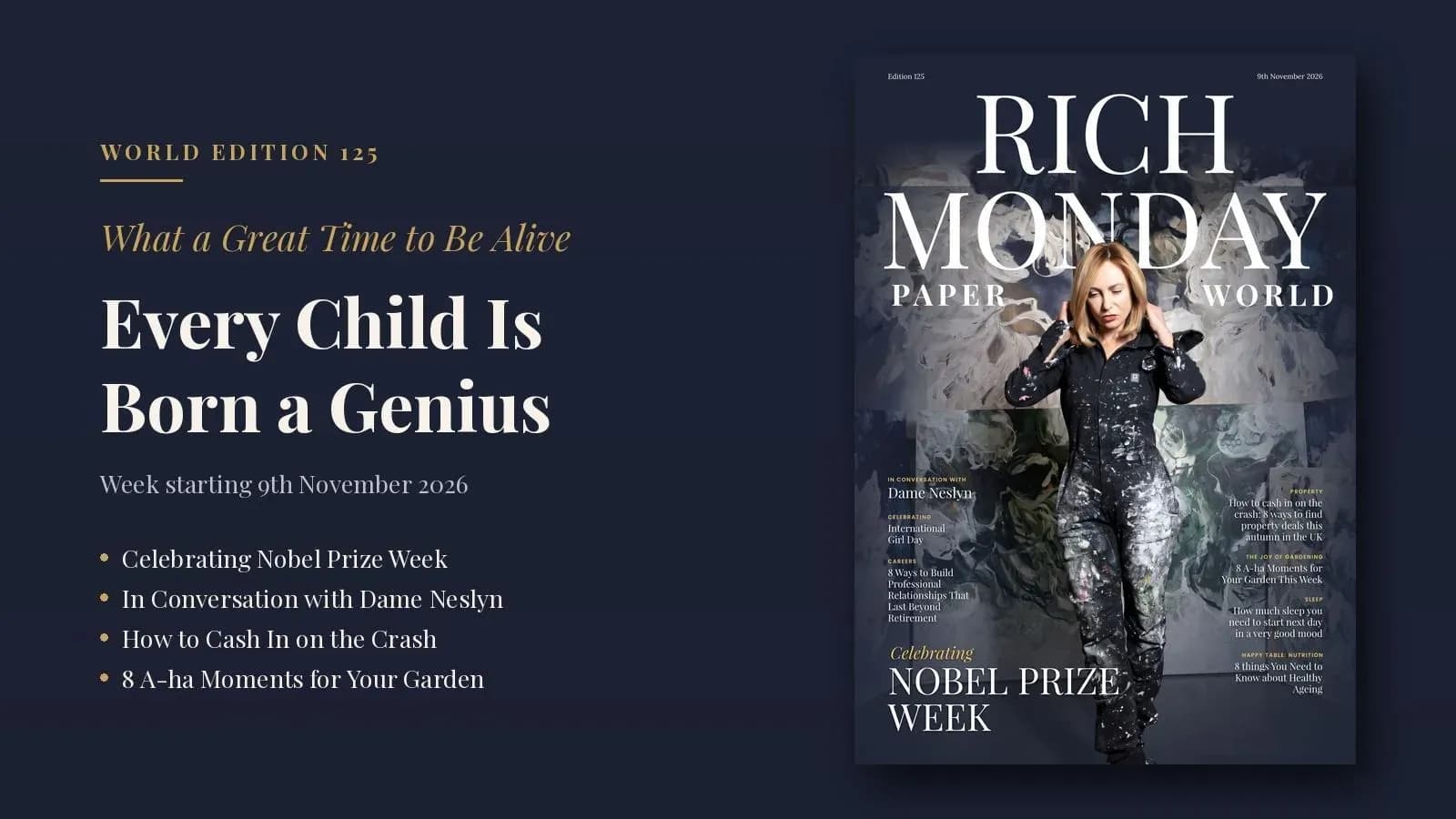
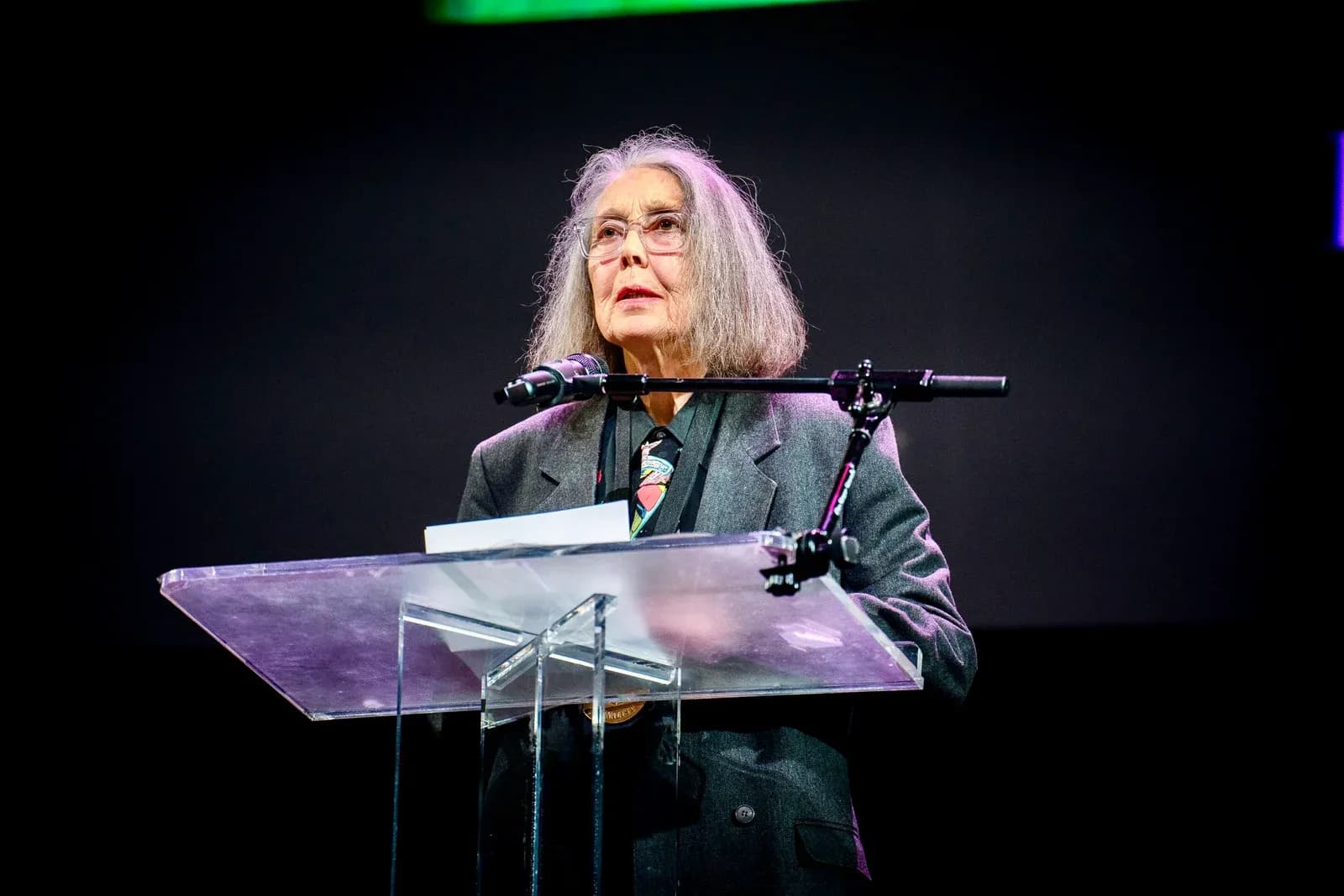
Navi Pillay's Nobel Peace Prize and the International Day of the Girl ask the same question: who decides what you are capable of? Dr Marina Nani on self-awareness and human potential.
What a Great Time to Be Alive: Every Child Is Born a Genius
By Dr Marina Nani
Dear Reader,
Two moments in October belong together. On Friday 9th October, Navi Pillay, an 85-year-old judge from South Africa, learned in a Nuremberg courtroom that she had won the Nobel Peace Prize. On Sunday 11th October, the United Nations marked the International Day of the Girl. One celebrates a life fulfilled. The other turns our attention to lives that have barely begun. Between them sits a question every one of us has had to answer: who decides what you are capable of?
Navi Pillay was born in Durban in 1941, the daughter of a bus driver. The country she grew up in had written her limits into law before she could read. It told her which schools, which jobs and which doors were meant for someone like her. She became a lawyer anyway. When no firm would hire her, she opened her own. For years she could defend a client in open court, yet she was not allowed into a judge's chambers. The first chambers she ever entered were her own.
Her life is not a story of luck. It is a story of self-awareness. Long before anyone gave her a title, she knew something about herself that the world around her refused to see. That knowledge did not make the closed doors disappear. It kept her knocking until they opened.
The International Day of the Girl speaks to every child standing at the start of that same story. Each of us, boy or girl, is handed a script early in life. You are the clever one, the difficult one, the practical one. You are not academic. You are not a leader. People like us do not do things like that. Most of these lines come from people who love us and mean well, and most of them are wrong. We carry them for decades all the same, and many of us never put them down.
This is the link I want you to see. Self-awareness and human potential are the two faces of one karmic coin, and the name stamped on it is progress. Potential is everything you could become. Self-awareness is the moment you notice the gap between who you really are and who you were told to be. Without that moment, your potential stays locked away, however great it is. With it, a bus driver's daughter becomes a judge in the world's highest courts.
The coin has a second turn. When you know your own worth, you start to see it in other people. Navi Pillay spent her life listening to people the world had ignored, and on the day of the announcement she dedicated her Nobel Prize to the survivors of the crimes she had worked to bring to justice. Self-awareness never stays private. It shapes how you treat the next person, and that is how one life ends up changing thousands.
So let me bring this home to you, whether you are a man or a woman, 25 or 75. Somewhere inside you there is a line from your childhood that you still believe. It might be 'I am not good with numbers', 'I am not the creative type' or 'it is too late for me now'. Ask yourself who first said it to you, and whether it was ever true.
Then look at the young people around you: your children, your grandchildren, the nephew who has stopped talking at family dinners, the new starter at work who never speaks up in meetings. Notice the scripts being handed to them. Replace one of them with the truth. Tell them what you actually see.
Navi Pillay is 85 and still sits on the bench. Her career did not begin with anyone's permission. It began with a young person who knew who she was. That same knowledge is open to you this week, at any age. Claim it for yourself, and then pass it on.
With gratitude,
Dr Marina Nani Editor-in-Chief, Rich Monday Paper
Me vs AI: The Seven-Year-Old, Arrow Travnick Singing About AI
By Dr Marina Nani
If you are raising a child today, you are raising someone who has never lived in a world without a machine that answers back. Children born from the early 2010s onwards ask the speaker in the kitchen to play their favourite song, watch cartoons picked for them by an algorithm and sit in classrooms where a chatbot can write a homework essay in seconds. Artificial intelligence is simply part of the house they grew up in.
The adults around them spend their evenings worrying about what all this will do. Parents ask which jobs will still exist in twenty years, teachers ask whether children will still learn to think for themselves, and every family fights its own battle over screens. The children at the centre of it are rarely asked what they think.
Arrow Travnick, a seven-year-old singer from Sydney, has answered anyway, with a pop song. Her debut single, Gen Alpha (Me vs AI), takes the biggest worry of her parents' generation and turns it into something you can dance to in a school hall. Her verdict on the technology is simple: AI can be super smart, and she is still the boss.
Getting there took a night of nerves. The night before she recorded her first song, Arrow sat on the floor of a hotel room in Bali and told her manager the truth. 'I don't think I'm ready for tomorrow,' she said.
She was six. Her manager, Amanda, gave her a big hug and told her it would be okay. Her vocal coach and director, Ms Kenny Febrina, was in the room too, and both women kept encouraging her through the evening. The next day Arrow stepped up to the microphone to record Gen Alpha (Me vs AI), a pop song about growing up with artificial intelligence, still feeling the weight of wanting to get it right. Somewhere in the first takes the fear loosened. 'Oh! I can do this!' she remembers thinking.
Halfway through the session, the power went out. The whole team sat and waited for the electricity to come back on before Arrow could carry on singing. A child who had spent the previous night convinced she would fail now tells the story as a comedy. 'It was a little crazy,' she says, 'but now it's one of the funny things I remember about recording my very first song.'
Arrow, now seven, is an Australian-Indonesian singer and performer based in Sydney. Gen Alpha (Me vs AI) is her debut single, released in September 2026 with an official music video. The track is published by Sony Music Publishing Indonesia and was made with the Indonesian creative and production company PT Lihat Dengar Rasakan (LDR), working mainly with producer David Elsandro and songwriter and musician Audree Dewangga. None of it was planned. On a family trip to Indonesia in December 2025, Arrow was scouted and invited to try recording original music.
A Children's Song About Artificial Intelligence
The song started with a remark that had nothing to do with music. Arrow's former school principal said that, with AI, she did not even know which jobs would still be around by the time children Arrow's age grew up. Arrow's mother heard it, and the comment stayed with her.
When the family later met David Elsandro, the producer suggested making a children's song for Arrow. Her mother already had a subject. 'My mum said, "What about Generation Alpha and AI?"' Arrow recalls. Elsandro found the idea interesting, she explains, since most children's songs are about family or friendship, while AI is already a big part of the world her generation is growing up in.
Arrow's father, Caleb Travnick, sees the gap between how adults and children experience the technology. 'Adults talk about AI all the time and whether it is good or bad, but for children Arrow's age, technology is simply part of the world they have been born into,' he says.
Arrow's own conclusion is more practical than most of what is written about her generation. She wants children, and grown-ups too, to know that AI 'can be really cool and helpful, but we still need to use our own brains, have our own ideas, be creative and be ourselves.'
“AI can be super smart… but I'm still the boss.”
— Arrow Travnick
Making the Gen Alpha (Me vs AI) Music Video
The music video was Arrow's first, and it nearly overwhelmed her before a single scene was shot. The production ran a workshop beforehand so she could practise everything, and one day it all became too much. 'I just started crying!' she says. 'I think I was feeling a bit overwhelmed.'
Filming day went the other way. 'I had so much fun,' she says, even with the constant call of 'Again, Arrow!' as the crew reshot scenes to get them right. Repetition used to be her least favourite part of the job. 'I used to hate repeating things, but now I'm much better at it!'
Parts of the video were made using AI, which Arrow thought was 'really cool'. She liked that a song called Me vs AI ended up working with AI to bring it to the screen. The choice fits her message neatly: Arrow is not against the technology, and she simply wants people to stay in charge of it.
Her parents saw the pressure building long before the cameras arrived. 'The production team, her manager and we as her parents were nervous too,' they say. 'Ultimately, a huge part of the production rested on the shoulders of a six-year-old.'
That feeling is familiar to them. Arrow started modelling at four, and she has since worked on children's campaigns across Asia, including for Le Petit Society in Singapore and for Terry Palmer and Zuma Sandals in Indonesia. In Australia she is represented for modelling and commercial work by Munchkins Talent Agency. Before every job, her parents have asked themselves the same things: will she cope with the pressure, take direction and deliver when it matters?
What they have watched grow is resilience. 'Arrow used to really dislike being corrected or asked to repeat something,' they say. 'Over time, she has learned that direction and discipline are simply part of getting better.' In the finished video, once the cameras were rolling, she relaxed and performed for the joy of it. 'For us, that was probably more important than getting every shot perfect.'
Piano, Dance and a Normal School Week in Sydney
Most of Arrow's recording and production work is scheduled for school holidays. The music video was the one exception, and she missed a week of school to fit the shoot. In a normal week she has piano, vocal and dance training after school or at weekends, and the rest of her time belongs to school, friends and family.
'Arrow is still a normal seven-year-old who goes to school, spends time with her friends and family and loves singing, dancing, fashion, arts and crafts, but she also has this incredible creative side that she absolutely loves exploring,' her father says.
The family is careful about how far ahead it looks. 'We aren't trying to map out an adult career for a seven-year-old,' Caleb Travnick says. Her parents want to support her passion, and they want her to enjoy being a child just as much.
Teaching a Young Performer the Value of Money
The Travnicks started teaching Arrow about money early. Every dollar she earns from modelling and music goes straight into her own savings, and her parents encourage her to find small ways to earn money herself. By their account, she once made around $700 selling Pop Mart collectibles, the designer toys sold in blind boxes that children and adults now collect and trade around the world.
For her parents, the point is for Arrow to learn early that money has value, and how to earn it, save it and make thoughtful decisions with it. If you have children of your own, the model is simple to copy: whatever they earn stays theirs, and the habit of saving it starts before the amounts get large.
Secret Songs With a Nineties Sound
Arrow is now working on five more original songs for a planned mini album, and the titles are staying secret for now. Each song looks at life through Gen Alpha eyes. Even familiar subjects such as school, friendship and growing up sound different, she says, when technology, pressure, games, AI, scores and screens are mixed into them.
She wants children her age to hear the songs and think, 'That's so me!' She also wants their parents to hear what her generation's world looks and feels like from the inside. To help with that, the music borrows the energy and sounds of the 1990s and early 2000s and gives them a Gen Alpha feel, so the children relate to the stories while the adults catch something they grew up with.
'The songs are still fun, but there's always something real behind them,' Arrow says. 'It's basically our Gen Alpha world turned into music.'
Her bigger dreams include becoming a K-pop idol and, one day, recording with Bruno Mars. Her father keeps those plans in proportion. 'Arrow is seven, so naturally her dreams may change many times as she grows up, but right now music and performing genuinely excite her and we want to support that in a healthy and positive way,' he says.
For now, the girl who sat on a hotel floor in Bali sure she was not ready has a released single, a finished music video and five new songs in progress. She has also learned to hear 'Again, Arrow!' as part of the job.
You can find out more about Arrow and her music at arrowtravnick.com.
In Conversation with Dame Neslyn: How Can We Build Prosperity Within the Planet's Limits?
By Dr Marina Nani
Each autumn, more than 60 scientists give the Earth a health check, and this year the results came back worse than ever recorded. Seven of the nine systems that keep the planet habitable are now outside their safe limits, and every one of those seven is moving in the wrong direction. Climate, ocean acidity, biodiversity, freshwater, land, the nitrogen and phosphorus cycles and the synthetic chemicals and plastics we release are all in the red. Only the ozone layer and, at a global level, the fine particles we put into the air remain inside safe limits.
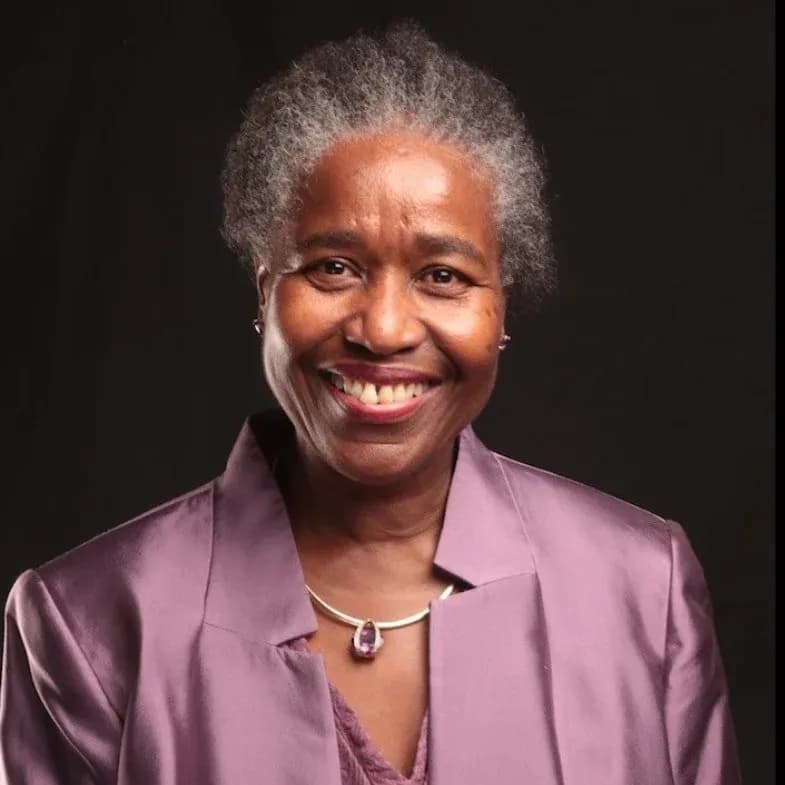
For you, these numbers arrive as supply chain disruption, rising insurance premiums, water shortages at your sites and higher food prices for your employees. I sat down with Dame Neslyn Watson-Druée DBE, Editor-in-Chief of Rich Monday Paper+ London Edition, former NHS Chair, business angel and author of From Impossible to Possible, to talk about the question that now sits on every serious board agenda.
Seven abnormal results on one patient's chart
AI in Schools: Has Anyone Tested It on Children?
By Dr Marina Nani
Before a new medicine reaches a child, it has to clear a long series of hurdles. Researchers first check it is safe in a small group, then whether it works, then run large randomised trials over months or years. Since 2007, European rules have also required companies to submit a separate paediatric plan: children are not small adults, and a drug that suits a 40-year-old can behave differently in a nine-year-old. After approval, doctors and parents keep reporting side effects through systems such as the UK's Yellow Card scheme, so problems that only show up in large numbers can be caught.
Generative AI went through none of this. ChatGPT launched at the end of 2022, and within four years it had become part of childhood. A Common Sense Media census published in June 2026 found that 86% of American children aged 9 to 17 use or interact with AI, and that 24% do so every day. The same survey found that more than eight in ten young users turn to it for schoolwork.
So it is fair to ask the question a doctor would ask about any new treatment. Has it been tested on children, at the doses they are taking, for long enough to know what it does? And if there are side effects, is anyone collecting the reports?
What the trial record looks like
In March 2026, researchers at Stanford University's SCALE Initiative published the most thorough audit so far of the evidence on AI in schools. They found more than 800 academic papers on AI in primary and secondary education. Only 20 met the standard for strong causal evidence, meaning a randomised trial or a comparable design that can show a tool caused a change rather than merely coinciding with one. None of those 20 studied pupils using AI in American school classrooms. Most of the student studies involved learners over 18, settings outside the United States, or short, controlled sessions. The review also found almost no rigorous research on what AI does to equity, wellbeing or social development.
In medical terms, that is a treatment with promising early-phase results and no large paediatric trial. The early results deserve attention, though: they point in two directions at once.
The most cited trial took place at a large high school in Turkey during the 2023 to 2024 school year. Researchers from the University of Pennsylvania gave nearly 1,000 maths students one of three things during practice sessions: a plain GPT-4 chat window, a version of GPT-4 set up as a tutor that gave hints rather than answers, or no AI at all. With the plain chatbot, students solved 48% more practice problems than the control group. When the AI was taken away for the exam, they scored 17% worse. The tutor version lifted practice scores by 127% and left exam results level with the control group, so it did no harm, but it did not add learning either. Students in both AI groups believed they had learned more than they had.
A World Bank trial in Edo State, Nigeria, produced the opposite headline. Secondary school pupils aged roughly 12 to 17 attended a six-week after-school programme twice a week, using Microsoft Copilot as a tutor under teacher guidance, with prompts tied to the curriculum. They outperformed the control group by about 0.3 standard deviations, which the World Bank equates to roughly 1.5 to 2 years of typical schooling. The authors are careful to say the result belongs to the whole package of teachers, structured prompts, peers and AI, and that they cannot isolate the effect of the chatbot alone.
The OECD read the emerging research the same way in its Digital Education Outlook 2026, published in January. General-purpose chatbots tend to improve the work students hand in, and the advantage tends to disappear, or reverse, once the tool is removed. Tools built with a teaching purpose, and used under a teacher's direction, show more lasting gains. The OECD warned of what researchers call metacognitive laziness, where pupils stop monitoring their own understanding while something else does the thinking. It recommended that children develop skills first without AI, then with educational AI, and only then with general-purpose tools.
The study that alarmed parents most, from the MIT Media Lab in June 2025, recorded brain activity with EEG caps while 54 people wrote essays with ChatGPT, with a search engine or with no help. The ChatGPT group showed the weakest connectivity across brain networks and had trouble quoting what they had just written. The study was small and was released as a preprint before peer review, and its authors warned against reading it as proof of brain damage. Its participants were also university-age adults. Nobody has run the equivalent study on a ten-year-old.
Norway decided the trial had not been run
On 19th June 2026, Norway's Prime Minister, Jonas Gahr Støre, announced national recommendations that Reuters described as a near ban on generative AI for primary school pupils. From the school year that began in late August, children in grades one to seven, aged 6 to 13, are as a rule not given access to generative AI in their schoolwork. Pupils aged 14 to 16 may begin to use it gradually and carefully, and only once their teachers have been trained. Students aged 17 to 19 are taught to use it well, to prepare them for university and work.
'The most important thing in school is that our children learn to read, write and do mathematics,' Støre told reporters in Oslo. The government's statement argued that the youngest pupils do not yet have the knowledge, critical reflection or self-control needed to use AI well, and that uncritical use makes it more likely they will skip steps in learning that cannot be skipped. It also promised a law obliging municipalities to provide physical books in classrooms, and said previous governments had given digital media too much weight.
The decision makes more sense against Norway's own history. The country put computers into classrooms in the 1990s and replaced many textbooks with tablets after 2010. In its June statement the government said one in four Norwegian pupils now reads below the minimum the OECD considers necessary for further education and work. The PISA results published on 8th September 2026 then showed Norway's reading score falling 24 points since 2022, to its lowest level since the tests began, with maths also down. The OECD added a note that Norway had excluded 10.4% of eligible students from testing, above the permitted limit, which may have flattered the result.
Norway had already tried one withdrawal. In 2024 it banned smartphones from schools, by which time research by the economist Sara Abrahamsson of the Norwegian Institute of Public Health had caught politicians' attention. She tracked more than 400 middle schools that had brought in bans at different times. Girls at schools with bans made far fewer visits to specialists for psychological symptoms, a fall of almost 60% compared with before the ban, and bullying fell for both girls and boys. Girls from poorer homes gained most in grades. The study found no change in how many pupils were actually diagnosed with a condition, so the effect is better read as fewer consultations and less bullying than as a cure for anxiety. It was still enough to persuade politicians that taking a device out of the classroom could do measurable good.
New York City reached a similar conclusion three months later. On 2nd September 2026, Mayor Zohran Mamdani announced a one-year moratorium on all student-facing generative AI for pupils up to eighth grade, about 600,000 children, in the largest school system in the United States. Companion chatbots are banned in every grade, the city recommended daily screen time limits of 30 minutes for pupils in grades three to five and 45 minutes for grades six to eight, and a task force will report during the year. Los Angeles, the second largest district, is blocking generative AI on student devices while it writes a policy. Josh Golin of the children's advocacy group Fairplay argued that the burden of proof belongs with the AI companies, and that 'a year to evaluate is not nearly enough time.'
China teaches AI to six-year-olds but will not let them use it alone
China is usually presented as Norway's opposite, and on the surface it is. In November 2024 the Ministry of Education told primary and secondary schools to build AI into the curriculum, and Beijing made at least eight hours of AI teaching a year compulsory in its schools from autumn 2025, starting with six-year-olds. In April 2026 the ministry set a target of a complete AI education system across every stage of schooling by 2030.
Read the detail, though, and the two countries are closer than they look. Guidelines the ministry issued in May 2025 bar primary school pupils from using open-ended generative AI tools on their own. Teachers may use AI to help them teach, but are forbidden from handing their core teaching role to it, and pupils may not copy AI-generated content into homework. Middle school pupils may explore how generative AI reasons, and only in high school are students allowed to use it more broadly. The stated reason is the same one Oslo gave: to stop children weakening their capacity for independent thought by leaning on the machine too early.
The real difference is between learning about AI and learning with it. China wants every child to understand what AI is, how it works and how to build it, and treats AI skills as a matter of national strength. It does not want a ten-year-old's homework written by a chatbot. Norway prefers to postpone both. Both governments, in other words, have reached the same view of a young child's mind, and disagree only about when to start the lessons.
The countries pressing ahead
Other governments have moved faster. The United Arab Emirates made AI a formal subject in all public schools from kindergarten to grade 12 in the 2025 to 2026 school year, with about 1,000 teachers delivering it. The youngest children meet AI through stories, play and visual activities. In the United States, President Donald Trump signed an executive order on 23rd April 2025 calling for AI to be integrated into education and for children to be exposed to AI concepts early, to build what the order calls an AI-ready workforce.
Estonia has tried to have it both ways. Its AI Leap programme started with teachers, who were trained from August 2025, and only gave students a purpose-built learning application from January 2026. It covers upper secondary pupils, about 20,000 of them in 154 of the country's 156 upper secondary schools, rather than young children. The Estonian government's own reasoning is that the experiment was already running without permission: before the programme began, between 64% and 90% of Estonian pupils in grades six to twelve were using AI. In the PISA results published in September, Estonia ranked first in Europe and sixth in the world.
England sits between these camps. The Department for Education published its first guidance on AI in schools in June 2025, focused mainly on cutting teachers' paperwork, and has announced trials of AI tutoring tools for disadvantaged pupils in secondary schools. The statutory safeguarding guidance that took effect on 1st September 2026 now lists generative AI among the online risks schools must manage.
South Korea recalled its AI textbooks after four months
The closest thing to a product recall has already happened. South Korea introduced AI-powered digital textbooks in March 2025 for English and maths in the third and fourth grades of primary school and for several subjects in secondary schools. Privacy International put the public cost at more than 1.2 trillion won, about £650 million. Teachers and pupils reported software failures, factual errors and lessons disrupted by glitches. On 4th August 2025 the National Assembly passed a law redefining a textbook as a printed or electronic book, which stripped the AI versions of their official status and funding. By then only about 30% of schools were using them.
South Korea's experience shows the cost of skipping the trial stage, both for children and for the companies that built the product. Publishers who had invested heavily said the policy had been reversed within a few years.
Why a young brain reacts differently
The psychology behind the age limits is older than ChatGPT. The researchers Robert and Elizabeth Bjork showed decades ago that learning sticks best when it involves what they called desirable difficulties: having to recall something rather than reread it, working out an answer rather than being handed it, spacing practice out rather than cramming. The effort is the mechanism. A tool designed to remove effort can therefore make work look better while leaving less behind in the learner's memory, which is exactly the pattern the Turkish trial recorded.
Children are also still building the capacities they would need to use AI wisely. The parts of the brain that handle planning, self-control and judging whether information is reliable keep developing well into the teenage years. That developmental timetable sits behind Norway's ages, and behind UNESCO's 2023 guidance, which suggested 13 as a minimum age for AI tools in the classroom and urged schools to validate any system before pupils used it.
Then there is the relationship children form with the machine. In a study posted in December 2025, psychologists at the University of Denver and Ewha Womans University in Seoul watched 23 children aged five and six tell stories with an animated chatbot, with a parent, and with both together. The children credited the chatbot with being able to see, hear and know things, and 42% said they would rather tell stories with the AI alone next time. Brain scans showed different activity in the area linked to reading other minds when the parent was in the room, which suggests that a trusted adult changes how a small child makes sense of a talking machine.
The Harvard researcher Ying Xu, who has spent years testing AI reading companions with young children, has found that a well-designed system which reads a story aloud and asks the child questions can improve comprehension about as much as an adult reading partner. She has also argued that such results do not show AI can replace the real conversations children have with the people around them. Those conversations do more than teach vocabulary. They teach a child how to take turns, read a face and repair a misunderstanding.
Older children show the attachment risk more clearly. In Common Sense Media's 2025 survey of 1,060 American teenagers, 72% had used an AI companion, and about a third had chosen to discuss something serious with one instead of with a person. Younger teenagers trusted the advice more than older ones. The 2026 census found that lonelier children used AI more often, and that among children who use it for homework, 16% said they struggle to start or finish homework without it.
The side effects nobody is recording
Medicine has a name for what happens after a product is approved: pharmacovigilance. Every unexpected reaction is reported and counted, so that a rare harm hidden in a trial of a few thousand people becomes visible across millions.
Nothing comparable exists for AI used by children. The Common Sense census found that one in six children who had used chatbots had seen something they felt was not meant for someone their age, and that most never told a trusted adult. Only about a third knew that AI cannot reliably tell fact from fiction. When the harms have been serious, they have surfaced through lawsuits and journalism rather than through any reporting system. Character.AI, one of the most popular companion apps with teenagers, ended open-ended chats for users under 18 from 25th November 2025, saying it had acted after reports and feedback from regulators, safety experts and parents.
Where the drug comparison breaks down
The comparison has limits, and the people who favour faster adoption make them well. Schools have never put textbooks, calculators, phonics schemes or the internet through drug-style trials, and children learned with all of them. Medicine itself also counts the cost of delay: a treatment held back for years of testing can harm the people who needed it while they wait. The Nigerian results suggest that for children in under-resourced schools, a teacher-guided AI tutor may be one of the cheapest ways to deliver extra learning yet found. Holding it back would carry a cost.
There is also the problem that, unlike a prescription drug, AI does not need a doctor to hand it out. Children already have it on their phones, at home, whatever their school decides. Estonia's view is that a school that refuses to teach AI does not stop children using it, it only stops anyone showing them how to use it well. China's view is that a country which waits will fall behind.
What the comparison does capture is the order in which things happened. The tools reached children first and the studies followed, and the studies that exist mostly involve older students, short periods and a single subject. Norway, New York and, in its own way, China have drawn the same practical line: teach children about AI if you like, but let young children build their reading, writing and reasoning with their own minds before handing them a machine that can do it for them. Whether that line sits at 12, 13 or 14 is a question the long-term trials have not yet answered. Nobody has run them.
What parents can ask their child's school
Parents do not need to wait for those trials to ask useful questions. Which AI tools do pupils use, at what age, and were they built for learning or are they general chatbots? Does a teacher direct the use, or are children left alone with it? Is homework designed so that the thinking still has to be done by the child? And if a child sees something upsetting from an AI tool, who should they tell, and does anyone keep a record?
Frequently asked questions
Should children use ChatGPT for homework?
Most researchers advise against children using a general-purpose chatbot such as ChatGPT to complete homework, particularly at primary school age. Trials show that chatbots help pupils produce better answers while they have access, but that pupils often perform worse in tests once the tool is removed: the effort that builds memory and understanding has been skipped. OpenAI's own terms require users to be at least 13, with parental consent for under-18s. Where AI is used, it works best as a tutor that gives hints and asks questions, under the guidance of a teacher or parent, after the child has first tried the task alone.
Why is Norway banning AI in primary schools?
Norway announced in June 2026 that pupils in grades one to seven, aged 6 to 13, should as a rule not be given access to generative AI in school, starting from the 2026 to 2027 school year. The government said young children need to learn to read, write and do mathematics first, and that they lack the knowledge, critical judgement and self-control to use AI well. Norway has seen falling results in international tests such as PISA and PIRLS. Pupils aged 14 to 16 may use AI gradually under trained teachers, and students aged 17 to 19 are taught to use it appropriately.
What is desirable difficulty in learning?
Desirable difficulty is a term from the psychologists Robert and Elizabeth Bjork for learning conditions that feel harder in the moment but lead to stronger long-term memory and understanding. Examples include testing yourself instead of rereading, spacing practice over days instead of cramming, mixing different types of problem, and working out an answer before being shown it. The extra effort helps the brain store and retrieve knowledge. Tools that remove the effort entirely can make learning feel easier while reducing how much is retained.
Is AI bad for children's brain development?
There is not yet enough long-term research on children to give a firm answer. Small studies in adults have found lower brain engagement when people write with a chatbot's help, and trials with teenagers show that relying on AI during practice can reduce what they learn. Researchers are most concerned about young children, whose capacities for self-control, attention and judging reliable information are still developing, and about the time AI may take away from conversation with adults and other children. Well-designed AI tools used with a teacher or parent have shown learning benefits in some studies.
International Day of the Girl: End child marriage and invest in girls' rights
By Dr Marina Nani
An estimated 68 million child marriages have been averted over the past 25 years, according to the United Nations and UNICEF. Over the same period the share of girls married before their 18th birthday has fallen from one in four to one in five, on figures from the UNFPA-UNICEF Global Programme to End Child Marriage.
Today, 11 October, is the International Day of the Girl, and the theme for 2026 is "End child marriage and invest in girls' rights". The UN says it came out of consultations with girls, girls' organisations and girl-led networks, along with civil society groups and UN partners, who called for urgent action on child marriage.
More than 12 million girls are still married before 18 every year, roughly one every three seconds, and on UNICEF's 2026 estimates about 650 million women and girls alive today were married as children. The UN credits the progress so far to investment in girls' education, legal reform and social protection. Taken further, the same approach would end it: a legal marriage age of 18 with no exceptions, girls kept in school, and steady money for the programmes that reach them.
South Asia and India Drove the Fall in Child Marriage
When UNICEF reported a sharp decline in 2018, most of it came from South Asia. A girl's risk of marrying before 18 there had dropped from nearly 50 per cent to 30 per cent in a decade, in large part because of progress in India. UNICEF put the change down to more girls in education, government investment in adolescent girls and strong public messaging that child marriage was illegal and harmful. Ethiopia, once among the five countries in sub-Saharan Africa with the most child marriage, cut its rate by a third over the same ten years.
UNICEF's 2023 analysis found South Asia still driving the global decline and on course to end child marriage in about 55 years. The region was also still home to 45 per cent of the world's child brides, and India alone accounted for a third of the global total.
In November 2025 the Global Programme, writing with the global partnership Girls Not Brides and the Girls First Fund, attributed the 25-year fall to targeted programmes for girls and their communities, rising incomes, and public spending on education and poverty reduction.
Sub-Saharan Africa Has the Highest Child Marriage Rate, at 31 Per Cent
Child marriage prevalence in sub-Saharan Africa stands at 31 per cent, the highest of any region, the UN says. UNICEF's 2023 analysis put the region more than 200 years from ending the practice at the pace it was then moving, with rapid population growth and repeated crises expected to push the number of child brides up there while numbers fell elsewhere. Latin America and the Caribbean was falling behind as well, on course for the second-highest regional level by 2030.
Girls in fragile settings were twice as likely as the average girl to become child brides, UNICEF found in 2023. For every ten-fold increase in conflict-related deaths, the number of child marriages rose by 7 per cent, and the Covid-19 pandemic had already cut the number of marriages averted since 2020 by a quarter.
Child marriage among boys runs at one sixth of the rate among girls, according to UNICEF, and nearly one in four girls aged 15 to 19 who have ever been married or had a partner have experienced intimate partner violence.
At the global level, UNICEF calculated in 2023 that reductions would have to be 20 times faster to meet the Sustainable Development Goal of ending child marriage by 2030.
A Marriage Age of 18 With No Exceptions Closes the Parental Consent Route
Several countries that have changed their laws in recent years had allowed children younger than 18 to marry with a parent's consent. The newer laws remove that route, and some also cover informal unions, which UNICEF's figures count alongside formal marriages.
Colombian law, in effect since 1887, allowed children to marry from 14 with their parents' consent. Law 2447 of 2025, passed after nearly two decades of debate and nine bills, bans any marriage or de facto union in which either partner is under 18. Colombia ranks 20th in the world for the number of girls married or in unions before the age of 15, UN News reported when Congress approved the bill. "Child marriages and early unions are understood as harmful practices that not only lead to gender violence but also cause the victims, especially girls, to fall into poverty," Andrea Tague Montaña, gender and development officer at UNICEF in Colombia, told UN News.
Sierra Leone's Prohibition of Child Marriage Act 2024 sets the minimum age for marriage "of whatever kind" at 18 and amends the Christian, Muslim and civil marriage laws to match. It repeals parts of the 2009 law on customary marriage, forbids parents and guardians to consent to a child's marriage, and also bans cohabiting with a child. Marrying a child is punishable by at least 15 years in prison, a fine, or both, and anyone who conducts or attends the ceremony also commits an offence. Anyone married as a child before the Act can petition to have the marriage annulled, and a judge can order the adult spouse to pay compensation.
England and Wales raised the minimum age to 18 on 27 February 2023, ending marriage at 16 and 17 with parental consent. It is now a criminal offence, carrying up to seven years in prison, to cause a child to marry in any circumstances, including in a "traditional" ceremony that is not legally binding. The Act covers England and Wales only, because marriage law is devolved. In 2021 the government's Forced Marriage Unit gave advice or support in 118 cases involving victims under 18.
Keeping Girls in School Lowers Their Risk of Marrying Young
Girls who marry before 18 are less likely to stay in school, UNICEF says, and the 2025 Global Programme brief describes the same link in the other direction: programmes that keep girls in school longer reduce their likelihood of marrying young. The UN puts the number of girls out of school at 133 million, and almost four in ten adolescent girls and young women do not finish upper secondary school. Girls aged 15 to 19 are twice as likely as boys to be out of education, employment or training, UNICEF says. In fragile and conflict-affected countries, girls are nearly 90 per cent more likely to be out of secondary school than girls in stable ones, which raises their risk of child marriage.
“We've proven that progress to end child marriage is possible. It requires unwavering support for vulnerable girls and families.”
— Catherine Russell, UNICEF Executive Director, May 2023
Catherine Russell said this when UNICEF published its 2023 analysis, and added: "We must focus on keeping girls in school and making sure they have economic opportunities." The Global Programme, which UNICEF and UNFPA launched in 2016, supported nearly 9.8 million adolescent girls to enrol in, return to or stay in school in 2025, and reached more than 7.3 million with life skills training or comprehensive sexuality education.
Aid Cuts Left the UN Child Marriage Programme Targeting 4 Million Fewer Girls in 2025
The Global Programme's November 2025 brief says major donors have cut development and humanitarian aid since early 2025, and that targeted funding to end child marriage had been falling steadily since 2019. In 2024 the programme received $21.1 million from its donors against a fundraising target of $37.4 million, 56 per cent of what was planned. It reached 16 million girls with empowerment programmes that year and had to target 4 million fewer in 2025.
In Ethiopia, UNICEF partnerships funded by the programme were reduced in the Gambella and Somali regions, some local organisations closed their operations in parts of the country, and a voice-response phone service that gave information to girls at risk and support to victims was shut down. More girls dropped out of school as a result, the brief says.
The brief calls on donors to protect targeted funding to end child marriage and, where they can, increase it. It also calls on governments to commit their own budgets to prevention and to adolescent girls, and on philanthropic foundations to make girls a central priority in their giving.
Despite the cuts, the programme reported that more than 14 million people took part in community discussions on child marriage and girls' rights in 2025, and that several of the countries where it works recorded declines in child marriage.
FAQ
What is the theme for International Day of the Girl Child in 2026?
The 2026 theme is "End child marriage and invest in girls' rights". It was developed through consultations with girls, girls' organisations and girl-led networks, together with civil society organisations and UN partners, who called for urgent action to end child marriage. It comes after 25 years in which an estimated 68 million child marriages were averted, while more than 12 million girls a year are still married before 18.
What is the purpose of the International Day of the Girl Child?
The UN General Assembly adopted resolution 66/170 on 19 December 2011, declaring 11 October the International Day of the Girl Child to recognise girls' rights and the particular challenges girls face around the world. The day focuses attention on those challenges and on girls' empowerment and human rights. It builds on the 1995 Beijing Declaration and Platform for Action, the first such declaration to call out girls' rights specifically.
How to celebrate International Day of the Girl?
The UN asks people to speak up for girls' rights, support the measures that keep girls in school and safe, especially in crises, challenge the customs that keep child marriage going, press for laws, policies and investment that prevent it, and make sure girls have a say in decisions that affect their lives. In practice that can mean giving to organisations that work with girls at risk of child marriage, writing to an elected representative about aid for girls' education, or sharing girls' own accounts of their lives.
Brexit Has Countless Victims and Nobody Has Been Held Responsible
By Dr Marina Nani
On 23rd June 2016, Britain was sold a promise painted on the side of a bus. Ten years later, the whole country is still paying for it. The people who sold that promise have not paid a penny.
The Cost of Brexit to Britain
The damage is now measured rather than guessed. Economists at the US National Bureau of Economic Research found in November 2025 that Brexit had left UK GDP 6 to 8 per cent lower than it would have been inside the European Union, with investment down 12 to 18 per cent. Britain's own fiscal watchdog, the Office for Budget Responsibility, expects the post-Brexit trading relationship to cut long-run productivity by 4 per cent. We set out the full range of estimates earlier this year, and every serious study points the same way.
53 Days to a New Year: 8 Small Hinges That Swing Big Doors
By Dr Marina Nani
There are 53 days left of 2026. Most people wait for 1st January to change something, then try to change everything at once, and by February the resolutions have gone. You can start now instead, with changes so small that they cost you nothing and fit into the day you already have.
A door weighs far more than the hinge it swings on, yet the hinge does the work. Your mood, your energy and your patience work the same way. A few minutes of light, a few minutes of stillness and one kind act each day move far more of your life than their size suggests.
This week the whole world is turning in the same direction. The Moon is new on Monday 9th November, bringing the darkest nights of the month and the start of a new lunar cycle. The same day, the UN climate conference opens in Antalya, with delegates from almost every country meeting about a future they share. On Wednesday 11th November, millions of people fall silent at 11am for Armistice Day. On Friday 13th November, people around the world mark World Kindness Day. Each of these moments points to one of the routines below.
Morning Light Within an Hour of Waking
Your body clock resets every morning with daylight. Bright outdoor light soon after waking tells your brain the day has started, lifts your alertness and helps you fall asleep more easily that night. In London this week, daylight lasts about nine hours and shrinks by around three minutes a day.
Step outside for ten minutes before 10am, even on a grey day. Overcast winter daylight is still many times brighter than a well-lit room. Drink your coffee by an open door, walk to the shop or take the long way to the station.
Two Minutes of Silence a Day
On Wednesday at 11am, the country stops for two minutes. Those two minutes show you how rarely you sit without input. Silence gives your nervous system a short break, slows your breathing and lets your attention settle.
Keep the habit after Wednesday. Choose a fixed moment, such as before you open your laptop or after you park the car, and sit for two minutes with no phone, no music and no task. Breathe out for longer than you breathe in.
One Act of Kindness Each Day
Doing something kind for another person lifts your own mood. Your brain releases chemicals linked to warmth and connection, your stress eases, and the effect lasts longer than most treats you could buy yourself.
Start on World Kindness Day and keep going for the 48 days of the year that follow it. Write a thank-you note, let someone go first, pay a compliment you mean, or call the person you keep meaning to call. Make it specific and make it daily, and kindness becomes part of who you are.
A Ten-Minute Walk Outside
A short walk lowers stress hormones, lifts mood and clears your thinking, and a walk among trees or by water does more than the same walk on a busy road. You do not need a long hike. Ten minutes at a brisk pace is enough to feel the difference.
Fix the walk to something you already do: after lunch, after the school run or before your evening meal. If you can, walk without headphones and notice the season changing around you.
Three Good Things Before Sleep
Your brain notices problems more readily than pleasures. Writing down three good things that happened during the day trains your attention to see what went right, and people who keep the habit for a few weeks report feeling happier and sleeping better.
Keep a notebook by your bed. Each night, write three small things and why each one happened. A good conversation, a meal you enjoyed or a job finished all count.
One Phone-Free Meal a Day
A phone on the table divides your attention, even when it stays face down. Meals eaten together without screens lead to better conversation, slower eating and more enjoyment of your food.
Choose one meal a day and leave every phone in another room. If you eat alone, eat at the table rather than at your desk, and give the meal your full attention.
Listening Without Planning Your Reply
Most people listen while they prepare what to say next. Real listening, where you follow the other person's words and ask a question about what they said, makes them feel understood and makes you calmer.
Choose one conversation each day for full listening. Look at the person, let them finish, and ask a follow-up question before you share your own view.
The Same Bedtime Every Night
Your body clock likes regular hours. Going to bed and waking at the same time, including at weekends, gives you deeper sleep and steadier energy than an occasional long lie-in.
Pick a bedtime that gives you seven to nine hours and set an alarm to remind you to start winding down an hour before. Dim the lights, put screens away and let the house slow down with you.
At a Glance
Days left of 2026 on Monday 9th November: 53
Morning light: ten minutes outside before 10am
Silence: two minutes a day, starting with Armistice Day at 11am on Wednesday
Kindness: one act a day, starting with World Kindness Day on Friday
Walking: ten brisk minutes outdoors
Evenings: three good things in a notebook, and the same bedtime every night
The Good Mood Formula: How Much Sleep You Need to Start Tomorrow Happy
By Dr Marina Nani
You know the feeling. After a short night, small things irritate you, the inbox feels heavier and your patience runs out by mid-morning. That is not weakness or a bad attitude. It is your brain doing exactly what a tired brain does. The good news is that the science of sleep and mood is clear enough to give you a practical formula. Here is how much sleep you need to start the next day in a good mood, and how to get it as the nights draw in.
Seven to Nine Hours for Most Adults
The NHS says most adults need between seven and nine hours of sleep a night. If you are over 65, seven to eight hours is usually enough. Within that range, your personal need is fixed by your biology, not by your willpower, and it does not shrink with practice.
A very small number of people carry rare gene variants that let them thrive on six hours or less. They make up well under 1% of the population. If you regularly sleep less than seven hours and feel fine, the next point explains why you are probably mistaken.
The formula starts here: aim for at least seven hours of actual sleep, not seven hours in bed.
You Are a Poor Judge of Your Own Tiredness
When volunteers in a sleep laboratory were limited to six hours a night for two weeks, their reaction times and concentration fell as low as people kept awake for one or two nights in a row. The surprising part came when the volunteers rated how they felt. Most reported feeling only slightly sleepy. Their performance kept falling, but their sense of tiredness levelled off after a few days.
This is why so many people believe they have adapted to short sleep. You stop noticing the cost, but you keep paying it, and the people around you often notice it in your mood before you do.
The lesson: if you sleep six hours and feel fine, treat that feeling with suspicion.
A Tired Brain Turns Up the Volume on Bad News
Deep in your brain sits the amygdala, a small region that reacts to threats and upsetting events. Normally, the front of your brain keeps it in check, like a calm manager steadying an anxious colleague. After a night without sleep, brain scans show the amygdala reacting around 60% more strongly to unpleasant images, while its connection to the calming front of the brain weakens.
You do not need to stay up all night to feel a smaller version of this. Even a run of short nights makes you quicker to snap, slower to see the funny side and more likely to read a neutral message as a criticism.
The lesson: a bad mood after a short night is biology, not a verdict on your life. Do not make big decisions or send difficult emails when you are short of sleep.
The End of the Night Does the Most for Your Mood
Sleep runs in cycles of around 90 minutes, and you pass through four to six of them each night. The cycles are not identical. Early in the night, your sleep is heavy with deep sleep, which restores your body. Later in the night, the cycles contain more REM sleep, the dreaming stage.
REM sleep works like overnight therapy. During REM, your brain replays the emotional experiences of the day while levels of a stress chemical called noradrenaline fall close to zero. You keep the memory, but its emotional sting softens. That is why a problem that felt overwhelming at bedtime often feels manageable in the morning.
This has a practical consequence. If you go to bed late and wake up early, you lose the end of the night, and the end of the night is where most of your REM sleep happens. Cutting your sleep from eight hours to six removes a quarter of your sleep, but a much larger share of your REM.
The lesson: protect the end of your night. An early night does more for your mood than a lie-in that clashes with your alarm.
Your Bedtime Is Arithmetic
You can find your personal sleep need with a simple test. On a holiday, once you have recovered from any sleep debt, go to bed at the same time every night without an alarm. After a few days, the time you wake up naturally shows you how much sleep your body needs.
Then do the sum. Most people take 10 to 20 minutes to fall asleep. If you need seven and a half hours, the length of five full cycles, and you need to get up at 6.30am, your lights should go out at about 10.45pm. Waking at the end of a cycle, rather than in the middle of deep sleep, can also help you feel less groggy in the first half hour.
The lesson: your bedtime is not a matter of mood. It is arithmetic.
Keep the Same Wake-Up Time, Even at Weekends
If you sleep until 10am on Saturday and Sunday, your body clock drifts later, as if you had flown a couple of time zones west. When the Monday alarm goes off, your body clock is still set to the middle of the night. Researchers call this 'social jet lag', and it explains a good part of the Monday morning blues.
Your body clock likes regular habits more than anything else. A steady wake-up time, seven days a week, is one of the most effective ways to wake up feeling bright. If you need to recover from a short week, go to bed earlier rather than sleeping in, and keep any lie-in to about an hour.
The same applies to the snooze button. Snoozing breaks the final, REM-rich part of your sleep into short, light fragments. If you regularly hit snooze, set the alarm for the time you actually get up.
The lesson: guard Sunday morning, and Monday morning will thank you.
Daylight Within an Hour of Waking
Your body clock resets every morning, and light is its main signal. Morning light signals to your brain that the day has started, helps you feel alert and also times the release of melatonin, the hormone that makes you sleepy, for the following evening. Good mornings start the night before, and good nights start the morning before.
This matters more than ever this week. In London, daylight shrinks from 9 hours and 12 minutes on Monday 9th November to 8 hours and 53 minutes by Sunday 15th November, and it will keep shrinking until the winter solstice. Even a grey British morning is many times brighter outdoors than a well-lit room indoors. A 10 to 20 minute walk, a coffee by an open door or a cycle to work all count.
The lesson: step outside within an hour of waking, whatever the weather.
Set the Stage in the Evening
Three habits do most of the damage to a good night.
Caffeine blocks the chemical that builds up sleep pressure through the day, and it lingers. Around half the caffeine in your afternoon coffee is still in your body five to six hours later. Have your last cup by early afternoon.
Alcohol helps you fall asleep faster, but as your body breaks it down in the second half of the night, your sleep becomes lighter and broken, and you lose REM sleep. A nightcap borrows from tomorrow's mood. With the party season approaching, this one is worth remembering.
Heat keeps you awake. Your body temperature needs to drop for you to fall asleep, and a bedroom of around 16°C to 18°C helps. Resist the urge to turn the heating up at bedtime. A warm bath an hour or two before bed also helps, oddly enough. It draws blood to your skin, and your core temperature falls afterwards.
The lesson: finish caffeine early, go easy on alcohol, and keep your bedroom cool.
Your Sunday Night Formula for a Happy Monday
Put it together, and the formula fits on a sticky note. Aim for seven to nine hours of sleep, protect the final 90 minutes, keep your wake-up time steady, get daylight early, and stop caffeine after lunch.
There are 53 days left of 2026. Start the formula this week, and you will reach the new year rested rather than running on empty, with a better mood to carry you into January.
If you regularly sleep seven to nine hours and still wake up exhausted or low, or if you snore heavily, struggle to fall asleep most nights or feel low for more than a couple of weeks, speak to your GP. Sleep and mood problems are common, and both respond well to help.
The New Science of Humour: How You Can Use Laughter to Lead Your Team
By Dr Marina Nani
The more often a manager jokes with staff, the more those staff fake their laughter, and the faking leaves them more emotionally exhausted and less satisfied with their jobs, according to three studies published in the Academy of Management Journal in 2024.
The clinical evidence on laughter itself has also grown stronger. A 2023 meta-analysis of eight studies found levels of the stress hormone cortisol 31.9 per cent lower after laughter than in comparison groups. In 2024 the BMJ published a randomised trial in which eight weeks of laughter exercises eased dry eye symptoms as well as standard eye drops. Reviews published this year pool dozens of trials on depression, anxiety and stress.
Teams that laugh together bond and, in some settings, perform better. Recent workplace studies also carry a warning about who supplies the jokes: a leader's failed joke costs status, the same joke is judged differently from a man and from a woman, a boss's humour, more so when aggressive, makes rule-breaking look acceptable to staff, and a steady stream of jokes from the boss becomes one more thing staff have to manage. Read together, the evidence suggests leaders get most from humour when they leave room for their team to supply it.
Laughter Lowers Stress Scores and Eases Some Symptoms
If you are wondering about the healing power of laughter, you will find that the latest clinical trials record specific, measured changes, most of them in how people rate their own mood and symptoms.
One of the new reviews pooled 33 randomised trials of laughter therapy. Depression and anxiety scores fell by an amount the usual statistical yardstick counts as large, and stress scores by a moderate amount. The improvement grew with total time spent in laughter sessions, up to 400 minutes for depression and 600 for anxiety, then levelled off.
A second 2026 review, graded how far each of its conclusions could be trusted. Across 16 trials in 1,127 cancer patients, laughter therapy probably reduces anxiety by an important amount and probably makes little or no difference to quality of life. The evidence on depression and fatigue is rated very uncertain.
The trial that drew most attention was published in the BMJ. Researchers at Sun Yat-sen University in China randomised 299 adults aged 18 to 45 with dry eye, 283 of whom completed the trial, to standard eye drops or laughter exercises, each four times a day for eight weeks. A phone app with face recognition guided the exercises, which involved repeating phrases such as "hee hee hee, hah hah hah, cheese cheese cheese" 30 times in a five-minute session. Symptom scores fell by a similar amount in both groups, enough to show the exercises were no worse than the drops, and no adverse events were reported. The authors suggest laughter exercise could serve as a first-line home treatment for people with milder disease.
The cortisol figure comes from Kramer and Leitao's 2023 meta-analysis in PLOS One, which pooled eight studies with 315 participants, four of them randomised trials, in which people laughed spontaneously, mostly while watching comedy. Cortisol was on average 31.9 per cent lower after laughter than in comparison groups, and 36.7 per cent lower after a single session. Cortisol is a marker of stress, not a measure of illness.
Longer-term evidence comes from population studies in Japan, which show associations only. In the JAGES study of 12,571 people aged 65 and over, followed for six years, those who laughed with other people were less likely to develop a functional disability than those who mostly laughed alone, for example in front of the television. Healthier, better-connected people may simply laugh with others more often. Our earlier coverage looks at laughter's effects on mental, physical and social health more widely.
We found no trial of laughter sessions on executives or office staff. The employee trials so far are in nurses, and their results are mixed. In a 2025 trial of 101 nurses, eight weeks of laughter yoga reduced self-reported fatigue compared with a control group. A 2024 trial in intensive care nurses found no change in perceived stress or work motivation.
Most of these trials are small. Participants know whether they are laughing, so they cannot be blinded, and the BMJ authors noted that no validated sham laughter exercise exists. Most outcomes are self-reported scales, not hard clinical measures. Results vary widely: a 2026 review of 15 stress trials in BMC Psychology rated seven at high risk of bias, and 12 of the 15 came from Turkey. Simulated laughter, as in the eye exercises or laughter yoga, is a different intervention from laughing at something funny, and a 2019 review found the simulated kind more effective than the humorous kind. The authors of the BMC review describe laughter interventions as "complementary strategies, not complete replacement for conventional mental health care."
Shared Laughter Triggers the Brain's Natural Opioids and Tracks Team Performance
In six experiments published in 2012, Robin Dunbar and colleagues found that people tolerated more pain after laughing, in the laboratory and at live comedy, and that the effect came from laughing itself, not just a good mood. Pain tolerance stood in for endorphin release, which was not measured directly. In 2017 Manninen and colleagues, Robin among them, scanned the brains of 12 healthy men after 30 minutes of watching comedy with close friends and after 30 minutes alone. Social laughter increased pleasurable feelings and triggered opioid release in several brain regions.
A 2021 follow-up from Robin's group found that laughter seemed to strengthen bonding but did not make people reliably more generous with money. A 2026 brain-imaging study found no sign that laughing together synchronises brain activity, though how much pairs actually laughed did predict how much they liked each other.
The research closest to a manager's daily experience comes from filmed team meetings. Lehmann-Willenbrock and Allen videotaped 54 regular team meetings in organisations and coded the humour and laughter in them. Teams in which humour came in patterns, such as a joke followed by laughter followed by another joke, scored higher on performance, both straight after the meeting and in supervisors' ratings two years later. A joke or a laugh on its own showed no such link, and the pattern held only where job insecurity was low.
A 2012 meta-analysis of 49 studies and 8,532 people found that supervisors' use of humour was associated with better performance and satisfaction among their staff, more cohesive workgroups and less withdrawal from work.
A Failed Joke Leaves a Leader Worse Off Than No Joke at All
In eight experiments published in 2017, Brad Bitterly, Alison Wood Brooks and Maurice Schweitzer found that a successful joke can raise a person's status, because it makes them seem both confident and competent. An inappropriate joke also signals confidence, but it signals low competence as well, and the combination lowers status. In one study, a presenter who added a pun to a pitch for a Swiss tourism advertisement was rated more confident and competent and was more often voted leader for later tasks. Writing in Harvard Business Review in 2020, Bitterly and Brooks summarised the downside: failed humour leaves leaders "even worse off than serious, humorless leaders who don't attempt jokes at all."
They also note that self-deprecating jokes can backfire for people of lower status when the joke touches a core skill: a statistician joking about spelling is on safer ground than one joking about statistics.
Humour Lifts a Male Leader's Status and Lowers a Female Leader's
Evans and colleagues showed 216 online participants in the US a video of a retail store manager presenting results to regional managers, with an identical script except that some versions included humour, delivered by either a man or a woman. Humour raised the man's perceived status and lowered the woman's, and those status judgements carried through to how participants rated each manager's performance and capability as a leader, upwards for him and downwards for her.
The effects in the study, published in the Journal of Applied Psychology in 2019, were small, and they come from one scenario with an online sample. Across the whole sample, humour showed no link to status at all, because the two effects cancelled each other out.
Leader Humour Can Make Breaking the Rules Seem Acceptable
Psychologists commonly sort humour into four styles, set out by Martin and colleagues in 2003: affiliative and self-enhancing, treated as positive, and aggressive and self-defeating, treated as negative. A 2025 meta-analysis by Xu, Hayes, Jiang and Jimenez, covering 161 samples with 45,759 followers and 7,820 leaders, found that positive and negative leader humour are only very weakly related to each other and are best treated as separate things. The two styles relate differently to most outcomes, including innovation and staff going beyond their formal duties.
Yam and colleagues measured the cost of a funny boss in two field studies published in 2018, of 215 working MBA students in China and 200 full-time US employees, each surveyed three times. Staff who saw their leader as having a strong sense of humour later rated breaking workplace norms as more acceptable, and in turn reported more deviant behaviour of their own. The effects were small, and in the US study stronger where the leader's humour was aggressive. The same leaders' humour also predicted a better relationship with staff and higher engagement at work. The study builds on benign violation theory, McGraw and Warren's 2010 account of humour as something that is a violation of a rule or norm and harmless at the same time.
In an experiment with 155 undergraduates, Hoption, Barling and Turner found in 2013 that leaders who used self-deprecating humour in a speech were rated as more attentive to individuals than leaders who used aggressive humour. A 2026 survey of 197 employees by Sohr, Knaut and Kowalski linked leaders' self-deprecating humour to staff wellbeing and psychological safety, through a better relationship with the leader, though a single survey cannot show cause.
Frequent Jokes from the Boss Make Staff Fake Their Laughter
“If you are trying to be funny, you are de facto trying to elicit a response, so the use of humour is never neutral or irrelevant.”
— Randall Peterson, London Business School, 2025
Randall, a professor of organisational behaviour at London Business School, wrote the 2024 Academy of Management Journal study on faked laughter with Xiaoran Hu, Michael Parke and Grace Simon. In a field experiment in southern China, managers in 88 manager-employee pairs were randomly told either to use more humour or simply to improve their interactions. In a laboratory experiment with 212 participants, an actor playing a bookstore manager ran focus groups with more or less humour. A third study surveyed 126 employees at a Chinese technology company three times.
Across the three studies, the amount of humour a leader used, whatever its quality, pushed staff into what psychologists call surface acting, faking or exaggerating positive emotion, which in turn led to more emotional exhaustion and lower job satisfaction. The laboratory manager's humour consisted of four friendly puns. One participant reported: "The moderator had a lot of puns...I pretended to laugh to be nice." In the field experiment, more humour had no direct effect on wellbeing; the cost ran through the faking, and the authors note that this study may have been too small to detect a direct effect.
The effect was stronger among staff with high power-distance values, meaning they accept large gaps in authority between boss and employee, and the authors found the costs highest for leaders who are formal and authoritative. In Harvard Business Review in 2025, they advised that leaders "should focus on fewer, higher-impact humor expressions."
A 2026 meta-analysis of 45 samples and 12,696 people found that national culture shapes the benefit: leader humour was linked to employee creativity more strongly in individualist cultures and less strongly in cultures that prefer to avoid uncertainty or value restraint. In a 2016 study of students, Canadians rated humour as more important than Chinese participants did, and when asked to name humorous people, the Chinese students named professional entertainers 81.73 per cent of the time.
Humour in Leadership Works Best When the Leader Makes Room for the Team's Laughter
We found no study that tests the advice below as a training programme for managers. It is our reading of the studies above, and each point says which ones it rests on.
Let your team be funny, and laugh at their jokes. In the team-meeting study, performance was linked to patterns of joking and laughter passing between people, and a single joke on its own showed no link. The 2024 study found that the amount of humour coming from the leader carries a cost for staff. Laughing at a colleague's joke contributes to that back-and-forth without adding to the volume of your own humour, though we found no study that directly compares leaders who mainly laugh with leaders who mainly joke.
When you do joke, aim it at yourself or at the situation, never at a person. Aggressive humour is the style that strengthened the link to rule-breaking in the 2018 US field study, and leaders using self-deprecating humour were rated more attentive to individuals than those using aggressive humour in the 2013 experiment. The authors of the 2012 meta-analysis recommend self-directed humour as the safe form. Keep self-deprecation away from the skills your job depends on, as Bitterly and Brooks advise. Humour aimed at a situation has not been tested on its own; including it is our extension of these findings.
Read the room on status and culture. The cost of a boss's jokes is highest where staff defer most to authority, and the creativity benefit is weaker in some national cultures. If you are senior to everyone in the room or new to a team, fewer jokes are the safer course, since a failed joke costs more than none. If part of your job is rating colleagues, the 2019 gender study is a reason to ask whether you would judge the same joke differently from a man and from a woman.
Do not use a joke to avoid a hard question. Bitterly and Brooks cite research showing that humour distracts listeners, with Ronald Reagan's line in a 1984 presidential debate as their example, and that a joke can soften negative feedback so much that people act on it less.
We found no laughter programme tested on executives. If laughter at work carries any of the benefits seen in the trials, the Japanese study points to the shared kind: lower risk of disability was associated with laughing with others rather than alone.
FAQ
Why is humour important at work?
Humour that passes back and forth within a team is linked to better team performance, both straight after meetings and two years later, and supervisors' humour is associated with more satisfied, more cohesive and better-performing staff. In a brain-scan study of 12 men, laughing with friends triggered the release of the brain's natural opioids, which may help explain why it brings people closer. The kind of humour matters: a leader's humour, especially the aggressive kind, is linked to staff seeing rule-breaking as acceptable.
How do leaders utilise humour or seriousness in leadership roles?
The research favours humour used sparingly and with care. A successful joke can raise a leader's status, but a failed or inappropriate one leaves them worse off than a leader who stays serious. Frequent jokes from a boss can push staff to fake their laughter, especially where staff defer strongly to authority, so the evidence supports making room for the team's humour and keeping hard news and hard questions serious.
What is laughter scientifically?
Laughter is a physical response with a strong social side. Brain scans of 12 men who watched comedy with close friends showed release of the brain's natural opioids, and experiments find that people tolerate more pain after laughing, which researchers read as a sign of endorphin activity. On what makes something funny, McGraw and Warren's benign violation theory holds that people laugh when something breaks a rule or expectation while also seeming harmless.
Sleep Hygiene: How Much Sleep Do You Need to Wake Up Fresh
By Dr Marina Nani
Sleep has become a coveted commodity, often sacrificed at the altar of productivity and a hectic lifestyle. The consequences of poor sleep quality are staggering. According to the Centers for Disease Control and Prevention (CDC), an estimated 35% of adults in the United States report getting less than the recommended 7 hours of sleep per night, a statistic that is mirrored in many other parts of the world. This is not just an inconvenience; it is a significant public health concern.
Sleep is the heart of a healthy, vibrant life. Research has shown that insufficient or poor-quality sleep can lead to a wide array of physical and mental health issues, including obesity, heart disease, cognitive decline, and a weakened immune system. According to the American Sleep Association sleep-related issues cost the U.S. economy over $411 billion annually.
How much sleep do you need to wake up fresh? What the key strategies and techniques you can employ to improve the quality of your sleep? We’ll shed light on the latest research and provide practical advice to help you enjoy the rejuvenating, restorative sleep you deserve. Keep reading if you want to discover how your sleep hygiene can positively impact every facet of your life.
Key Takeaways
Getting a full eight hours of sleep is crucial for overall health and wellbeing.
Creating a sleep-friendly environment with soothing colours, comfortable fabrics, and relaxing fragrances can enhance the quality of sleep.
Mindful sleep hygiene techniques, such as adjusting sleeping positions and analysing dreams, can improve sleep quality and increase self-awareness.
Incorporating sleep-inducing foods and consistent exercise in the early evening can regulate the body’s internal clock and promote restorative sleep.
Stress Less to get a good night Sleep
You need 8 hours of Sleep
You mightn’t realize it, but getting a full eight hours of sleep is crucial for your overall health and wellbeing. It’s not just about feeling rested; it’s about giving your body the time it needs to rejuvenate and heal. But what if you’re plagued with sleep disorders? It’s a hurdle, yes, but one you can overcome.
Circadian rhythm, your body’s internal clock, regulates your sleep-wake cycle. It lets you know when it’s time to rest and when it’s time to rise and shine. However, sleep disorders can disrupt this rhythm, leading to sleep deprivation, and negatively impacting your health and quality of life.
Remember, your sleep isn’t something to gamble with. It’s a sacred, restorative process, a silent prayer your body whispers to the universe every night. It’s the spiritual connection between your conscious and subconscious.
Listen to your body’s rhythm. If it’s out of sync, seek help. Addressing sleep disorders and restoring your circadian rhythm is your path to better health, greater productivity, and a more fulfilling life. You deserve the best sleep—and the best life—possible. Let your journey to improved sleep quality begin now. Now that we establish how much sleep do you need to wake up fresh, there are a few more things that you need to consider, so keep reading…
How to create a Sleep-Friendly environment
To transition from understanding the importance of sleep to implementing it, you need to apply practical strategies for creating a sleep-friendly environment that’ll help re-establish your body’s circadian rhythm.
Your bedroom aesthetics play a fundamental role in this. Picture a space that inspires tranquillity and calmness; a sanctuary where your mind can unwind and your body can rejuvenate. The colors around you, the materials you touch, the scents you smell, all have profound effects on your state of mind and body. Consider incorporating soothing hues of blues or greens, soft and comfortable fabrics, and relaxing fragrances like lavender. Allow these elements to dance together, creating a symphony of sensory experiences designed to lull you into peaceful dreams.
Next, let’s talk about ambient and noise pollution. While some need complete silence, others find solace in the gentle hum of white noise or the rhythmic lullaby of nature sounds. Discover what works for you. Tune into the harmony of your surroundings, embracing the sounds that foster relaxation and dismissing those that distract.
Sleep isn’t an elusive dream; it’s a reachable reality, with the right atmosphere. By optimizing your bedroom aesthetics and mastering ambient noise, you’re one step closer to unlocking the door to better sleep quality.
Sleep Hygiene and your dreams
Practicing mindful sleep hygiene can drastically alter your night time routine, setting you on a path towards tranquillity and deep, rejuvenating sleep. You’ve probably heard about the importance of sleeping positions, but have you ever really thought about them? They’re not just about comfort—they’re a tool for mindfulness. Back sleepers, side sleepers, stomach sleepers—each position has its own unique benefits. Embrace your natural position, but be open to adjustment. It’s not a change, it’s an evolution, a step towards better sleep and greater self-awareness.
Dream analysis, too, can be part of your sleep hygiene routine. Your dreams aren’t just random—they’re messages from your subconscious. They’re your mind’s way of working through the day’s events, feelings, and worries. Don’t just dismiss them, take a few moments each morning to reflect on them. What’re they trying to tell you? Integrating dream analysis into your routine, will not just improve your sleep but help you understand yourself.
Are Diet and Exercise impacting your Sleep Quality?
Consider how significantly your diet and exercise habits can shape the quality of your sleep. It’s a profound connection, one that carries the potential to transform your nights into peaceful journeys of rest, and your days into vibrant expressions of energy and vitality.
The secret to a restful night’s sleep may be as close as your kitchen. While there’s no magical food that guarantees a perfect night’s rest, certain sleep-inducing foods can help you have a better sleep quality. In a world filled with sleepless nights and stressful days, understanding how your diet can influence your sleep patterns is an invaluable asset. Incorporating sleep inducing foods into your daily meals can make a world of difference. Think warm milk, cherries, almonds, and turkey – nature’s lullabies, gently whispering your body towards relaxation and tranquillity.
Exercise timing also plays a pivotal role. A consistent workout regime in the early evening can help regulate your body’s internal clock, preparing you for a night of quality sleep. However, be cautious of exercising too close to bedtime as it may interfere with your ability to fall asleep. Remember that every step, every bite, every breath counts. You hold the power to transform your sleep.
Stress Less to get a good night Sleep
Do you know that 55% of nurses say they experience insomnia? Chronic stress, whether due to work, family, or other life pressures, is a leading contributor to sleep disturbances and insomnia. As per the American Psychological Association, over 77% of Americans report experiencing physical symptoms caused by stress, and sleep difficulties are at the top of the list. The toll stress takes on our sleep quality and overall health is undeniable.
In today’s hyperconnected world, where information never sleeps and the demands of modern life continue to mount, finding effective ways to manage stress has never been more critical. Poor sleep quality is a well-documented consequence of unmanaged stress, leading to a cascade of negative effects on both physical and mental health. From compromised immune function to mood disorders, the consequences of sleep deprivation are far-reaching.
Stress management plays in achieving better sleep. What is the science behind the connection between stress and sleep? There are practical strategies and techniques to help you calm your mind, reduce stress, and ultimately enhance the quality of your sleep. The path to a more restful night can be paved with relaxation, mindfulness, and healthier coping mechanisms.
Finding ways to stress less is not just a luxury; it’s a necessity for our overall health. Fortunately, there are numerous strategies you can employ to manage stress effectively, ensuring it doesn’t interfere with your ability to get a good night’s sleep.
1. Wind Down Before Bed: One of the most effective ways to ensure stress doesn’t keep you tossing and turning at night is to set aside time for relaxation before bed. This designated quiet time allows you to step away from the concerns of the day and make a conscious effort to set them aside before you retire for the night. Consider activities like taking a warm shower or bath, getting a massage, or engaging in some light stretching. Certain scents and teas, like lavender or chamomile, can also aid in relaxation.
2. Create a Stress-Free Bedtime Ritual: If you find yourself grappling with stress and worry during the night, implementing a calming bedtime routine can make a significant difference. Here are some steps to consider:
Make Decisions: Taking your worries and concerns to bed is not going to help – but before bedtime you can free yourself and effectively set them aside before sleep. Allocate a specific time during the day to remove the stressors you’re facing, and make a conscious effort to keep your bedtime a worry-free zone. Don’t lose your sleep over worries. If you find yourself carrying stress to bed with you, keep a notepad on your bedside table.
Stay Organized: Keeping your living spaces clean and well-organized can help you reduce stress throughout the day. Clutter can lead to unnecessary stress when you can’t find important documents or your car keys. Maintaining order in your environment can help you maintain order in your mind.
Exercise Your Mind: Mind puzzles, such as Sudoku, crossword puzzles, or even journaling, can help you break the cycle of worrisome thoughts that can plague your mind before sleep. Engaging your mind in a constructive and challenging way can divert your attention away from stress and into a state of relaxation.
Incorporating these stress-reduction strategies into your daily routine can pave the way for more restful and rejuvenating sleep. Remember, managing stress is not only a gift to yourself but also an investment in your long-term health and well-being. By actively practicing stress reduction, you can look forward to a more peaceful night’s rest and a brighter, more resilient tomorrow.
Stress-induced insomnia is a real struggle, a night terror robbing you of the peaceful slumber you deserve. Don’t let stress steal your restful nights. Be intentional about your sleep hygiene and wake up fresh, filled with more energy, vitality, and joy.
How to Cash In on the Crash: 8 Ways to Find Property Deals This Autumn in the UK
By Dr Marina Nani
UK house prices fell 0.6% in October, the largest monthly drop in recent months, taking the average home to £296,285 on the Lloyds House Price Index. Prices are now 1.2% lower than a year ago, the biggest annual fall since October 2023. On Thursday 5th November the Bank of England raised Bank Rate from 3.75% to 4%, its first rise since 2023, and buyers who were already cautious have become more so.
This is not a national crash. Prices across most of the country have barely moved in two years, and in the latest official figures prices in the North East, Wales and Scotland were still rising. The falls sit in particular places and particular types of home, and that is where your deal is. With 53 days left before the new year, the sellers still on the market are the ones who most need to move. If you have a deposit, a steady income and the patience to negotiate, eight small moves below can open a big door: the keys to a home bought for less.
London and South East Flats
The deepest falls are in London, where the average home cost £554,430 in August, 2.2% less than a year earlier. Flats carry most of that fall: London flats are down 5% on the year, while London houses edged up. The South East follows the same pattern.
Start your search with flats in London and the commuter belt, especially in large, newer blocks where many similar units compete for the same buyers. A seller with ten near-identical flats for sale in the same building has little power to hold out on price.
Price Cuts and Stale Listings
A home that has sat on the market for three months or more, or has already had its price cut once, belongs to a seller who knows the first price was wrong. Property portals show how long a listing has been live and whether the price has changed. Set alerts for reductions in your chosen postcodes and look at those homes first.
When you make an offer, refer to the time on the market and the earlier reduction. A seller who has watched viewings dry up for a season is more open to a lower figure than one who listed last week.
The Gap Between Asking and Selling Prices
In prime London, buyers paid on average 10.1% below the asking price in the third quarter of 2026, and 12.7% below in the most central districts. Outside prime London the gap is smaller, but asking prices across the country are running ahead of what homes sell for.
Check sold prices for the same street on the HM Land Registry service before you offer, not the asking prices of homes still for sale. Your offer should start from what similar homes achieved in the last six months, adjusted for condition, and leave room to move up.
Landlords Selling Before the Tax Rise
From 6th April 2027, income tax on rental profit in England, Wales and Northern Ireland rises to 24%, 44% and 49%, four points higher than today. Some landlords will sell before that date rather than pay more tax, and many of them own exactly the flats and terraced houses first-time buyers want.
Look for homes listed as tenanted or recently vacated, and ask the agent whether the seller is a landlord leaving the market. A landlord selling to avoid a tax bill often values a quick, certain sale above the last few thousand pounds.
Probate Sales and Auctions
Executors selling a home after a death usually want a clean, quick sale, and these homes often need updating, which puts off many buyers. Ask local agents to tell you when probate properties come up, and expect to negotiate on condition.
Auctions can offer lower prices, but the rules are strict. You normally pay a 10% deposit on the day and complete within about 28 days, so you need your finance arranged and a solicitor who has read the legal pack before you bid. Never bid on a home you have not viewed.
Your Mortgage Offer Before You Shop
Fixed mortgage rates are set from swap rates, and the markets had already priced in the November rise before the vote. The next Bank of England decision falls on Thursday 17th December. If you secure a mortgage offer now, most lenders hold it for around six months, which protects you if rates climb again while you search.
A mortgage in principle also tells the seller you can proceed. In a slow market, that certainty is worth money to them.
Being the Buyer Sellers Want
Sellers in a falling market fear one thing above all: a buyer who pulls out three months in. You can turn that fear into a discount. Have your mortgage in principle, your deposit in place and your solicitor named before you offer. If you are a first-time buyer or have already sold, say so plainly: a chain-free buyer often secures a lower price than a higher bidder who still has a home to sell.
Winter Timing and the Valuation Line
Fewer people buy between mid-November and January, and the sellers still on the market in December usually need to move. Viewing in the dark and the rain also shows you how a home copes with winter: damp, heating and light.
At the very top of the market, the council tax surcharge in England applies to homes worth £2m or more at April 2026 values, from £2,500 a year. Homes priced just above that line carry a cost that homes just below it do not, and some owners near £2m are now open to offers that bring the price under it.
At a Glance
Average UK price, October: £296,285, down 0.6% on the month and 1.2% on the year
Bank Rate: raised to 4% on 5th November; next decision 17th December
London flats: down 5% on the year
Prime London discount to asking price: 10.1%, and 12.7% in the most central districts
Landlord tax rise: 24%, 44% and 49% from 6th April 2027
Auction rules: 10% deposit on the day, completion in about 28 days
Follow the Money: 8 Small Money Moves to Make Before the Year Turns
By Dr Marina Nani
The money backdrop changed this autumn. On Thursday 5th November, the Bank of England raised Bank Rate from 3.75% to 4%, its first rise since 2023. Inflation reached 3.5% in September, up from 3.1% in August. Suppliers expect the energy price cap to rise again in January, and Christmas is seven weeks away.
None of this calls for drastic action. It calls for a handful of small checks that take an evening each and protect you from the biggest costs. Here are the dates to watch this month, and eight moves to make before 1st January.
The Dates That Matter This Month
On Wednesday 18th November, the Office for National Statistics publishes October's inflation figure. By Wednesday 25th November, Ofgem announces the energy price cap for January to March 2027. On Thursday 17th December, the Bank of England makes its last rate decision of the year. Each of these dates can change what you pay or earn, so put them in your calendar now.
Savings Moved to a Better Rate
When Bank Rate rises, the best savings accounts usually raise their rates quickly, while many existing accounts lag behind. Check the rate on every savings account you hold, including old accounts you rarely look at.
If your money earns well below the best easy-access rates on offer, move it. On £20,000, a gap of two percentage points costs you £400 a year.
Your Mortgage Before the Fixed Rate Ends
If your fixed-rate mortgage ends in the next six months, you can usually lock in a new deal now. Most lenders hold an offer for around six months, which protects you if rates rise again in December or early next year.
Speak to your lender or a broker this month. Fixed rates are priced from markets that had already expected the November rise, so waiting does not guarantee a better rate.
The Energy Bill Before January
The current price cap for a typical household paying by direct debit is £1,723 a year. Supplier forecasts for January to March 2027 range up to about £2,185, although the final figure depends on wholesale prices this month.
Take a meter reading this week and submit it to your supplier, so you are not billed on an estimate when prices change. When Ofgem announces the new cap, compare it with any fixed deals on offer before you decide whether to fix.
A Christmas Budget Written Down
Spending creeps up when nobody sets a limit. Write down one total for Christmas this week: presents, food, travel, decorations and going out. Divide it into the seven weeks ahead and track what you spend each week.
A written number gives you permission to say no, and a weekly check stops a January credit card bill from catching you by surprise.
Subscriptions You No Longer Use
Streaming services, apps, memberships and free trials that turned into payments drain money without you noticing. Go through your last two bank statements and list every regular payment.
Cancel the ones you have not used in the past month. You may find two or three you had forgotten about.
Your ISA Allowance
You can save or invest up to £20,000 a year in ISAs without paying tax on the interest or growth, and the allowance resets on 6th April. The Budget in October kept the full allowance for cash savers.
If you have money building up in an ordinary savings account, moving it into an ISA before the tax year ends shelters future interest from tax. With Bank Rate at 4%, the interest on larger balances can push you over your personal savings allowance.
Your Tax Return Before January
If you file a Self Assessment tax return, the online deadline is 31st January, and the same day is the deadline to pay any tax you owe. Filing in November is far easier than in the final days of January.
Gather your income figures, pension contributions and charitable donations this month. If you are owed a refund, filing early means you receive it sooner.
One Money Conversation at Home
Money stress grows in silence. Choose one evening this week to talk through the household budget with your partner or family: what is coming in, what is going out, and what matters most this Christmas.
Agree on one shared goal for the new year, such as an emergency fund of three months' spending, so the year begins with a plan rather than a resolution.
At a Glance
Bank Rate: 4% from 5th November; next decision 17th December
Inflation: 3.5% in September; October's figure out 18th November
Energy price cap: £1,723 now; the January figure is announced by 25th November
ISA allowance: £20,000 a year, resets 6th April
Self Assessment: file and pay by 31st January
The AI Gold Rush: Billions Pour Into AI, but Agents Booked Just Four Uber Rides in October's Busiest Week
By Dr Marina Nani
Two numbers from the past week tell you where the AI boom stands. Business Insider reported that Thinking Machines Lab, the start-up founded by former OpenAI technology chief Mira Murati, is closing a $5bn funding round at a $40bn valuation before the new money, more than three times its value a year ago. A day earlier, Uber told investors that AI agents booked just four of its rides during Halloween week, its busiest week in October.
The money keeps flowing into AI at record speed. The everyday habit of letting an AI act for you has barely started.
AI Agents at Uber and DoorDash
On its third-quarter earnings call on Wednesday 4th November, Uber said it handled around 320 million rides and food orders during Halloween week. AI agents, the assistants that are meant to book and buy things on your behalf, placed four of the rides and about 500 of the Uber Eats orders. DoorDash reported a similar picture on its own call the week before: a few hundred orders from AI agents in total.
Uber's chief executive, Dara Khosrowshahi, called the traction 'very, very early' and said every major AI company is talking to Uber about it. He also pointed out that booking a ride in the Uber app already takes about 50 seconds, so an agent has little time to save you.
Valuations Keep Climbing
The gap between investment and everyday use has not slowed the money. Alongside Thinking Machines, the AI infrastructure start-up Fal reached a $16bn valuation this week, and Anthropic, the maker of Claude, is preparing for one of the largest stock market listings ever.
Big valuations bet on what AI will do in five or ten years, not on what people do with it today. The four Uber rides show how far everyday habits still have to travel before those bets pay off.
Where AI Already Earns Its Keep
The clearest gains this week came from companies using AI inside their own work. Revolut, the British fintech, told The Register it cut the cost of its AI coding tools by about ten times by moving from a paid service to open models it runs itself. Anthropic launched a Claude tool for personal finance on 5th November, and OpenAI and Google released faster tools for images and video.
AI saves the most time where the task is long, repetitive and checkable: drafting, summarising, writing code, sorting data. It saves the least where the task already takes seconds, like booking a ride.
Where AI Can Lead You Astray
WIRED reported this month on hikers on Mount Shasta in California who relied partly on Google's Gemini to plan a climb, reached the summit at 7.30pm, came down in the dark and were lost by morning. Rescuers met another climber carrying an AI-made map that put major features on the wrong side of the mountain. At Grand Teton National Park, the superintendent said the share of visitors using AI for travel information has gone from zero to 26%.
An AI answer sounds equally confident whether it is right or wrong. On anything that affects your safety, money or health, it is a starting point, not the final word.
Small Habits for Using AI Well
You do not need to choose between ignoring AI and handing it your life. A few small habits give you most of the benefit and little of the risk.
Use AI for first drafts, summaries and ideas, then make the final decision yourself. Check any fact that matters against an official source. Keep personal, medical and financial details out of chats unless you trust where they are stored, as courts in the US have ordered AI companies to keep copies of users' conversations. Ask the same question twice in different words and compare the answers. And notice how you feel after using it: if a tool leaves you thinking less, use it less.
At a Glance
Uber, Halloween week: about 320 million rides and orders, four rides and about 500 food orders booked by AI agents
Thinking Machines Lab: $5bn round at a $40bn valuation before the new money, according to Business Insider
Fal: valued at $16bn
Grand Teton visitors using AI for travel information: 26%, up from zero
8 Ways to Build Professional Relationships That Last Beyond Retirement
By Dr Marina Nani
For most of your working life, your job hands you company. You see the same people every day, you share problems, lunches and deadlines, and friendships form without effort. Then you retire, the building badge stops working and the calendar empties. Many people discover within a year that most of their working relationships were held together by the work itself.
Loneliness after retirement is common, and it matters for more than mood. People with strong social ties in later life tend to stay healthier, think more clearly and live longer than people who are isolated. The good news is that you can build the relationships that will carry you through retirement while you are still working, and the effort is small if you start early. The seven weeks before the new year, with their lunches, parties and cards, give you more natural reasons to reach out than any other time of year. Each step below is a small hinge, and together they swing a big door.
Seeing Colleagues Outside Work
A friendship that only exists in meetings rarely survives the end of the meetings. Invite the colleagues you value most to something that has nothing to do with work: a walk, a gallery, a meal with partners. You want each relationship to have at least one shared memory that is not about a project.
Start with three or four people. A handful of real friendships formed at work is worth more than a hundred names in your contacts.
Giving Before You Need
The people who stay in touch after you leave are usually the people you helped. Make introductions, pass on opportunities, write the reference, share what you know. Do it now, while you have the position to make a difference, and without expecting anything back.
Generosity builds a store of goodwill that does not depend on your job title. When you call someone in five years, they will remember what you did for them, not what grade you held.
A Contact Rhythm You Keep
Relationships fade from neglect, not conflict. Write a short list of the 20 to 30 people you most want in your life after work, and decide how often you will be in touch with each: monthly for close friends, quarterly for the wider circle.
Put the reminders in your calendar. A two-line message about something you saw that made you think of them is enough. Small, regular contact keeps a relationship alive far better than a long catch-up once a year.
Personal Contact Details Before You Leave
On your last day, your work email and phone number disappear, and with them many of your connections. In your final year, move your important relationships onto personal channels: a private email address, a mobile number, a personal profile on LinkedIn.
Update your LinkedIn profile before you retire, not after, so people can still find you when your old job title no longer appears in search.
Mentoring the Next Generation
Younger colleagues will still be working long after you have stopped, and they will remember who helped them early on. Offer to mentor two or three people whose careers you believe in, and keep it going after you leave.
Mentoring also works in both directions. Younger colleagues keep you current on technology and new ways of working, which keeps your conversations fresh and your opinions worth hearing.
Roles That Outlast Your Job
Professional bodies, alumni networks, industry associations, charity boards and school governing bodies all continue after your employment ends. Join one or two now and take an active part, so the relationships you build there belong to you and not to your employer.
A non-executive or trustee role in particular gives you a regular reason to meet capable people, a structure to your week and a way to use what you know.
Shared Interests Over Shared Titles
Relationships built on a job title end with the job. Relationships built on something you both love, such as a sport, books, music, a cause or a place, last as long as the interest does.
Notice which colleagues share your passions and build on that common ground. Start a book group, a walking club or a regular supper with people from work who enjoy the same things you do, and invite people from outside work to join.
Telling People What Comes Next
When you retire, people often do not know how to stay in touch. Tell them. Share what you plan to do next, which causes you will support, where you will spend your time and how they can reach you.
Treat your leaving gathering as the start of a new chapter rather than an ending. Ask the people you value to put a date in the diary for a first meeting after you leave, and turn up for it.
At a Glance
Start early: build the relationships while you still see people every day
Keep it small: three or four real friendships beat a long contact list
Keep a rhythm: monthly or quarterly contact, set as calendar reminders
Go personal: move key contacts to your own email and phone before your last day
Join something: professional bodies, boards and alumni networks outlast your job
London Calling: The Week Starting 9th November 2026
By Dr Marina Nani
This is the week London starts its countdown to Christmas. Lights switch on across the West End, the City welcomes a new Lord Mayor with a parade that is more than 800 years old, and the London Jazz Festival fills the capital with music. In between, there are moments to fall silent, to listen to a great storyteller and to watch young musicians take the stage at the Royal Albert Hall. Here are eight ways to spend it.
The West End Switches On Its Christmas Lights
Christmas really arrives this week. Oxford Street's lights are due to switch on on Monday 9th November, with a Harry Potter theme alongside its classic stars. Knightsbridge follows on Tuesday 10th November and Old Spitalfields Market on Wednesday 11th November. On Thursday 12th November, it is the turn of Marylebone Village, Covent Garden and Bond Street, where the switch-on launches a seven-week festive programme. Most displays are free to see.
Make it a walk: start at Marble Arch at dusk and walk east along Oxford Street, then south down Regent Street and into Covent Garden. It is one of the loveliest free evenings in the city.
Michael Morpurgo at St Martin-in-the-Fields
On Monday 9th November at 7pm, the much-loved children's author Michael Morpurgo speaks at St Martin-in-the-Fields on Trafalgar Square. Fifty years ago, he and his wife, Clare, founded the charity Farms for City Children. He will tell its story and talk about transformation, opportunity and the power of nature. Tickets cost £10.
Why go: few evenings could suit this edition better. It is a reminder that every child carries extraordinary potential, and that a single opportunity can unlock it.
Music for Youth Proms at the Royal Albert Hall
On Monday 9th and Tuesday 10th November, young musicians from across the country perform at the Music for Youth Proms at the Royal Albert Hall, starting at 7pm. These are concerts where the performers may be at the start of extraordinary lives.
Why go: watching children and teenagers play on one of the world's great stages is one of the most uplifting things you can do in London this autumn.
Falling Silent on Armistice Day
On Wednesday 11th November, the country falls silent for two minutes at 11am to remember those who died in war. Wherever you are in London, in an office, on a platform or in a park, you can stop and join in.
Make it count: use the two minutes to think of one person whose sacrifice, large or small, made your own life possible.
A Christmas Market at the Business Design Centre
From Wednesday 11th to Saturday 14th November, Good Housekeeping Live with the Country Living Christmas Market fills the Business Design Centre in Islington with independent makers, food producers and festive ideas. It is a ticketed show.
Make it count: buy your gifts from small makers this year, and write down who made them. The story behind a present is part of the gift.
The EFG London Jazz Festival Opens
The EFG London Jazz Festival, now in its 34th year, opens on Friday 13th November and runs until Sunday 22nd November across more than 60 venues. The opening night includes Jazz Voice at the Royal Festival Hall, a gala of singers with Guy Barker and the festival orchestra, and Coltrane 100 at the Barbican, marking a century since John Coltrane's birth. Some concerts start from as little as £5.
Insider tip: the big names sell out first, but the smaller clubs, such as the Vortex in Dalston, are where you may discover your new favourite musician.
Christmas at Kew Opens
Kew's famous light trail opens on Friday 13th November and runs on selected dates until 3rd January 2027, from 4.20pm to 10pm. Expect illuminated trees, tunnels of light and the Palm House glowing in the dark. It is ticketed separately from general admission, and it is closed on 16th, 23rd and 28th November and on Christmas Day.
Book now: dates sell out fast, especially at weekends and in December.
The Lord Mayor's Show and the Return of the River Pageant
On Saturday 14th November, the Lord Mayor's Show sets off from Mansion House at 11am, with around 6,500 participants, 250 horses and more than 50 decorated floats. Alderman Bronek Masojada becomes the 698th Lord Mayor of the City of London. This year, for the first time since 2017, the celebrations also return to the Thames, with a flotilla passing through Tower Bridge. The parade is free to watch, and it marks a hundred years since the BBC first broadcast the Show live on radio in 1926.
Make a day of it: the Bank of England Museum opens for a rare Saturday visit from 11am to 4pm, with last entry at 3.30pm.
Your Week in One Line
Light a little, listen a lot, and fall silent once. London is reminding you this week that the countdown to a new year is also a countdown to the people and moments that matter.
London Calling: Business and Networking Events for the Week Starting 9th November 2026
By Dr Marina Nani
The last seven weeks of the year are when next year's opportunities take shape. Budgets are set, partnerships are agreed and the people you meet in November often become the clients, colleagues and collaborators of January. This week London offers everything from a free show for small business owners at ExCeL to a summit on workplace culture in the City and a parade that marks the City's own new year. Here are eight events worth your time.
A one-day conference for security leaders, with a strong focus on the Cyber Security and Resilience Bill and the changes it is expected to bring to compliance for UK organisations.
Go if: you are responsible for keeping your organisation safe online and want to prepare before the new rules arrive.
RISK Expo Europe
When: Tuesday 10th and Wednesday 11th November. Where: ExCeL London.
An exhibition and conference for risk, compliance and governance professionals, held alongside several other business shows at ExCeL this week.
Go if: you manage risk, audit or compliance and want to compare notes with peers before planning for 2027.
The Business Show London
When: Wednesday 11th November, 10am to 5pm, and Thursday 12th November, 10am to 4pm. Where: ExCeL London. Cost: free with registration.
One of the UK's largest events for people starting or growing a business, with more than 25,000 visitors expected, around 500 exhibitors and 200 speakers. Expect seminars and masterclasses on marketing, finance, HR and technology, and plenty of networking.
Go if: you run a small business, are thinking of starting one, or want to meet founders at every stage.
Going Global Live
When: Wednesday 11th and Thursday 12th November. Where: ExCeL London.
Held alongside The Business Show, this event is for companies that want to expand overseas, with advice on new markets, trade and setting up abroad.
Go if: 2027 is the year you plan to take your business beyond the UK.
The Great Place To Work For All Summit
When: Wednesday 11th and Thursday 12th November. Where: Convene, 155 Bishopsgate, City of London.
For the first time, the Great Place To Work For All Summit comes to London. Over two days, senior leaders explore how people-first workplace culture drives business performance. Speakers include the organisational psychologist John Amaechi OBE, Sana Khareghani, former head of the UK Government's Office for AI, Michael C. Bush, global chief executive of Great Place To Work, and Alex Edmans, professor of finance at London Business School.
Go if: you lead people and believe, as this edition does, that every person in your organisation carries more potential than their job title shows.
Retrain Expo and Event Tech Live
When: Wednesday 11th and Thursday 12th November. Where: ExCeL London.
Two more shows share the ExCeL halls this week. Retrain Expo is for people considering a career change or a new qualification. Event Tech Live brings together the technology behind conferences, exhibitions and live events.
Go if: you are planning a new chapter in your career, or you organise events and want to see what is coming next.
Chatham House This Week
When: Wednesday 11th and Thursday 12th November. Where: Chatham House, St James's Square.
The institute's annual Iraq Initiative conference runs on Wednesday 11th November from 8.30am to 5.30pm, bringing together policymakers, business leaders and experts. On Thursday 12th November, from 2pm to 3.30pm, a panel discusses what Nigeria's 2027 elections may mean for the country and the wider region.
Go if: your business depends on reading international risk, or you work with partners in the Middle East or West Africa.
The City's Own New Year: The Silent Ceremony and the Lord Mayor's Show
When: Friday 13th and Saturday 14th November. Where: Guildhall and the City of London.
On Friday 13th November, Alderman Bronek Masojada takes office as the 698th Lord Mayor of the City of London at the Silent Ceremony. On Saturday 14th November, the Lord Mayor's Show sets off from Mansion House at 11am, with livery companies, businesses and charities among around 6,500 participants. This year the river pageant returns to the Thames for the first time since 2017.
Go if: you work in the City, or want to see how London's financial district has celebrated its traditions for more than 800 years. It is also a relaxed, free day out to bring a client or your team.
Make Your Week Count
Before you go to any event, choose two people you want to meet and one question you want answered. Afterwards, follow up within 48 hours. A handful of good conversations in November can shape your whole year ahead.
8 A-ha Moments for Your Garden This Week
The garden looks as if it has stopped, but the week starting Monday 9th November is one of the most useful of the year. The soil is still warm enough for roots to grow, the first hard frosts are arriving and most plants are slipping into dormancy. Small jobs done now decide how well your garden comes through the winter and how early it wakes in spring. Seven weeks before the year turns, ten minutes outside each day is also one of the simplest routines you can give yourself: daylight, fresh air and a task you can finish.
Pot Feet for Your Containers
Pots sitting flat on a patio cannot drain. Winter rain fills the compost, the water freezes and expands, roots rot in the cold wet and terracotta pots crack. Lift every container onto pot feet, bricks or slim pieces of wood so water runs straight out of the base.
Group pots together against a house wall, where the brickwork releases warmth at night. Tender plants in pots, such as agapanthus and salvias, also benefit from a fleece wrap on the coldest nights.
Seedheads Left Standing
You do not need to cut everything down. Seedheads of teasels, sedums, echinaceas, grasses and alliums feed goldfinches and other seed-eating birds through the winter, and hollow stems shelter ladybirds and solitary bees until spring.
They also give your garden structure in winter. On a frosty morning, seedheads rimed in white turn a bare border into one of the most beautiful sights of the year. Cut them back in late winter, when new growth starts to appear at the base.
Fresh Water and Clean Feeders
Birds struggle more to find water than food in a hard frost. Put out a shallow dish of fresh water every morning, and float a small ball in a birdbath to slow ice forming.
Clean your feeders and birdbath with hot soapy water every week or two, then rinse and dry them. Dirty feeders spread disease between birds, and finches are especially vulnerable. Fat balls, sunflower hearts and nyjer seed give the most energy as the nights lengthen.
Dahlias After the First Frost
Once the first frost blackens dahlia leaves, the tubers need protection. If your soil drains well and you live somewhere mild, cut the stems down to about 15cm and cover the crown with a deep mulch of compost or bark to keep the frost out.
On heavy, wet soil, or in a colder area, lift the tubers. Cut the stems short, turn the tubers upside down for a few days so water drains from the hollow stems, then store them in dry compost in a frost-free shed or garage until April.
Apple and Pear Pruning
Apple and pear trees can be pruned from now until late February, while they are dormant and you can see their shape clearly without leaves. Remove dead, diseased and crossing branches first, then open the centre of the tree so air and light reach the fruit next summer.
Leave plums, cherries and other stone fruit alone. Pruning them in winter lets in silver leaf and other diseases, so prune those in summer instead.
Sweet Peas Sown Now
Sweet peas sown in November flower earlier and grow stronger, deeper roots than those sown in spring. Sow two seeds to a deep pot or root trainer, keep them in a cold frame, cold greenhouse or sheltered spot, and protect them from mice.
When the young plants have three or four pairs of leaves, pinch out the growing tip. Each plant will branch out and give you more stems of scented flowers from late spring.
Shrubs Moved While Dormant
If a shrub is in the wrong place, this is the moment to move it. Deciduous shrubs can be moved safely from November to March, and the soil is still warm enough this month for new roots to start growing before winter.
Water the shrub well the day before, dig a wide root ball, and replant at the same depth in a hole you have already prepared. Water it in and add a mulch over the root area.
Frosted Lawns Left Alone
Walking on a frosted lawn breaks the frozen blades, and you will see brown footprints for weeks afterwards. Keep off the grass until the frost has lifted.
If you mow again this year, raise the blades to their highest setting and only mow when the grass is dry. Rake fallen leaves off the lawn regularly: a layer left lying blocks light and lets moss and disease take hold.
At a Glance
Containers: raise onto pot feet and group against a warm wall
Borders: leave seedheads standing for birds and insects
Birds: fresh water every morning, clean feeders every week or two
Dahlias: mulch on well-drained soil, lift on heavy soil
Fruit: prune apples and pears now, leave plums and cherries until summer
Sowing: sweet peas in deep pots, pinch out at three or four pairs of leaves
8 Everyday Home Routines for the Last Seven Weeks of the Year
By Dr Marina Nani
The weeks before Christmas usually end in a rush: a frantic clean before guests arrive, cupboards stuffed with things nobody wants and a house that feels tired by New Year's Eve. There is a gentler way. Small routines repeated every day do more for your home than one exhausting weekend, and seven weeks is long enough for them to become habits.
A tidy, well-lit, comfortable home also changes how you feel. Clutter keeps part of your attention busy even when you are not looking at it, and a calm room helps your mind settle. Each routine below takes between two and fifteen minutes.
A Ten-Minute Evening Reset
Before you sit down for the evening, set a timer for ten minutes and put the main rooms back in order: dishes washed or in the dishwasher, cushions straightened, post sorted, shoes away. Everyone in the house can take a room.
You wake up to a home that is ready for the day, and mornings start calmer. Ten minutes a night adds up to more than eight hours of tidying before New Year's Eve, without a single lost weekend.
Keep it small enough to finish in five minutes. Take everything out, wipe the space, put back only what you use or love, and decide on the rest straight away.
A Give-Away Bag by the Door
Hang a bag by the front door and drop in anything you no longer want: clothes, books, toys, kitchen gadgets. When it is full, take it to a charity shop or a donation point.
Giving before Christmas makes room for new things and puts good items into the hands of people who will use them in the coldest months of the year.
Warm Light After Dark
Bright, cool white light in the evening tells your body clock it is still daytime and delays the hormone that makes you sleepy. Warm, low light does the opposite.
After sunset, which in London now comes before 4.30pm, switch off overhead lights in the rooms you relax in and use lamps with warm bulbs. Lamps placed below eye level feel calmer and make a room look larger and softer.
Fresh Air Every Morning
Homes in winter fill with moisture from cooking, showers, drying clothes and breathing, and stale air makes rooms feel heavy. Open the windows wide in the rooms you use most for five to ten minutes each morning, then close them.
A short, full blast of fresh air changes the air in a room faster than a window left slightly open all day, and loses less heat.
A Cool, Dark Bedroom
You sleep best in a room that is slightly cool, around 16 to 18°C, and dark. Turn the bedroom radiator down, close curtains or blinds fully and move charging phones out of the room.
Make your bed every morning as well. It takes two minutes, makes the bedroom look finished and gives you an easy first task completed before the day begins.
Sunday Meal Planning
The weeks before Christmas fill with late nights and last-minute shopping. Spend fifteen minutes each Sunday writing down the week's evening meals and a shopping list from them.
You throw away less food, spend less, and avoid the nightly question of what to eat. Cook double portions of soups and stews on free evenings and freeze half for the busy weeks in December.
One Thing Mended Each Week
Every home has a list of small jobs that never get done: a dripping tap, a loose handle, a blown bulb, a squeaking door. Each one takes a little of your attention every time you notice it.
Fix one each week. A few drops of oil on a squeaking hinge, a tightened screw or a new washer take minutes, and by New Year's Eve seven of those small irritations will have gone.
At a Glance
Every evening: a ten-minute reset of the main rooms
Every day: one drawer or shelf cleared, and fresh air for five to ten minutes each morning
After dark: lamps with warm bulbs instead of overhead lights
Bedroom: 16 to 18°C, dark, phones out, bed made every morning
Every Sunday: fifteen minutes of meal planning
Every week: one small repair finished
Happy Table: 8 Things You Need to Know About Healthy Ageing
Your appetite shrinks as you get older, but your need for nutrients does not. From your fifties onwards, your body absorbs some vitamins less well, builds muscle less easily, and stops sending clear signals of thirst. The food on your plate has to work harder, and the right choices make a real difference to how strong, sharp and energetic you feel.
None of this calls for a special diet or a January resolution. It calls for a few small changes to the meals you already enjoy, and if you start this week, you reach the new year with eight good habits already in place.
Protein at Every Meal
You lose muscle from your thirties onwards, and the loss speeds up after 60. Muscle keeps you steady on your feet, protects your joints and helps control blood sugar. Your body also becomes less efficient at turning protein into muscle as you age, so you need more of it.
Many experts now suggest that people over 65 aim for 1 to 1.2g of protein per kilogram of body weight each day, more than the 0.75g usually recommended for younger adults. Spread it across the day rather than saving it for dinner: eggs or Greek yoghurt at breakfast, beans, fish or chicken at lunch, and a portion of meat, fish, tofu or lentils in the evening.
Drinking Before You Feel Thirsty
The signal that tells you to drink weakens with age, so you can be mildly dehydrated without feeling thirsty. Even mild dehydration brings tiredness, headaches, constipation and poor concentration, and it raises the risk of falls.
Aim for six to eight cups of fluid a day. Water, milk, tea and coffee all count. Keep a glass or bottle in sight, drink a glass with each meal, and add soups, stews and juicy fruit to your plate.
Vitamin B12 and Your Energy
Your stomach makes less acid as you age, and stomach acid helps release vitamin B12 from food. Some common medicines, including metformin for diabetes and some drugs for acid reflux, also reduce how much B12 you absorb. Low B12 causes tiredness, pins and needles, memory problems and low mood, and it is easy to mistake for simply getting older.
Eat B12 from fish, eggs, meat, milk and cheese, or from fortified breakfast cereals and plant milks. If you feel unusually tired or forgetful, ask your GP for a simple blood test.
Calcium for Your Bones
Bones thin with age, and women lose bone faster after the menopause. Adults need about 700mg of calcium a day. A glass of milk, a pot of yoghurt and a matchbox-sized piece of cheese cover most of it.
If you do not eat dairy, tinned sardines or salmon with their soft bones, tofu set with calcium, almonds, and fortified plant milks are good sources. Calcium needs vitamin D to reach your bones, and from October to March in the UK, sunlight cannot give you enough, so take a daily 10 microgram vitamin D supplement through the winter.
Oily Fish Twice a Week
Oily fish such as salmon, mackerel, sardines, trout and herring give you omega-3 fats, which support your heart, your blood vessels and your brain. Aim for two portions of fish a week, with at least one of them oily.
Tinned fish counts and costs less. Sardines on toast, mackerel pâté or a salmon fishcake make a fast, cheap lunch.
Colour on Your Plate
Deeply coloured fruit and vegetables, such as berries, leafy greens, red peppers, beetroot and red onions, are rich in plant compounds that protect your cells from wear. People who eat a Mediterranean-style diet, built on vegetables, fruit, pulses, wholegrains, nuts, olive oil and fish, tend to keep their thinking sharper for longer and have fewer heart problems.
Try to fill half your plate with vegetables and fruit, and eat as many different colours across the week as you can. Frozen berries and spinach work as well as fresh.
Salt Swapped for Flavour
Your sense of taste and smell fades with age, and many people reach for the salt shaker to compensate. Too much salt raises blood pressure, the main risk factor for strokes. Adults should eat no more than 6g of salt a day, about a teaspoon, and most of it is already in bread, cheese, processed meat and ready meals.
Bring the flavour back another way: lemon juice, garlic, black pepper, chilli, fresh herbs, mustard and spices all lift a dish without the salt.
Meals Shared With Others
People who eat alone tend to eat less, choose a narrower range of foods and skip meals. Sharing a table changes that. You cook properly, eat more slowly, enjoy your food more and take in more of what your body needs.
Make a habit of eating with family, friends or neighbours at least a few times a week. A regular Sunday lunch, a supper club or a weekly meal with a friend feeds your body and your mood at the same time.
At a Glance
Protein: 1 to 1.2g per kilogram of body weight a day, spread across three meals
Fluids: six to eight cups a day, before you feel thirsty
Vitamin B12: fish, eggs, dairy or fortified foods; ask your GP for a test if you feel tired
Calcium: about 700mg a day, plus 10 micrograms of vitamin D from October to March
Fish: two portions a week, one of them oily
Salt: no more than 6g a day
The Real Cost of Getting There: Home for Christmas Costs Less If You Book This Week
By Dr Marina Nani
Christmas is six and a half weeks away, and the cheapest way to get home for it is on sale right now. Train companies release their lowest advance fares around 12 weeks before travel, and the cheapest seats on the busiest days before Christmas sell first. Wait until December and the same journey can cost two or three times as much.
The real cost of getting there is not only the fare. It is the stress of a sold-out train, the hours on a jammed motorway and the cost of a missed connection. Eight small decisions this week bring all of those down.
Advance Fares Booked Now
Advance tickets tie you to a specific train, and they are usually the cheapest fare for any long journey. Check when your train company opens bookings for late December, and book as soon as your dates are certain.
If you need flexibility, compare the price of two advance singles with an off-peak return. On some routes the return costs less, and it lets you travel on any off-peak train that day.
A Railcard Bought Before You Book
Most railcards take a third off adult rail fares for a year, and many pay for themselves on a single Christmas return. There are railcards for 16 to 25-year-olds, 26 to 30-year-olds, people over 60, two adults travelling together and families with children.
Buy the railcard first and then search for fares, so the discount applies to every ticket you book this winter.
Split Tickets on Longer Journeys
Buying separate tickets for different legs of the same journey often costs less than one through ticket, even when you stay on the same train. Several booking sites search for split fares automatically.
Check that your train stops at every station where your tickets change, and keep all the tickets together for inspection.
The Days Before and After the Rush
The Friday and Saturday before Christmas and the days straight after Boxing Day are the busiest of the season, and fares and road traffic reflect it. Travel a day or two earlier, or come back on a weekday, and you pay less and travel in more comfort.
No trains run on Christmas Day, and few run on Boxing Day, so plan your return around those gaps.
Engineering Works Checked in Advance
Network Rail uses the Christmas break for major engineering works, when fewer people commute. Lines into some London terminals and other busy routes can close or run reduced services between Christmas Eve and early January.
Check the National Rail website for your route before you book, so you do not buy a ticket for a train that will not run.
The Coach as a Serious Option
For many city-to-city journeys, a coach costs a fraction of the train, and advance coach fares can start at a few pounds. Coaches take longer, but overnight services save a night's accommodation and a day of travel.
Book coach seats early as well. The cheapest fares on the busiest days go first, just as they do on the railways.
The Car, Shared and Timed
If you drive, the cheapest journey is the one where you share the fuel and leave at the right time. The roads are busiest on the afternoons before the Christmas weekend. An early-morning start can save hours of sitting in traffic.
Check your tyres, oil, screenwash and battery before you set off. A breakdown on a cold motorway costs far more than an hour of checks at home.
Flights Booked With Your Rights in Mind
If you fly, book early and avoid the most popular days. Under current UK rules, a flight that arrives more than three hours late for reasons within the airline's control can earn you compensation of £220 to £520, depending on the distance.
Keep every receipt for food and drink during a long delay, and claim directly from the airline rather than through a claims company that takes a share.
At a Glance
Advance train fares: usually released around 12 weeks before travel
Railcards: a third off most rail fares for a year
No trains: on Christmas Day, and few on Boxing Day
Busiest days: the weekend before Christmas and just after Boxing Day
Flight delay compensation: £220 to £520 for delays of over three hours within the airline's control
What Are You Wearing: 8 Small Wardrobe Habits That Make Winter Mornings Easier
By Dr Marina Nani
In the weeks before the new year, many mornings begin in the dark. You wake to a cold room, open a full wardrobe and still feel you have nothing to wear. A few small habits change that, and the effect reaches beyond your clothes. What you wear shapes how you stand, how you speak and how other people respond to you, and on a grey morning that matters more than ever.
Tomorrow's Outfit Chosen Tonight
Every choice you make in the morning uses up a little of your attention for the day. Choose tomorrow's clothes before bed, check the weather forecast, and hang the full outfit, shoes and coat included, where you can see it.
Your morning becomes shorter and calmer, and you start the day with one decision already made.
A Wardrobe Organised by Outfit
Hang the things you wear together side by side, and put the pieces you wear most at eye level. Move summer clothes to the top shelf, a spare room or under the bed.
When you open the wardrobe, you see only clothes that suit the season and work together.
Layers Instead of One Heavy Jumper
Winter days swing from a cold platform to an overheated office. Thin layers trap warm air between them and let you adjust through the day: a fine merino or thermal base, a shirt or knit, and a coat that fits over both.
Natural fibres such as wool keep you warm without making you sweat, and they need washing less often.
One Colour on a Grey Day
Dark winter skies drain colour from everything around you. A single piece of colour, such as a scarf, a jumper or a lipstick, lifts your face and brightens your mood, and it makes the people you meet respond to you with more warmth.
Choose the shade that makes your skin look rested. Deep jewel tones such as emerald, burgundy and sapphire suit most people in winter light.
A Coat That Earns Its Place
You wear your coat more than anything else from November to March, and it is often the first thing people notice about you. One well-cut coat in a neutral colour, with room for a jumper underneath, does more for your winter wardrobe than five cheaper ones.
Brush it after wearing, hang it on a broad hanger and give it room to breathe.
Ten Minutes of Care on Sunday
Clothes last longer and look better when you look after them. Spend ten minutes each Sunday on care: remove bobbles from knitwear with a fabric shaver, steam creases from a shirt, polish your shoes and sew on the loose button.
Leather shoes and boots need protection from rain and road salt in winter. A coat of polish or protective spray once a week keeps them supple.
Something Comfortable to Change Into
How you dress at home affects how you feel in the evening. Changing out of work clothes into something soft and warm tells your body the working day has ended.
Keep a set of comfortable clothes you actually like, rather than the oldest things you own, and change into them as soon as you come home.
One Piece Out for Every Piece In
Christmas brings new clothes, and the wardrobe fills up fast. Each time something new comes in, take one thing out and put it in a bag for a charity shop.
Every evening: choose and hang tomorrow's full outfit
This week: move summer clothes away and hang outfits together
Every day: dress in thin layers, with one piece of colour
Every Sunday: ten minutes of clothes and shoe care
Every new piece: one old piece given away
Authors "evicted" from Big Brother Amazon reach out to Local Bookstores
By Dr Marina Nani
Over the past few weeks my inbox has filled with messages from authors whose Amazon accounts have disappeared. The stories follow the same pattern. An email arrives from Kindle Direct Publishing (KDP), the Amazon service that most self-published authors use, the account closes, and every title the author uploaded is removed from the Amazon store, usually with no clear explanation of what went wrong.
I understand the panic. Every book carries a slice of its author's soul, and watching years of work vanish from an online platform like Amazon feels personal. I do not think anyone needs to lose sleep over this, though, because Amazon was never the only door to readers.
What the termination emails tell authors
The messages are short. Jolene MacFadden, who has published through KDP for twelve years, wrote in October 2026 that her email read: 'We have terminated your KDP account because we were unable to verify your identity.' Termination notices shared by other authors add that their books have been taken off the Amazon store and that they are 'not allowed to open a new KDP account.'
Identity checks are behind many of the recent cases. KDP's own help pages say the service can ask any author for a passport or driving licence, that the name and country on the account must match the document exactly, and that failing the check can lead to the account being closed. Amazon presents the checks as protection 'against fraud and abuse', and the platform does have a genuine fraud problem, from duplicated books to scam publishers.
Other authors are caught by rights questions. Some are asked to prove they own a book they wrote themselves, and some are told their account is linked to one Amazon closed in the past. When a termination is for a breach of the KDP terms, unpaid royalties can be withheld as well.
Why authors struggle to get a human answer
The novelist Carolyn Jewel wrote on 15th August 2026 that she kept hearing of long-standing authors losing their accounts without recourse, including one whose account had been open for fourteen years. She describes replies to KDP that bring back the same automated response, and one author who finally reached a person and was told: 'The AI agent cannot be challenged.' She also points out that the KDP terms now send disputes to arbitration instead of the courts.
Small presses are not exempt. FutureCycle Press, an American poetry publisher, posted a notice on its website that on 5th August 2026 KDP emailed to say its account was being terminated 'effective immediately'.
There is an argument that Amazon is entitled to police its own shop, and few authors would disagree. The complaint from writers is narrower: honest authors are being swept up by automated systems, and the decision lands without a specific reason they could fix.
Some accounts do come back
A termination is not always final. MacFadden reports that after both of her accounts were closed on 13th October, she sent one calm, factual reply to each email, used the verification tool when KDP answered, and had her books back on sale within three days.
Other authors have needed help. In cases MacFadden collected, the Society of Authors helped one writer regain her account within six days, a lawyer from the Authors Guild took about ten days in another, and an appeal backed by the Alliance of Independent Authors and a solicitor's letter took about two months.
The practical advice from these authors is consistent. Log in to KDP by typing the address into your browser, never through a link in an email, because fake verification messages circulate. Check that the name and country on your account match your passport or driving licence. If the worst happens, reply once and calmly, then contact your writers' organisation before sending anything further.
More than a thousand bookshops want local authors
While Amazon closes doors, the high street is opening them. The Booksellers Association counted 1,069 independent bookshops across the UK and Ireland at the end of 2025, after 77 opened during the year and 41 closed, and figures shared during Independent Bookshop Week in June 2026 put the total at 1,086. The low point was 867 in 2016. Meryl Halls, the association's managing director, called it 'genuinely encouraging to see more independent bookshops opening than closing', while warning that the margins in bookselling remain fine.
Independent booksellers read what they sell, recommend titles by hand and know their regulars by name. Many keep a shelf for local authors, host launches and readings, and will take a handful of signed copies on consignment, which means the shop pays the author only when a copy sells. An author who walks in with a finished copy, an ISBN, a cover price and clear terms is much easier to say yes to than one who sends a link to an Amazon page.
The catch for British authors using print on demand
In the UK, most bookshops order through Gardners, the country's dominant book wholesaler. Self-published authors usually reach Gardners by listing their books with Ingram, often through IngramSpark, which makes the title orderable by shops and libraries.
Print on demand is the weak point. Gardners treats print-on-demand titles differently from conventional stock, which makes them riskier for shops to order, and online sellers that draw on Gardners, including Bookshop.org UK and BookKind, do not list them. A Change.org petition created on 26th February 2026 asks Gardners to offer these books on sale or return at the usual trade discount, as Ingram already does in the United States. Until that changes, a short print run and a consignment agreement are often the most reliable way for a British author to reach a local shelf.
Ebooks now have a home in independent bookshops
The digital side has improved this year. On 4th February 2026, Bookshop.org, which shares its profits with independent bookshops, announced a partnership with Draft2Digital that lets self-published authors sell ebooks through the site by opting in on their Draft2Digital dashboard. Draft2Digital distributes around 1.2 million titles from about 330,000 authors, and Bookshop.org founder Andy Hunter has said that Amazon sells more than 80 per cent of ebooks in the United States. For the first time, a reader who wants an indie author's ebook can buy one and support a local bookshop in the same click.
Rich Books puts your title in front of readers
I am humbled by the wave of authors behind more than 11,000 new book titles every day. Bowker, the agency that issues ISBNs in the United States, recorded 4,172,222 new titles there in 2025, and 3,529,980 of them were self-published. Rich Books has no need to become another Amazon. Our purpose is to help authors open a real path to readers, because we trust that readers are looking for your book right now.
That is why we made listing your book on Rich Books Magazine easy. Readers come to Rich Books to find their next great read, and every title we feature links to bookshops where readers can buy a copy, such as Waterstones and Barnes & Noble, so no single platform decides whether your work can be found.
To list your book, visit richbooksmagazine.com or list it at app.nanimediahouse.com/list-book.
Your book is still yours, and the readers who would love your story are still out there. Some of them are browsing a bookshop on their high street this afternoon.
Perhaps it is time to ask yourself better questions: Do you need Amazon or Amazon needs you?
Frequently asked questions
How many independent bookshops are there in the UK?
The Booksellers Association counted 1,069 independent bookshops in its membership across the UK and Ireland at the end of 2025, and figures released in June 2026 put the total at 1,086. That is well above the record low of 867 in 2016, although closures remain a concern because margins in bookselling are thin.
Why was my Amazon KDP account terminated?
Amazon does not always give a detailed reason. Common causes include failing or missing an identity verification request, having more than one KDP account or an account linked to one Amazon closed before, questions over the rights to a book, duplicated content, and suspected manipulation of reviews or Kindle Unlimited page reads. Automated systems make many of these decisions, so honest authors are sometimes caught by mistake.
How do I appeal an Amazon KDP account termination?
Reply to the termination email once, calmly and factually, explaining who you are and offering to verify your identity or prove your rights to the book. Log in to KDP by typing the address into your browser instead of following links in emails. If the reply does not work, writers' organisations such as the Society of Authors, the Authors Guild and the Alliance of Independent Authors can advise their members, and some authors have used a solicitor's letter.
Can a terminated KDP account be reinstated?
Yes, some terminated accounts are reinstated, particularly when the problem was identity verification or a misunderstanding about rights. Reinstatement can take a few days or several months, and some appeals are refused, so authors are advised to keep their books available through other retailers as well.
Karl Deisseroth Still Sees His Patients: The Nobel Psychiatrist Who Turned Light Into a Switch for the Brain
By Dr Marina Nani
When the call came from Stockholm, Karl Deisseroth had only just put down a paper he was writing late into the night. His children were asleep. He described himself as a night owl, and said he doubted he would sleep again for a while.
A month later, the 2026 Nobel laureate in Physiology or Medicine is preparing for Stockholm, where the prizes are presented on 10th December. He shares the prize with Peter Hegemann and Georg Nagel, 'for their discoveries concerning light-gated ion channels and optogenetics'. Of the three, Deisseroth is the one who turned a protein from pond algae into a tool that is changing how we understand the human mind.
A Switch Made of Light
Your brain holds billions of nerve cells, and for most of the last century scientists could only watch them from a distance. They could see which regions lit up during a task, but they could not prove which cells caused which feelings or behaviours. The Nobel Committee compared the old picture of the brain to a sketch map full of question marks.
Hegemann and Nagel had found channelrhodopsin, a protein that opens a tiny channel when blue light falls on it, letting an electrical signal flow into the cell. Deisseroth put the gene for that protein into the nerve cells of rats. When he shone blue light on them, the cells fired. He published the breakthrough in 2005. Two years later, he made the same switch work in the brains of living mice.
That method is called optogenetics. Scientists can now switch specific nerve cells on and off with light and watch what happens. It has revealed the circuits behind particular memories, feelings and behaviours, including some linked to neurological and psychiatric illness. In clinics, researchers are using it in attempts to restore sight to people with visual impairment.
The Doctor in the Laboratory
Deisseroth is a professor of bioengineering and of psychiatry at Stanford University and the Howard Hughes Medical Institute. He is also a practising psychiatrist, and he has never stopped seeing patients.
In his first interview after the announcement, he explained why. Listening to people describe states of mind that are hard to put into words keeps him connected to what matters to those who most need help and are most misunderstood. That connection shapes the experiments he designs and the way he teaches his students.
He also used the moment to speak about stigma. Every psychiatric disorder, in his view, exists to some extent on a spectrum, with roots deep in human evolution. His hope is that a wider understanding of the mind will increase empathy for people who are suffering and cannot find the words to explain it.
What His Story Teaches You
Stay close to the people your work is for. Deisseroth could have left the clinic for the laboratory. He kept both. If your work feels abstract, spend an hour this week with the person who uses what you make: a customer, a patient, a pupil, a reader.
Borrow from unexpected places. The most important tool in modern neuroscience came from a single-celled alga that swims towards light. The answer to your problem may sit in a field you have never thought to look at.
Give your mind the same patience you give your body. Nobody blames themselves for a broken wrist. A low mood, an anxious week or a racing mind are also states of a physical organ. If you are struggling, speak to someone, and if someone close to you is struggling, listen without judging.
Thank the people who helped you. On the night of his prize, Deisseroth said his first thoughts were of the trainees, staff and collaborators around the world who had made the work possible. Before the year ends, write to one person who helped you reach where you are.
The Brain Is Your Greatest Frontier
Optogenetics has not yet cured a single psychiatric illness, and its pioneers are careful to say so. What it has done is turn the brain from a sketch map into a landscape that can be explored, one circuit at a time.
The same is true of your own mind. You cannot switch your nerve cells on with blue light, but you can notice what lifts you and what drains you, and choose a little more of the first. Human potential begins in the most complex object we know, the three pounds of tissue behind your eyes, and this year's Nobel Prize in Medicine is a reminder of how much of it is still to be discovered.
Peter Hegemann Asked How a Tiny Alga Finds the Light, and His Curiosity Won a Nobel Prize
By Dr Marina Nani
Some of the greatest discoveries start with a question nobody else thinks is worth asking. For Peter Hegemann, the question was this: how does a single-celled green alga called Chlamydomonas find its way towards the light?
That question has now earned him a share of the 2026 Nobel Prize in Physiology or Medicine, with Georg Nagel and Karl Deisseroth. The Nobel Committee put it plainly in its press release: it all began with Peter Hegemann's curiosity.
A Question Older Than Electric Light
Hegemann was born in Münster, Germany, in 1954. He earned his doctorate in 1984 at the Max Planck Institute for Biochemistry in Martinsried, where the prize-winning discoveries were made, and he is now Hertie Senior Professor of Neuroscience at Humboldt University of Berlin.
When he spoke to the Nobel Prize website after the announcement, he traced his question back much further than his own career. The first publication on how Chlamydomonas senses light appeared in 1866, written by a Russian scientist who studied the alga in water from the river Neva in St Petersburg. That scientist worked without electricity, and Hegemann still admires how carefully the experiments were described.
More than a century later, in the early 2000s, Hegemann and Nagel found the answer: a protein on the surface of the alga, which they named channelrhodopsin. When blue light falls on it, a channel opens and charged particles flow into the cell, creating an electrical impulse. Whatever kind of cell they put the protein into, that cell became sensitive to light.
From Pond Scum to the Human Brain
When the discovery was first published, Hegemann remembers, a leading journal described it as an ion channel from pond scum. The community of scientists who study Chlamydomonas was not amused.
The pond scum had the last laugh. Karl Deisseroth placed the protein in nerve cells, and optogenetics was born: a way of switching specific brain cells on and off with light. Today it is used in laboratories around the world to map the circuits behind memory, emotion and behaviour, and in attempts to restore sight.
Hegemann almost missed the news of his prize. An email from a stranger asked him to call back about something important. He nearly ignored it, until he noticed the Swedish dialling code, which he recognised from his years of sailing. The caller was the chair of the Nobel Committee, shortly before 11am.
Work on Something New
Journalists keep asking Hegemann what the next generation should do to improve optogenetics. His answer surprises them. They should not try to improve it, he says. They should work on something new, and look at the many interesting creatures still to be studied.
That advice reaches far beyond science.
Follow the question that will not leave you alone. Hegemann did not set out to transform neuroscience. He set out to understand how an alga finds the light. Curiosity is not a distraction from your purpose. Very often, it is your purpose trying to get your attention.
Respect the small things. A journal called his organism pond scum. Your own small interests, the hobby you are shy about or the subject nobody at work cares about, may hold more value than you think.
Share the credit with your friends. Hegemann's first thought, he said, was the pleasure of sharing the prize with two close collaborators he counts as friends. Great work is rarely done alone.
The Light You Swim Towards
A single-celled alga has no brain, yet it finds the light and swims towards it. You have the most complex brain in the known universe, and in these darker November weeks it is worth asking the same question Hegemann asked: what is your light, and are you swimming towards it?
Georg Nagel Kept Going Until the Signal Came: The Persistence Behind a Nobel Prize
By Dr Marina Nani
Few people have received news of a Nobel Prize in a lovelier place. When Georg Nagel took the call, he was sitting on a terrace in the hills between Naples and Rome, with olive trees below him and a lemon tree beside him. He and his wife, who comes from Naples, spend their winters there now that he has retired. It is warmer than Würzburg, he explained, and there is no fog.
He was, by his own account, completely surprised. He had already shared the Shaw Prize six years earlier and believed the honours had come to an end. He had even told friends who watch the October announcements to keep cool.
The Protein That Made Cells See
Nagel was born in Weingarten, Germany, in 1953, and earned his doctorate at the University of Frankfurt in 1988. He is a professor of molecular plant physiology at the University of Würzburg, and the discoveries behind his prize were made at the Max Planck Institute for Biophysics in Frankfurt.
With Peter Hegemann, he discovered channelrhodopsin, a protein from a single-celled green alga that opens a tiny channel when blue light falls on it. To prove what the protein did, the team placed the alga's genes into frog eggs. When light shone on them, an electrical current flowed. They found that any cell carrying the protein became sensitive to light.
Karl Deisseroth then placed the protein in nerve cells, and optogenetics was born: the ability to switch brain cells on and off with light. The three men now share the 2026 Nobel Prize in Physiology or Medicine.
Hard at First, Then a Lucky Mistake
Nagel does not pretend the work was easy. In the beginning, he said, it was hard. Then he had some luck. A few solutions that had been prepared wrongly turned out to be more acidic than intended, and suddenly he saw a clear signal. From there, he could work out what the protein was. With the second version of the protein, everything became much easier.
That story holds a lesson every scientist knows and most people forget. Breakthroughs rarely arrive as a clean line from plan to result. They arrive after months of nothing, through an accident that only a prepared mind can recognise.
Honest About What Is Still to Come
Nagel is also unusually honest about the limits of his own discovery. As far as he knows, he said, only one patient has so far benefited directly from optogenetics. That is why he thought it was still too early for a prize in medicine. Its greatest impact so far has been on our understanding of the brain, and he believes the treatments may take longer to follow.
He is equally generous about his colleagues. Deisseroth, he said, did an excellent job of sharing the protein with other laboratories, making it popular and explaining it to the world, and that contribution was essential to its success in neuroscience.
What His Story Teaches You
Keep going through the hard beginning. Most worthwhile projects feel hopeless at the start. If you are in the middle of something difficult this autumn, the absence of results is not proof that you are on the wrong path.
Pay attention to your mistakes. Nagel's clear signal came from solutions that were wrong. When something goes unexpectedly this week, ask what it might be showing you before you throw it away.
Be honest about what your work has not yet achieved. Nagel's modesty makes his achievement more credible, not less. You earn trust by saying what you have done and what is still to come.
Give credit freely. The people who explain, share and champion an idea matter as much as the people who find it. Thank them by name.
Make room for the terrace. Nagel's prize found him resting in the sun, far from the laboratory. Rest is part of a long working life, not a reward you earn only at the end.
A Prize at the Right Time
Nagel thought the prize had come too early. The Nobel Committee thought differently: optogenetics has changed how we understand the brain, and every day brings new discoveries. Somewhere between those two views sits a truth for all of us. The value of your work is not always visible to you, and it is rarely visible all at once. Keep going, keep your sense of humour, and leave a little time for the olive trees.
Francis Halzen Bet on Antarctic Ice, and Surprise, Not Pride, Kept Him Going
By Dr Marina Nani
When Stockholm called, Francis Halzen was sitting in a hotel room in Bergamo, writing a funding proposal after a weekend at a science festival. He joked that the prize might help to get it funded. At 82, the 2026 Nobel laureate in physics was still doing what he has done all his working life: asking for the means to look further.
The Vision Behind IceCube
Halzen was born in Tienen, Belgium, in 1944, and earned his doctorate at KU Leuven in 1969. He has spent his career at the University of Wisconsin–Madison.
His prize rests on neutrinos, the most elusive particles we know. They are everywhere, and they pass through the Earth and through your body all the time without leaving a trace. Very rarely, one collides with an atomic nucleus and produces a faint flash of light. The highest-energy neutrinos are born in the most violent places in the universe, and unlike other particles they travel to us without changing direction or losing energy. If you could catch them, they would reveal where they came from.
In 1988, Halzen presented a vision to do exactly that, using the ice at the South Pole. The ice is clear, free of interference and geologically stable, with no earthquakes. Light sensors placed deep inside it could record the flashes. The idea soon won the support of other researchers, and a few years later the first sensors were being tested in the ice.
The result is IceCube, a detector that fills an entire cubic kilometre of Antarctic ice. It was completed in 2011. Its scientists soon found the first high-energy neutrinos, and later showed that some must come from far beyond our solar system. Among the first sources they identified was an active galaxy, with neutrinos produced close to its supermassive black hole, a region from which light itself cannot escape.
'Deo Volente'
What makes Halzen's story so human is how he describes it. Early in the project, he gave a talk at a conference in Venice in which he called IceCube a detector 'Deo volente', meaning God willing, and listed every hurdle that stood in the way. Nobody knew whether hot-water drilling would work, whether the background noise could be beaten, or even how light behaved in the ice.
That last question turned out to be the luckiest. The team discovered that the blue light they detect can travel hundreds of metres through the ice. The ice is ancient snow that fell on Antarctica around 50,000 years ago, so pure that it is astonishingly transparent. Nobody had guaranteed it. At every step, Halzen said, his reaction was surprise rather than pride.
The Nobel Committee chose a different word. It praised his tenacity and his scientific vision, and said they had paved the way for a new kind of astronomy.
What His Story Teaches You
Name your hurdles out loud. Halzen did not hide the risks. He listed them in public. When you write down every obstacle to your own plan, it stops being a vague fear and becomes a list you can work through.
Build where others see emptiness. The South Pole looks like the last place to do astronomy. Halzen saw a perfect instrument. Look again at the unpromising corner of your life: a neglected market, an overlooked skill, a slow season.
Expect help, and say so. Halzen said his talented collaborators always help him survive. Big visions are never carried by one person.
Stay surprised. Pride closes a story. Surprise keeps it open. If you approach each step of your work with curiosity rather than certainty, you are more likely to notice the lucky break when it comes.
Keep writing the next proposal. At 82, with a Nobel Prize in hand, Halzen was still asking for more. Your best work may still be ahead of you, whatever your age.
A Message From the Edge of the Universe
Every second, neutrinos from distant galaxies pass straight through you. For most of history, nobody could hear what they had to say. A physicist from a small Belgian town decided to listen, and built an ear the size of a mountain out of ancient snow.
As the year draws to a close, ask yourself what impossible thing you would build if you were willing to say 'God willing' and begin anyway.
Henri Kagan Questioned What Every Chemist Assumed, and Won the Nobel Prize at 95
By Dr Marina Nani
Henri B. Kagan was born in Boulogne-Billancourt, on the edge of Paris, on 15th December 1930. He earned his doctorate at the Collège de France in 1960 and spent his career at what was then the Université Paris-Sud, where he is Professor Emeritus. In October, aged 95, he was awarded the 2026 Nobel Prize in Chemistry, which he shares with Kenso Soai of Japan.
The discovery that earned it dates from 1986. For forty years, it has steadily shaped how medicines are made. And it began with one man refusing to accept an assumption.
The Problem of the Mirror Image
Many molecules come in two forms that are mirror images of each other, like your left and right hands. They look almost identical, but they do not behave the same way in the body. Life itself uses only one of them: the amino acids in your proteins are all one hand, and the sugars in your DNA are all the other.
For drug makers, this matters enormously. Often one mirror image heals and the other does nothing, or causes harm. The Nobel Committee recalls the thalidomide disaster of the early 1960s, when thousands of children were born with birth defects. Later analysis showed that the harm came from the mirror image of the active substance.
By the early 1980s, chemists were working hard to make reactions that produced only the right hand. They used catalysts, substances that drive a reaction without being used up, and they assumed a simple rule. The purity of the catalyst passed straight to the product, in a straight line. A half-pure catalyst would give a half-pure product.
Thinking Outside the Box
Kagan took the time to think about how the catalyst actually worked, which nobody really knew. He reasoned that the metal at its heart probably held at least two of the mirror-image molecules at once. If both hands were present, there would be three kinds of catalyst: right-right, left-left and left-right. The first two would make opposite products. But what would the mixed one do?
When he tested it, the straight line turned into a curve. The mixed catalyst worked far more slowly than the other two, so the product came out purer than the catalyst that made it. In 1986, he described three different reactions that showed this non-linear effect. The Nobel Committee calls it a historic breakthrough. Chemists around the world, among them Kenso Soai, began to explore it.
Today, non-linear effects are an everyday tool for chemists designing reactions for medicines, flavours, scents, farm chemicals and new materials.
What His Story Teaches You
Question the straight line. Kagan's genius was not a new machine or a bigger budget. He questioned an assumption everyone else had stopped seeing. Pick one thing in your work or home life that 'everybody knows', and ask whether anyone has checked it.
Take time to understand the thing you use every day. Thousands of chemists used catalysts without asking how they worked. You may do the same with your habits, your money or your relationships. Understanding the mechanism gives you power over the result.
Let your work outlive the moment. Kagan's discovery was recognised forty years after he made it. Good work keeps working long after the applause, or the silence, that greets it.
It is never too late. Kagan is 95. If you have ever felt that your chance has passed, his prize is a reminder that recognition, purpose and joy have no age limit.
A Lesson Written in Mirrors
Your hands are mirror images, yet you write with one and steady the page with the other. Henri Kagan spent his life studying that kind of difference, and showed that a small imbalance, well understood, can be made to grow.
As the year counts down, look for your own straight-line assumption. Bending it may be the most creative thing you do before January.
Kenso Soai Spent Eight More Years on One Reaction: The Patience Behind a Nobel Prize
By Dr Marina Nani
Kenso Soai's first interview as a Nobel laureate lasted only a few minutes. Halfway through, he politely apologised. Japan's prime minister was about to call him, at 7.45am Tokyo time.
It was a fitting interruption for a man whose life's work is about small things that grow very large. Soai, Professor Emeritus at the Tokyo University of Science, shares the 2026 Nobel Prize in Chemistry with Henri Kagan of France, 'for the discovery of non-linear effects and autocatalysis in asymmetric organic synthesis'.
From Hiroshima to the Origin of Life
Soai was born in Hiroshima in 1950, and earned his doctorate at the University of Tokyo in 1979. His work addresses one of the oldest puzzles in science. Many of life's molecules come in two mirror-image forms, like left and right hands, yet living things use only one. In the laboratory, reactions always produced an even mix of both. So how did life come to choose one hand?
Louis Pasteur wondered about this in the 19th century, Soai reminded his interviewer, and even tried to make it happen. In 1953, a Bristol physicist, Charles Frank, set out three conditions a reaction would need. One of them was that the product must make more copies of itself, a process called autocatalysis.
A Small Head Start
Inspired by Kagan's discovery, Soai noticed that the catalyst and the product of one reaction looked remarkably alike. Perhaps, he thought, he could design a reaction in which the product made itself. Nobody had ever achieved an autocatalytic reaction that also favoured one mirror image.
He experimented with molecule after molecule, by trial and error, until he found one that worked. In 1995 he published the result. He started with a two per cent excess of one form, and ended with an excess of 87 per cent. The reaction fed on itself.
It was a triumph, but it was not yet perfect. Soai kept going for another eight years. In 2003, he presented the reaction that made his name. It started from molecules with no preference for either hand. By chance, slightly more of one form appeared, and that tiny excess took over the whole reaction until it made up as much as 99.99 per cent of the product. When he repeated it, sometimes the other hand won. The outcome depended entirely on what happened by chance at the very start.
The Nobel Committee calls the Soai reaction one of the most elegant chemical experiments ever conducted. Other than life itself, nobody had achieved it before.
What His Story Teaches You
Small advantages compound. A two per cent head start became 87 per cent. A barely visible excess became 99.99 per cent. Your own small hinges work the same way: ten minutes of daylight, one kind message, one page read before bed. Repeated, they take over the reaction of your life.
Patience is a method, not a mood. Soai had a publishable result in 1995 and kept going until 2003. If you are close to something good this year, ask whether eight more months, or eight more years, could make it great.
Trial and error is honourable. He found his molecule by testing many that failed. Every failed attempt this autumn is a molecule ruled out, not a mark against you.
Your start shapes your direction. In the Soai reaction, the first tiny imbalance shapes everything that follows. The first hour of your day, and the first weeks of a new habit, matter more than they seem.
Treat rivals as friends. Chemists all over the world now study his reaction. Soai calls them his scientific friends.
The Chemistry of a New Year
With 53 days left of 2026, you do not need a revolution. You need a small excess of something good, and the patience to let it copy itself. Kenso Soai showed that a tiny imbalance can grow until it fills everything. Choose yours this week.
Anne Carson Turned Ancient Fragments Into New Forms: What Her Nobel Prize Says About Your Own Voice
By Dr Marina Nani
Most of the poems of Sappho, the great poet of ancient Greece, are lost. What survives are fragments: a few lines here, a single word there, the rest torn away by time. Many readers see only what is missing. Anne Carson saw an invitation.
Carson, born in Toronto on 21st June 1950, is the 2026 Nobel laureate in literature. The Swedish Academy honoured her 'for her bold and inventive oeuvre that, in playful dialogue with the classical tradition, has created new forms for contemporary literature'. She receives the prize in Stockholm on 10th December.
A Classicist Who Became a Poet
Carson's path began in scholarship. In 1981 she published her doctoral thesis in classics, and throughout her career she has combined writing poetry with translation and university teaching. The Swedish Academy notes that almost all her work sits where a scholar's obsession with words meets a poet's desire for new meaning. She has said that the origins of words are where all her work begins.
Her translations from ancient Greek are works of art in their own right. They include her version of Sappho's fragments, If Not, Winter (2002), and tragedies by Sophocles and Euripides.
Two Perspectives at Once
In her long essay Eros the Bittersweet (1986), Carson writes about the distance between the lover and the beloved, and how that distance sets a poem in motion. In the same book, she describes a way of seeing that allows her to 'hold in equipoise two perspectives at once'.
That double vision runs through everything she writes. She sets a Greek poet of the sixth century BC beside the 20th-century poet Paul Celan. She places the historian Thucydides next to Virginia Woolf. In 'The Glass Essay', a long poem about grief and abandonment, a woman visits her lonely mother on the moors with the novels of Emily Brontë in her bag, and three lives gently fold into one another.
Her best-known book, Autobiography of Red (1998), takes fragments by the Greek poet Stesichoros about Geryon, a winged red monster killed by Heracles, and turns them into a novel in verse about a sensitive boy growing up in the modern world. A myth nearly three thousand years old becomes a story about being different.
What Her Work Teaches You
Your inheritance is raw material, not a cage. Carson did not escape the classical tradition. She played with it until it became new. The family stories, skills and beliefs you were handed are yours to rework.
Fragments are enough to begin. You do not need the whole poem, the whole plan or the whole year mapped out. A few honest lines are a starting point.
Hold two views at once. Much of life's tension comes from forcing a choice between opposing ideas. Practise keeping both in view: ambition and rest, grief and gratitude, the past and the future. New forms grow in the space between them.
Let your work cross borders. Carson moves between poetry, essay, translation and other art forms. If your talents do not fit one box, that may be your strength.
Write your own form. The Academy praised her for inventing forms, not just filling them. Before the year ends, try expressing something important to you in a way you have never used: a letter, a drawing, a list, a song.
What Survives
Sappho's fragments have survived more than two and a half thousand years, and in Anne Carson's hands they speak again. The lesson for you is a gentle one. What feels broken or incomplete in your life may be exactly the material your own voice needs.
Navi Pillay Opened Her Own Door: The Courage Behind the 2026 Nobel Peace Prize
By Dr Marina Nani
When the doors of the legal profession stayed closed to her, Navanethem 'Navi' Pillay did not wait for them to open. In 1967, in apartheid South Africa, she founded her own law firm in Durban.
On 9th October, the Norwegian Nobel Committee awarded her the Nobel Peace Prize 'for her efforts to promote peace and international law'. On 10th December, at the age of 85, she will receive it in Oslo.
A Lawyer Under Apartheid
Pillay was born in Durban on 23rd September 1941, into a family of Indian Tamil origin. She grew up under a system designed to keep her out. The Nobel Committee describes a young lawyer and legal pioneer who confronted deep structural discrimination, segregation and exclusion. Under apartheid, she could present a case in court, yet she was not allowed into a judge's chambers.
She used the law to defend the people who stood up to that system, among them Nelson Mandela. In the 1980s she studied at Harvard University and earned a Doctor of Juridical Science degree there.
From Durban to the World's Courts
After apartheid ended, she became a judge of the High Court of South Africa. She went on to serve as a judge, and later president, at the International Criminal Tribunal for Rwanda, then as a judge at the International Criminal Court, and as the United Nations High Commissioner for Human Rights. Until recently, she chaired the UN Independent International Commission of Inquiry on the Occupied Palestinian Territory. Today she sits as a judge at the International Court of Justice in the case in which Myanmar stands accused of genocide.
The Nobel Committee highlights two breakthroughs at the Rwanda tribunal. Her influence was a significant factor when the tribunal established that rape and sexual violence could constitute genocide and a crime against humanity. In the same case, for the first time, a defendant faced charges of incitement to commit genocide purely for spreading propaganda.
Peace Requires Justice
The Committee's announcement makes a wider point. International law, it says, is under tremendous pressure, and judges and their institutions are under attack. Its conclusion is short: peace requires justice. It calls Pillay one of the most respected international jurists of our time, and praises her independence, her expertise and her steadfastness.
What Her Life Teaches You
If the door stays shut, build your own. Pillay did not ask permission to practise law. She opened a firm. If something you want is closed to you this year, ask what you could start yourself.
Know your worth before others see it. She was kept out of judges' chambers, and later sat as a judge in some of the most important courts in the world. Self-belief was the ground she stood on long before any title.
Stand for those who cannot stand for themselves. Her work brought hope to victims who had none. One of the most powerful things you can do with your own potential is to use it for someone else.
Let principle outlast pressure. Across six decades, the Committee notes, her commitment to universal legal principles and her firm moral compass have been constants. Your values are tested most when they are least convenient.
Keep working. At 85, she is still on the bench. Purpose does not retire.
A Prize for Every Girl
This edition's Editor's Letter links Navi Pillay's prize to the International Day of the Girl, which the world marked two days after the announcement. It is a fitting pairing. Somewhere today, a girl is being told that a door is closed to her. Navi Pillay's life is the answer: open your own.
Robert Hall Turned the Question Upside Down: How a Stanford Economist Won the Nobel Prize
By Dr Marina Nani
Sometimes the best way to solve a problem is to stop trying to solve it the way everyone else does. That, in one sentence, is the story of Robert E. Hall, who shares the 2026 Sveriges Riksbank Prize in Economic Sciences in Memory of Alfred Nobel with Michael Woodford, 'for microeconomic foundations of macroeconomic stabilisation'.
Hall was born in Palo Alto, California, in 1943. He earned his doctorate at the Massachusetts Institute of Technology in 1967, and he is a professor at Stanford University, a few miles from where he was born.
When the Old Models Broke
For decades after John Maynard Keynes, governments steadied the economy with a simple toolkit. In a downturn, cut interest rates and spend more. In a boom, do the opposite. The models behind those decisions relied on stable links between big numbers such as inflation, unemployment and household income.
Then came the oil crises of the 1970s. Inflation rose even as unemployment rose. The link between income and spending wobbled. Policies designed to help made things worse, and the West endured years of low growth and high inflation. Many economists concluded that stabilisation policy had done more harm than good.
One key puzzle was spending. Theory said households decide how much to spend based on what they expect to earn in the future, not just what they earn today. But nobody can see expectations. Researchers searched for clues that would predict changes in spending, and none of them worked.
The Upside-Down Question
Hall started thinking in an entirely new way. If households spend according to their expectations, he reasoned, then their spending is itself the best measure of those expectations. Optimistic households spend more, and pessimistic households spend less. They change their spending only when new information changes their view of the future. And new information, by definition, cannot be predicted, or it would not be new.
So instead of searching for a way to predict changes in spending, Hall proposed testing whether they could be predicted at all. In an article in 1978, he showed that they could not. The Nobel Committee describes it as something of a eureka moment. Even his most sceptical colleagues were convinced.
In 1982, working with Frederic Mishkin, Hall used data on individual households to show that around 80 per cent of them made their spending decisions in line with the theory. The rest lived hand to mouth. That insight, that some households look ahead and others cannot afford to, is built into the models central banks and finance ministries use today.
What His Story Teaches You
When a question will not yield, turn it over. Hall did not find a better predictor. He asked whether prediction was possible at all. If you have been stuck on the same problem all year, try asking its opposite.
Your spending shows what you expect. Hall's insight works at your kitchen table too. Look at last month's bank statement. Does it reflect fear, hope or habit? Changing what you expect about the future is often the first step to changing how you spend.
Not everyone can plan ahead, and that matters. One household in five, in Hall's early work, lived hand to mouth. The economy is kinder when its policies remember them. So are we.
Let your work become someone else's foundation. Michael Woodford studied Hall's work in his first year as a graduate student. Decades later they share a Nobel Prize. Good work feeds the people who come after you.
The Power of a Better Question
Hall's prize celebrates a model, but it also celebrates a habit of mind. When everyone around you is searching for the answer, the most valuable thing you can do may be to change the question.
Michael Woodford Still Gave His Exam the Morning He Won the Nobel Prize
By Dr Marina Nani
It was about 4.30am in New York when the phone rang. Michael Woodford had just been awarded a share of the 2026 Sveriges Riksbank Prize in Economic Sciences in Memory of Alfred Nobel. His first reaction was that it was staggering news, and that he thought the prize usually went to older people.
His second was to explain his plans for the day. He had an exam to give that morning, so he needed to collect the papers and the answer booklets. He had a visitor from the UK to see, and a job candidate to meet, as he was in charge of recruitment in his department. It had always been going to be a busy day, he said, and he would see what happened to it. He suspected his students were hoping he would cancel the exam.
The Economist of Expectations
Woodford was born in Chicopee, Massachusetts, in 1955. He earned his doctorate at the Massachusetts Institute of Technology in 1983, and he is a professor at Columbia University. He shares the prize with Robert E. Hall, 'for microeconomic foundations of macroeconomic stabilisation'.
In a book published in 2003, Woodford set out a complete model of the economy built from the bottom up, from the decisions of individual households and businesses. With just three equations, it became the prototype for the models that central banks and finance ministries use today. The Nobel Committee describes it as a kind of laboratory for policymakers. It can answer questions such as what happens to growth and inflation if interest rates fall, or how far rates should rise to bring inflation down.
At the heart of the model are expectations. Households and businesses look ahead. A company setting its prices considers what it expects its costs and its competitors to do. That means central banks influence the economy not only by what they do today, but by what they say they will do tomorrow. Credibility and openness, once seen as matters of style, became essential tools of policy.
A Debt to Sweden
Woodford is keen to share credit. In his first interview, he said he would have given more attention to Swedish economists, above all Knut Wicksell, who introduced the idea of a natural rate of interest in the late 19th century. This year marks a hundred years since Wicksell's death. Woodford also said his thinking was shaped by Sweden's early experience of inflation targeting, and by the openness with which Swedish policymakers explained their decisions.
He also spoke warmly of Robert Hall, whose work he studied in his first year as a graduate student.
What His Story Teaches You
Keep your Monday morning. On the day of his life's greatest recognition, Woodford kept his promises to his students and colleagues. Steady habits are not the opposite of great achievement. Very often, they are the reason for it.
Your expectations move your present. In Woodford's models, what people expect about the future changes what they do today. The same holds for you. If you expect next year to be better, you are more likely to save, learn, reach out and plan in ways that help make it better.
Say what you intend, clearly. Central banks earn trust by explaining their plans in advance. Families, teams and friendships work the same way. Before the year ends, tell the people close to you one plan you have for 2027.
Credit your teachers. Woodford named Wicksell, Swedish policymakers and his co-laureate. Generosity costs nothing and makes your own success richer.
You are not too young, or too old. Woodford thought the prize usually went to older people. He is in his seventies. Whatever your age, the work you are doing now may be the work that matters most.
A Steady Hand for Uncertain Times
The Nobel Committee says the laureates' work leaves the world better equipped to handle shocks such as energy crises or sudden changes in household spending. In a year that has had its share of both, there is comfort in that. There is also a personal lesson: the economy, like a life, is steadied less by dramatic gestures than by clear intentions, kept promises and the confidence to look ahead.
The 2026 Nobel Peace Prize Goes to Judge Navi Pillay: Lasting Peace and the Rule of Law
By Dr Marina Nani
Navi Pillay was in the Nuremberg courtroom where Nazi leaders were tried after the Second World War when she learned on Friday that she had won the 2026 Nobel Peace Prize, Al Jazeera reported.
"Perhaps it was meant to be that I was in this historic courtroom ... when the announcement was made, and I was informed of the award," said Navi, 85, the South African lawyer who once defended Nelson Mandela and now sits as a judge in a genocide case at the International Court of Justice. She said she would dedicate the prize "to all of the survivors of international crimes".
The Norwegian Nobel Committee awarded her the prize "for her efforts to promote peace and international law" and said she had been instrumental in ensuring that war crimes, crimes against humanity and genocide are prosecuted. Judges, the Committee said, "guard the thin red line between order and chaos", and "today, as these same judges are sanctioned, and their institutions are attacked, we need people of courage, vision and determination", qualities it said Navi shows in her work on the bench.
Anne Carson Wins the Nobel Prize in Literature : Always Trying To Do Something Else
By Dr Marina Nani
Anne Carson, the Canadian poet and classicist who won the 2026 Nobel Prize in Literature on October 8, has one rule for anyone opening her books for the first time: "Start in the middle."
She gave the same answer three times in a short telephone interview with the Nobel Prize soon after the announcement, when Jenny Rydén asked where a new reader should begin, how Carson starts a book of her own and what she would tell someone who wants to be a writer. "Start in the middle. It's the only rule I have," she said. Asked what she meant, she added: "Well, whatever you take that to mean, find the middle, start there." To the would-be writers, she said: "No, the same one, start in the middle."
The Swedish Academy gave her the prize "for her bold and inventive oeuvre that, in playful dialogue with the classical tradition, has created new forms for contemporary literature." Born in Toronto in 1950, Carson has spent more than four decades moving between scholarship, poetry, translation and theater. Carson's books range from Eros the Bittersweet, a 1986 study of desire in ancient Greek poetry, to Nox, a 2010 elegy for her brother that comes in a box.
A Physicist Who Bet on Antarctic Ice to Catch Neutrinos from Space Wins the Nobel Prize in Physics
By Dr Marina Nani
On October 6 the Royal Swedish Academy of Sciences awarded the 2026 Nobel Prize in Physics to Francis Halzen, the University of Wisconsin-Madison physicist who proposed in 1988 to catch particles from deep space with light sensors frozen into the ice beneath the South Pole.
Halzen, 82, is the only laureate. The Academy cited his "decisive contributions to the IceCube Neutrino Observatory and the discovery of high-energy neutrinos of astrophysical origin". IceCube, a cubic kilometer of Antarctic ice fitted with 5,160 light sensors, was finished in 2011, 23 years after he and the physicist John Learned first wrote up the idea. Two years later the collaboration he leads reported the first evidence of high-energy neutrinos from far outside the solar system. The prize, which two years ago went to the AI pioneers John Hopfield and Geoffrey Hinton, is worth 12 million Swedish kronor, about $1.2 million.
Halzen made his proposal before anyone knew whether the deep Antarctic ice was clear enough for it to work. Looking back in a telephone interview with nobelprize.org, he said his main reaction to the project over time "was not proud, but was surprised".
Tagore Won the 1913 Nobel Prize for Poems He Had Translated Into English Himself
By Dr Marina Nani
On 13th November 1913, the Swedish Academy awarded the Nobel Prize in Literature to Rabindranath Tagore, a Bengali poet most of its members could read only in English. He was the first writer from outside Europe to win it, and the first Indian to receive a Nobel Prize in any category. The Academy praised his 'profoundly sensitive, fresh and beautiful verse', and added that he had made his poetic thought, expressed in his own English words, part of the literature of the West.
The phrase about his own English words is the heart of the story. Tagore was 52 and already the most celebrated writer in Bengal, with decades of poems, songs, plays and stories behind him. Almost none of it existed in English until he translated a selection himself, and that slim book won him the prize.
A notebook of translations reached Yeats in London
The Bengali Gitanjali, a cycle of devotional songs, appeared in 1910. When Tagore sailed to England in 1912, he carried English prose versions of poems drawn from it and from other collections. The painter William Rothenstein, who had met him in Calcutta, passed them to W.B. Yeats, who was moved enough to write the introduction for a limited edition published by the India Society in London that November.
Macmillan published a general edition in March 1913, and it had been reprinted ten times before the Nobel announcement. The English Gitanjali is not a translation of the Bengali book of that name. It is a new collection, in plain rhythmic prose, assembled by the poet for readers who could not hear the rhyme and metre of the originals.
One nomination was enough
Tagore had never been nominated before 1913. The single nomination came from the English poet Thomas Sturge Moore, and most members of the Academy knew his work only through those few English translations. The committee member Per Hallström argued that no European poet since Goethe could rival him, and the Academy passed over a field that included Thomas Hardy, whose work was judged too pessimistic for the terms of Alfred Nobel's will.
The choice surprised Europe. The Times called it unexpected but welcomed it, the New York Times compared him to Walt Whitman, and Le Figaro described him as an author with no significant world reputation. In Santiniketan, the rural school Tagore had founded in 1901, the news arrived by telegram. He did not travel to Stockholm for the ceremony on 10th December, and gave his Nobel lecture there in 1921.
What the prize paid for
Tagore put the prize money into Santiniketan, which grew into Visva-Bharati University in 1921. The British government knighted him in 1915. In 1919, after British troops killed hundreds of unarmed civilians at Jallianwala Bagh in Amritsar, he wrote to the Viceroy to give the knighthood back.
Why the West moved on and Bengal never did
The English Gitanjali made Tagore famous in Europe as a gentle Eastern mystic, and that image hardened fast. There is an argument that the translations themselves did the damage: in turning rhymed songs into devotional prose, Tagore gave Western readers a voice that sounded wise and timeless but lost the music, wit and variety of the Bengali. Yeats, his first champion, later lost patience with the translations that kept coming.
In Bengal, the music never left. Tagore wrote more than 2,000 songs, known as Rabindrasangeet, which are still sung across the region, and his words are the national anthems of both India and Bangladesh. He took up painting seriously in his late sixties and left more than 2,000 pictures. The film director Satyajit Ray studied at Santiniketan and adapted Tagore's fiction for the screen, most famously in Charulata in 1964.
The medal was stolen in 2004
On 25th March 2004, thieves took Tagore's Nobel medal and other belongings from a security vault at Visva-Bharati. The Swedish Academy gave the university two replicas, one in gold and one in bronze, on 7th December that year, and the original has never been found. The theft later inspired the Bengali film Nobel Chor.
A century on, the prize is about to go to another poet who works between languages. Anne Carson, a translator of Sappho and Euripides, receives the 2026 Nobel Prize in Literature in Stockholm on 10th December.
FAQ
Why did Rabindranath Tagore win a Nobel Prize?
Rabindranath Tagore won the Nobel Prize in Literature in 1913 for his poetry, and in particular for Gitanjali: Song Offerings, a collection of his own English prose translations of Bengali poems published in 1912 with an introduction by W.B. Yeats. The Swedish Academy praised the sensitivity and freshness of his verse and the skill with which he made his poetic thought part of Western literature. He was the first writer from outside Europe to receive the prize.
What happened to Rabindranath Tagore's Nobel Prize?
Tagore's Nobel medal was stolen on 25th March 2004 from a security vault at Visva-Bharati University in Santiniketan, West Bengal, along with other personal belongings, and it has never been recovered. Later in 2004 the Swedish Academy presented the university with two replicas, one gold and one bronze, which are kept in the Tagore museum there. Tagore had used the prize money itself to develop the school that became Visva-Bharati.
Bob Dylan Skipped His Own Nobel Ceremony Ten Years Ago, and No Songwriter Has Won the Prize Since
By Dr Marina Nani
On 13th October 2016, Sara Danius, the permanent secretary of the Swedish Academy, announced that the Nobel Prize in Literature had gone to Bob Dylan 'for having created new poetic expressions within the great American song tradition'. He was the first musician and songwriter ever to receive it. On 10th December 2026, Anne Carson will collect the same prize in Stockholm, ten years to the day after the ceremony Dylan chose not to attend.
The laureate who did not call back
For days after the announcement, Dylan said nothing. The Academy could not reach him, and one of its members, the novelist Per Wästberg, called the silence 'impolite and arrogant'. Dylan eventually told the journalist Edna Gundersen that the news was amazing and incredible, and in November the Academy confirmed that pre-existing commitments would keep him from Stockholm.
A ceremony without the guest of honour
At the Nobel ceremony on 10th December 2016, Patti Smith sang Dylan's A Hard Rain's A-Gonna Fall with an orchestra, stopping partway through when nerves took her words, and apologising before she carried on. At the banquet that evening, the American ambassador to Sweden, Azita Raji, read a speech Dylan had written for the occasion.
Dylan collected his gold medal and diploma on 2nd April 2017, at a private gathering in Stockholm with twelve members of the Academy and no press. Danius reported afterwards that spirits had been high and champagne had been drunk.
The lecture that arrived just in time
Laureates must deliver a Nobel lecture within six months of the ceremony to receive the prize money, which left Dylan a deadline of 10th June 2017. His recorded lecture appeared on the Nobel website on 5th June. In it he talked about the books that shaped his songs, Herman Melville's Moby-Dick, Homer's Odyssey and Erich Maria Remarque's novel of the First World War, and argued that songs are different from literature because they are 'meant to be sung, not read'.
Within days, the writer Andrea Pitzer showed in Slate that passages about Moby-Dick closely resembled the study guide SparkNotes, including a supposed quotation that does not appear in the novel. An Associated Press analysis found more than 20 similar phrases but no copied sentences. Dylan has long defended borrowing as part of the folk tradition, and the Academy let the matter rest.
Writers took sides
The award split the literary world. Salman Rushdie, Stephen King and Joyce Carol Oates welcomed it. Irvine Welsh dismissed it as a nostalgia award, the French writer Pierre Assouline called it contemptuous of writers, and Will Self argued that it cheapened Dylan. Leonard Cohen said that giving Dylan the prize was like pinning a medal on Mount Everest.
A decade of novelists and poets
Since 2016, the prize has gone back to the page. The laureates have been Kazuo Ishiguro, Olga Tokarczuk, Peter Handke, Louise Glück, Abdulrazak Gurnah, Annie Ernaux, Jon Fosse, Han Kang, László Krasznahorkai and now Anne Carson: novelists, a playwright and two poets, and no songwriter. There is an argument that Carson's award picks up the thread Dylan's left, since the Academy praised her for creating new forms in dialogue with the classical tradition, and Dylan closed his own lecture by returning to Homer.
Dylan, meanwhile, has carried on doing what won him the prize. At 85 he has spent 2026 on the road with his Rough and Rowdy Ways tour, and James Mangold's 2024 film A Complete Unknown, with Timothée Chalamet as the young Dylan, earned eight Oscar nominations. His Nobel medal, collected late and without ceremony, remains the only one ever awarded for songs.
FAQ
Why did Bob Dylan not collect his Nobel Prize?
Bob Dylan did not attend the Nobel Prize ceremony in Stockholm on 10th December 2016, and the Swedish Academy said pre-existing commitments kept him away. He did collect the prize later: he received his gold medal and diploma at a private meeting with members of the Academy in Stockholm on 2nd April 2017, and delivered his required Nobel lecture as a recording in June 2017, which allowed him to receive the prize money.
Why did Bob Dylan win a Nobel Prize?
The Swedish Academy awarded Bob Dylan the 2016 Nobel Prize in Literature for creating new poetic expressions within the great American song tradition, treating his song lyrics as poetry written to be performed. He was the first musician and songwriter to receive the literature prize. The decision was controversial, with some writers arguing that song lyrics should not compete with novels and poems for the award.
3 Books on Leadership That Changed Lives, and What They Can Change in Yours
By Dr Marina Nani
Thousands of leadership books come out every year, and most are forgotten within a season. A few last for generations, passed from parent to child and from mentor to protégé, and read again in every crisis. The three below were written in very different worlds: a Roman military camp, a New York evening class and a Nazi concentration camp. Each one has changed the lives of millions of readers, and each still has something to teach you about leading other people, starting with yourself.
With seven weeks left of the year, any one of them would make a fine companion for the long evenings, or a gift for someone you would like to see grow.
Meditations by Marcus Aurelius: The Emperor Who Wrote Only for Himself
Written: around AD 170 to 180. Best for: leading yourself under pressure.
Marcus Aurelius ruled the Roman Empire from AD 161 to 180, the most powerful man in the known world. He spent much of his reign on military campaigns along the Danube frontier, while a devastating plague swept the empire. At night, he wrote notes to himself in Greek.
He never meant anyone else to read them. The notebook has no title from his own hand, and scholars often call it, simply, 'To Himself'. That is what makes it extraordinary. You are not reading a leader's public image. You are reading a man reminding himself, again and again, to be patient, honest and fair while everything around him pulled the other way.
The book has travelled a long way since. Generals, presidents and chief executives keep it on their desks. The US Marine general James Mattis has said he carried a copy with him on deployments.
Three lessons for you:
Focus on what you control. Marcus returns again and again to the Stoic idea that you cannot control events or other people, only your own judgements and actions. Most of the stress of leadership comes from fighting the first category.
Expect difficult people, and forgive them in advance. In one famous passage, he prepares himself each morning to meet people who will be ungrateful, rude or dishonest, and reminds himself that they act from ignorance and that he is made to work with them, not against them.
Remember that it all passes. He reminds himself often that fame, wealth and even emperors fade. It is not a gloomy thought. It frees you to do the right thing rather than the impressive one.
Read it if: you lead in a crisis, or you find yourself losing your temper with people you are supposed to inspire. Read a page a night, as he wrote it.
How to Win Friends and Influence People by Dale Carnegie: The Handbook That Built Confidence
Published: 1936. Best for: leading through people rather than over them.
Dale Carnegie was born Dale Carnagey, a farm boy from Missouri who sold bacon and soap before he found his calling teaching public speaking at evening classes in New York. He changed the spelling of his surname to match the steel magnate Andrew Carnegie, a name that opened doors. His book grew out of the material he used in his courses, and it has sold more than 30 million copies.
Its most famous student never needed the book to make money, but needed the course to find his voice. As a young man, Warren Buffett was so frightened of speaking in public that he said it made him feel physically ill. He enrolled in a Dale Carnegie course in Omaha and received his certificate in January 1952. He has said that he keeps that certificate on his office wall, not his university degrees.
Three lessons for you:
Stop criticising, condemning and complaining. Carnegie's first principle sounds simple, and it is the hardest. Criticism puts people on the defensive and makes them justify themselves. It rarely changes behaviour.
Use people's names, and remember them. Carnegie believed that a person's own name is, to them, the most important sound in any language. Remembering it shows them they matter to you.
Talk about what the other person wants. People act for their own reasons, not yours. Carnegie's advice is to understand what someone needs before you ask them for anything.
Critics have called some of its techniques manipulative, and the book's title has not aged well. Read it with that in mind. The core of it, though, is genuine interest in other people, and that never goes out of date.
Read it if: you are technically brilliant but people do not follow you, or you have just been promoted to manage the colleagues who used to be your peers.
Man's Search for Meaning by Viktor Frankl: Leadership at Its Deepest
Published: 1946, in German. Best for: finding purpose, and helping others find theirs.
Viktor Frankl was a Viennese psychiatrist who survived Theresienstadt, Auschwitz and camps attached to Dachau. His parents, his brother and his wife died in the Holocaust. After the war, he wrote the first part of this book, an account of life in the camps, in a matter of days.
What he observed there became the foundation of his work. The prisoners most likely to survive, he noticed, were often not the strongest but those who held on to a reason to live: a person waiting for them, work left unfinished, a purpose they had not yet fulfilled. He borrowed a line from Nietzsche to sum it up: if you have a why to live for, you can bear almost any how.
The book has sold more than 16 million copies in more than 50 languages. In a 1991 survey for the Library of Congress, readers named it one of the ten most influential books in America.
Three lessons for you:
Your attitude is the one freedom nobody can take. Frankl believed that even when everything else is stripped away, you keep the freedom to choose how you respond. Leaders who model that choice steady everyone around them.
Give people a why, not just a what. Teams endure long hours, setbacks and change far better when they understand what their effort is for. Your most important job as a leader may be to make the purpose visible.
Meaning comes from three places. Frankl saw meaning in the work you do, in the people you love and in the courage you show when suffering cannot be avoided.
One a-ha for book lovers: the line most often quoted from Frankl, about a space between stimulus and response in which lies our freedom, does not appear in this book. It was popularised by others and attributed to him, and its true origin is uncertain. The real book is better than the quote.
Read it if: you lead people through loss, change or hardship, or you have lost your own sense of why.
What the Three Books Share Across Nearly Two Thousand Years
An emperor, a salesman and a prisoner reached the same conclusion. Leadership starts inside you, with the judgements you make, the attitude you choose and the purpose you hold on to. Only then does it reach other people, through patience, genuine interest and a reason worth following.
Start with whichever book matches the leader you need to be next year. If you are leading through a crisis, open Marcus Aurelius. If you are leading new people, start with Carnegie. If you are leading through loss or change, begin with Frankl. All three are short enough to finish before Christmas, and good enough to reread for the rest of your life.
Your Wellbeing Horoscope for 9th to 15th November 2026: A New Moon in Scorpio and Two Planets Turning Direct
This is a week of fresh starts in the sky, and it falls 53 days before the new year. The New Moon arrives at 7.02am GMT on Monday 9th November at 17 degrees of Scorpio, and the nights that follow are among the darkest of the month. The Moon moves into Sagittarius on Tuesday morning, into Capricorn late on Thursday evening and into Aquarius on Sunday morning.
Two planets end their backward loops. Mercury turns direct at 5 degrees of Scorpio on Friday 13th November, around 4pm GMT, and Venus turns direct at 23 degrees of Libra in the early hours of Saturday 14th November. Both have been retrograde since October, and their turn marks the moment to act on what you have been reviewing.
Before dawn, look east and south. Venus rises around 4.45am as the brilliant morning star, low on the horizon. Higher up, Mars and Jupiter draw closer each night in Leo, and by Monday 16th November they sit little more than a degree apart. Jupiter is the brighter of the two. The Northern Taurid meteor shower also peaks around Thursday 12th November, and with no moonlight this week, you have a good chance of seeing a slow, bright fireball.
On Earth, the days are shortening fast. In London, daylight falls from 9 hours 12 minutes on Monday to 8 hours 53 minutes on Sunday. That loss of light affects your sleep, mood and energy more than any planet, so each sign below carries one small, science-based habit for the week.
Aries
21st March to 19th April
The New Moon falls in your house of shared resources and deep bonds, a good moment to clear an old debt, emotional or financial. With Saturn still retrograde in your sign until December, progress feels slow, and that slowness protects you from rushing.
Your habit this week: lift something heavy twice. Strength training builds muscle, steadies blood sugar and lifts mood, and two short sessions a week are enough to feel the benefit.
Taurus
20th April to 20th May
The New Moon lands opposite your sign, in your house of partnership. Venus, your ruling planet, turns direct on Saturday, and conversations that stalled since October start to move. Say the thing you have been holding back, gently and clearly.
Your habit this week: eat one meal a day with someone you care about, phones away. Shared meals lower stress and deepen connection.
Gemini
21st May to 20th June
Mercury, your ruler, turns direct on Friday afternoon, and the confusion of recent weeks lifts. Plans that kept changing begin to hold. The New Moon in your house of daily routine favours one new habit rather than a complete overhaul.
Your habit this week: write a to-do list for tomorrow before you finish work today. Closing open loops on paper calms your mind and helps you fall asleep.
Cancer
21st June to 22nd July
The New Moon falls in your house of joy and creativity. Make something with your hands this week: a meal, a drawing, a planted pot of bulbs. Venus turning direct in your house of home brings a wish to make your space softer and warmer.
Your habit this week: swap overhead lights for lamps after dark. Warm, low light in the evening helps your body release the hormone that makes you sleepy.
Leo
23rd July to 22nd August
Mars and Jupiter meet in your sign, and you feel a surge of energy and confidence. The danger is taking on too much at once. The New Moon in your house of home and family favours rest and a slower pace indoors.
Your habit this week: step outside within an hour of waking. Ten minutes of morning daylight resets your body clock and keeps your energy steady through a busy week.
Virgo
23rd August to 22nd September
The New Moon in your house of communication brings a clean start for writing, learning and conversations. Mercury turning direct on Friday clears the delays and mix-ups of recent weeks, especially with paperwork, travel and messages.
Your habit this week: learn one new thing for ten minutes a day. Learning builds new connections in your brain at any age, and small daily practice beats occasional long sessions.
Libra
23rd September to 22nd October
Venus has spent weeks moving backwards through your sign, and on Saturday she turns direct. You feel more like yourself again, clearer about what you want and who you want near you. The New Moon in your house of money favours a simple budget for the weeks before Christmas.
Your habit this week: one act of kindness a day, starting with World Kindness Day on Friday. Helping someone else lifts your own mood and lowers your stress.
Scorpio
23rd October to 21st November
This is your New Moon, the start of your personal lunar year, and Mercury turns direct in your sign on Friday. Set one intention for the months ahead and write it down. The darkest nights of the month suit reflection.
Your habit this week: breathe out for longer than you breathe in, for two minutes, twice a day. A long exhale slows your heart rate and calms your nervous system.
Sagittarius
22nd November to 21st December
The Moon moves through your sign from Tuesday to Thursday, lifting your mood and your appetite for adventure. The New Moon falls in your house of rest and retreat, so balance the excitement with early nights.
Your habit this week: go to bed and wake up at the same time every day, including the weekend. A regular sleep schedule gives you deeper sleep than a weekend lie-in.
Capricorn
22nd December to 19th January
The New Moon falls in your house of friendship and community. Reach out to one person you have not seen for a while. The Moon in your sign from Thursday evening sharpens your focus for the end of the working week.
Your habit this week: walk and talk. Meeting a friend for a walk rather than a coffee gives you exercise, daylight and connection in one outing.
Aquarius
20th January to 18th February
The New Moon lands in your house of career and reputation, a strong start for a new professional goal. The Moon arrives in your sign on Sunday, and you end the week with fresh ideas. Uranus, your ruler, is retrograde, so give big changes time to settle.
Your habit this week: take a ten-minute break from screens every 90 minutes. Short breaks restore attention and reduce eye strain.
Pisces
19th February to 20th March
The New Moon falls in your house of travel, study and meaning. Plan a trip, sign up for a course or open a book you have been saving. Neptune, your ruler, is retrograde, so your intuition is strong, but check facts before you act on a feeling.
Your habit this week: listen to music you love for 15 minutes without doing anything else. Music you enjoy lowers stress and lifts your mood quickly.
At a Glance
New Moon in Scorpio: Monday 9th November, 7.02am GMT
Mercury turns direct: Friday 13th November, around 4pm GMT, at 5 degrees of Scorpio
Venus turns direct: early Saturday 14th November, at 23 degrees of Libra
Mars and Jupiter: little more than a degree apart in the pre-dawn sky by Monday 16th November
Northern Taurid meteors: peak around Thursday 12th November, with dark, moonless skies
London daylight: 9 hours 12 minutes on Monday, 8 hours 53 minutes on Sunday