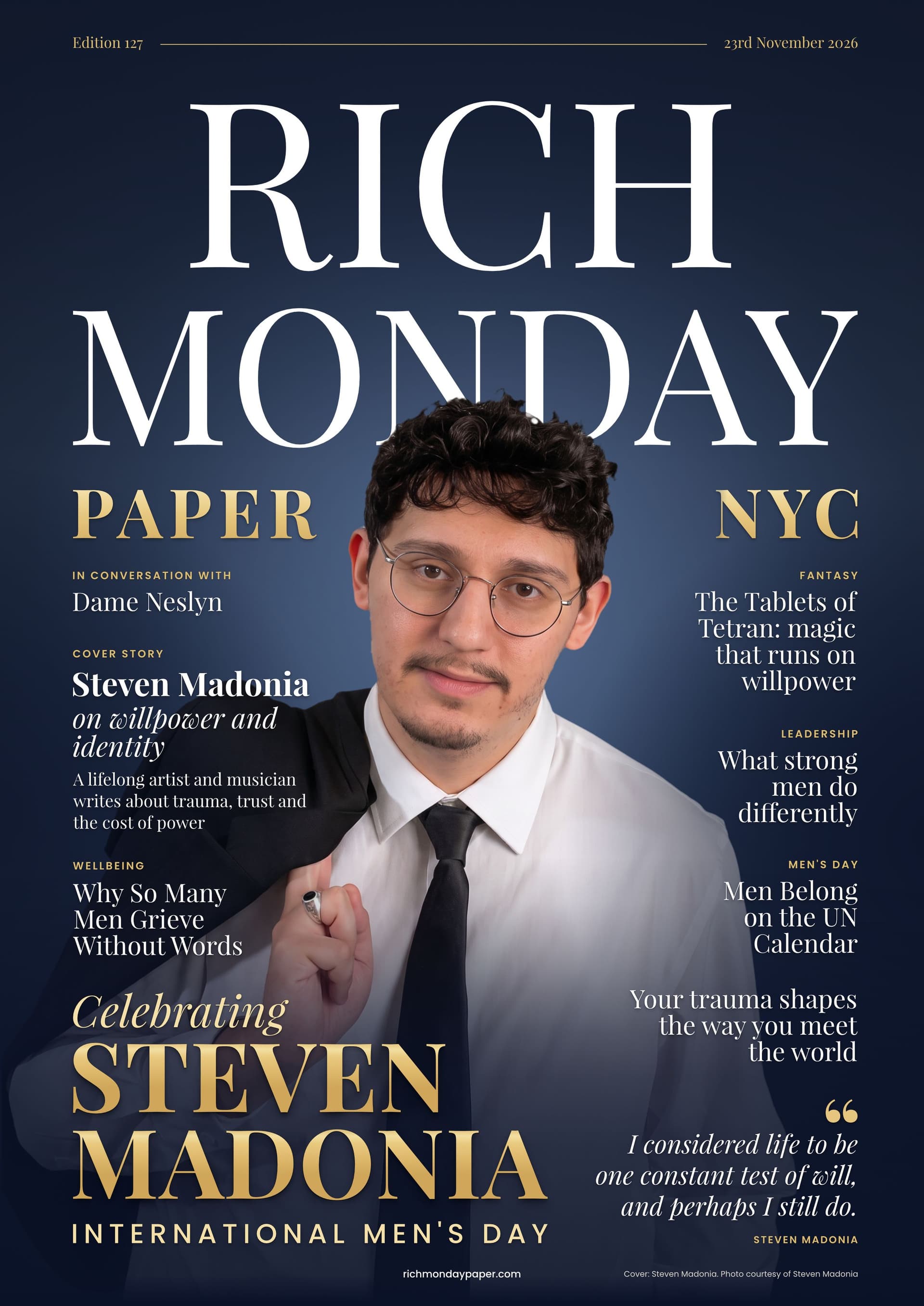
Willpower and identity are two things men are expected to have without ever being taught. From boyhood, the message is to be strong, keep going and know who you are, yet few men are told that every kind of power you hold comes with a price, or that your vulnerability is part of your strength. Those lessons often arrive late, and sometimes they arrive through a good story, the kind that keeps you thinking long after you have closed the book.
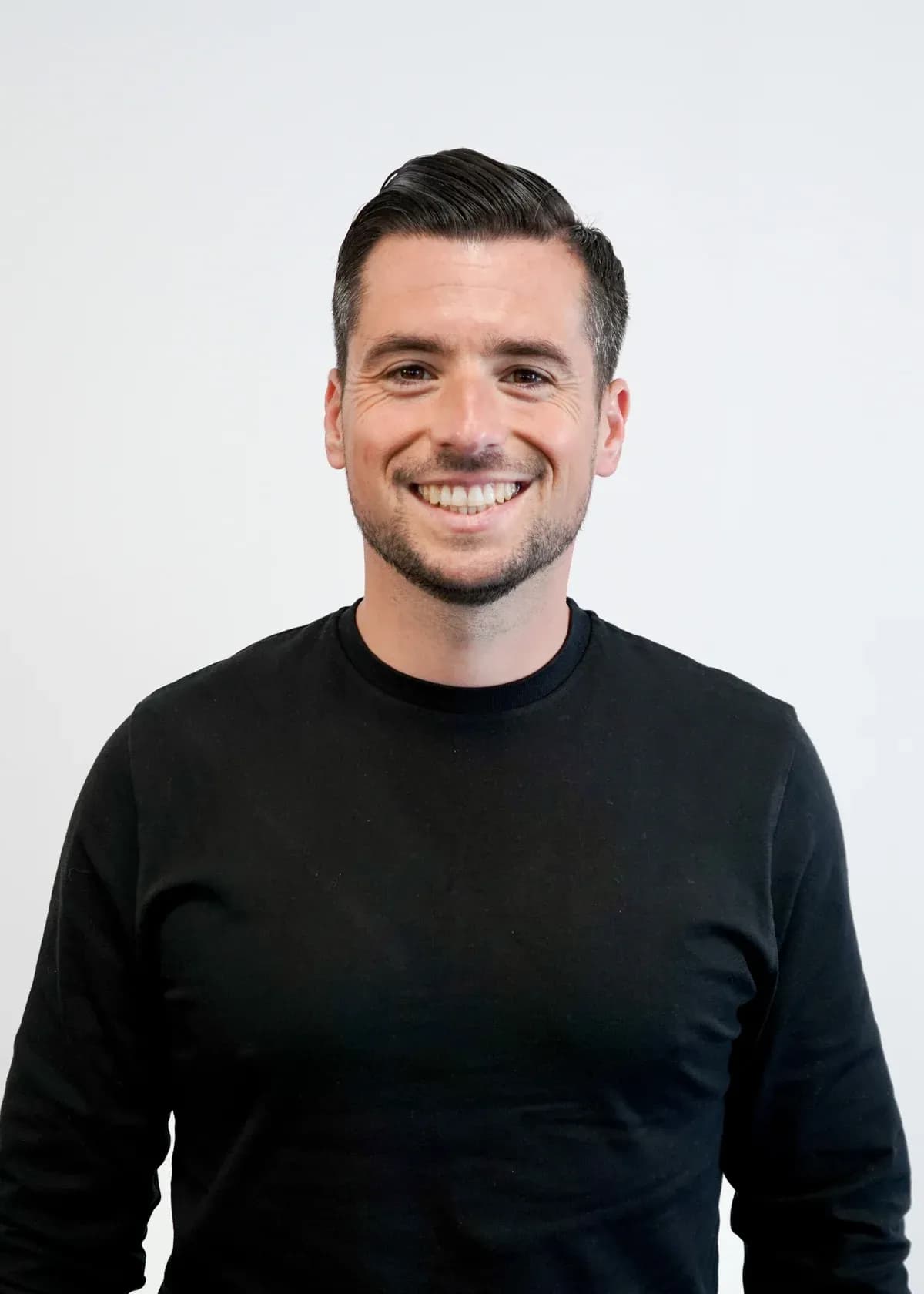
Steven Madonia has lived those lessons. For years, he says, life felt like one constant test of will: the bills, the decisions, the changing jobs, the long hours and the struggle to be present for the people he loves. Tests like those can turn a man sour very quickly. Then his first son was born, and Madonia came to believe something that changed everything after it: that underneath all the chaos of the world, people are truly good.
That belief changed what he was willing to risk. Madonia has made art since he was seven years old, when music was simply a way to be with friends. He grew up to teach music, play the cello and the mandolin, work as a visual artist and write poetry, yet for most of his life he kept the deepest part of himself out of his work. He chose instrumental music, he says, because it let him say the deeper things without feeling exposed. As a lifelong perfectionist, he made art that was polished, careful and safe.
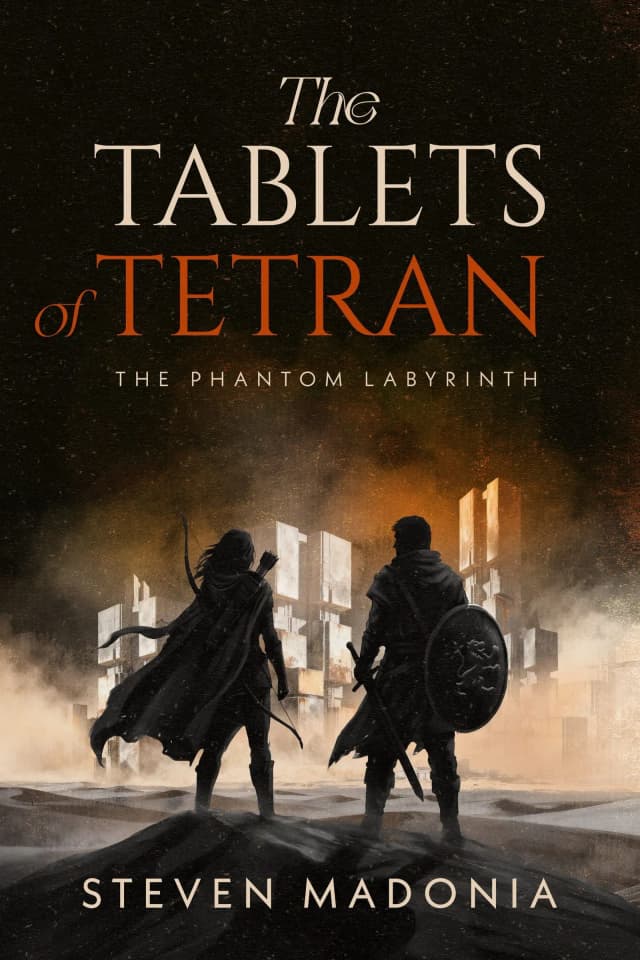
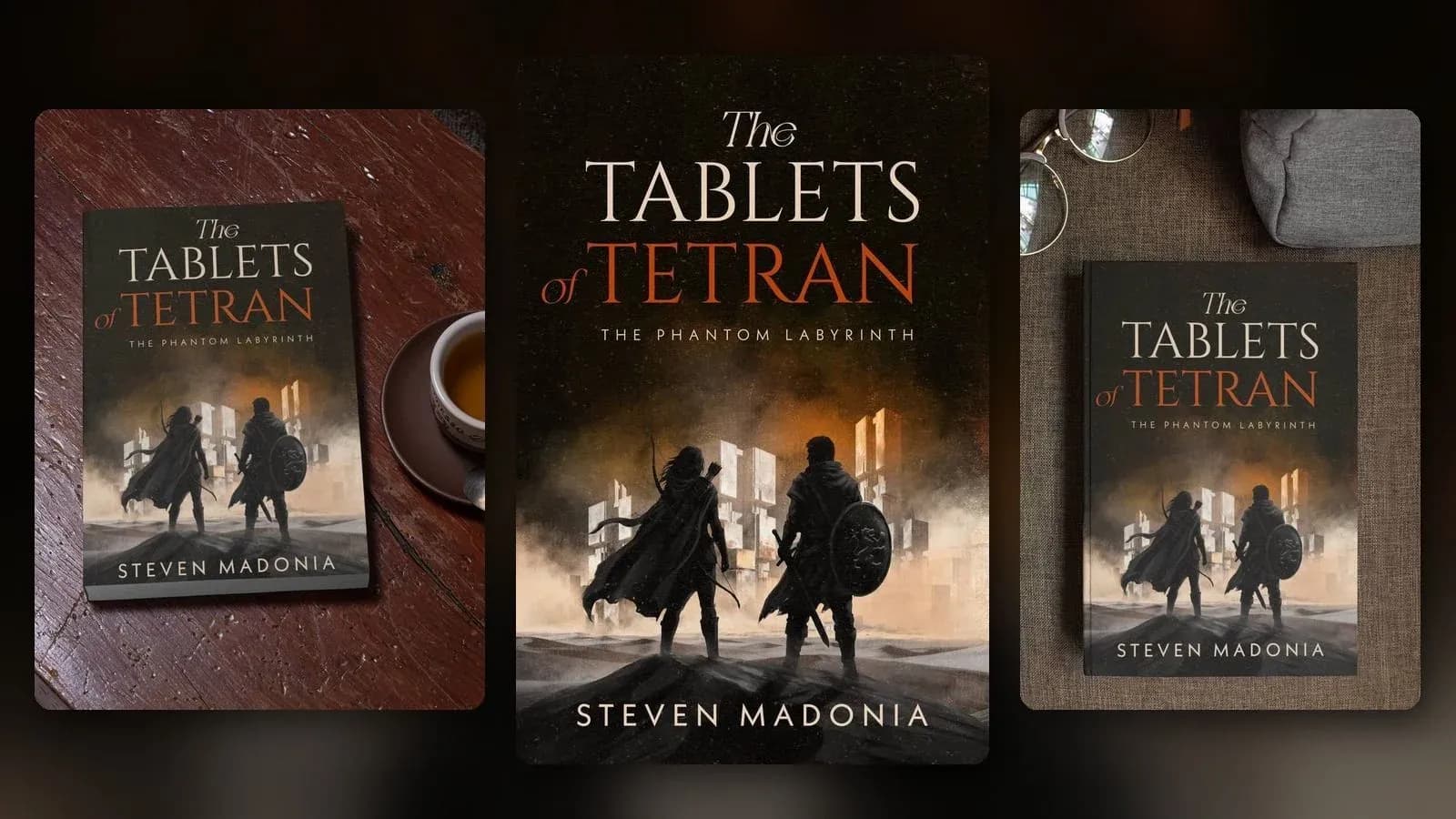
The Tablets of Tetran: The Phantom Labyrinth is what he made when he stopped hiding. His debut novel follows three wounded strangers, Rin, Yot and Nomir, through a season of deadly trials in a world where magic is the will made visible. When a character's conviction holds, their power grows, and when it breaks, the power fails. The villains of Tetran understand this, so they attack memory, identity and the ability to believe. At the heart of the book sit the two questions Madonia kept returning to as he wrote: can you really be yourself when the world stands against you, and how much darkness can you endure for love?
Many men carry those same questions without the words for them. In this conversation for International Men's Day, Madonia talks about the fear of being judged, the stigma around what men call weakness, and the friendships that can make a man feel less alone. He calls vulnerability one of the most important parts of strength, and he speaks as someone who had to find that courage himself: years ago, he says, writing the darkest scenes in his book would have felt impossibly terrifying.
This is a conversation about the power of your imagination, and about the courage it took one father, teacher and musician to put his whole self into it.
Becoming a father changes the way you face life's tests
In The Tablets of Tetran, aethra fades when the will breaks. When has your own will been tested, and what kept it from breaking?
For many years I considered life to be one constant test of will, and perhaps I still do. Bills, moving, changing jobs, trying to be present, working a lot of hours, and so on. Those things can turn you sour very quickly. But after the birth of my first son, I realized that underneath all the chaos of the world, people are truly good. That shift in perspective gave me the courage to act on things I love and the hope to dream of a better world. Suddenly, those constant tests felt a little more manageable.
How do you keep going on a project as long as a novel when motivation runs out?
There were quite a few sequences in this book that were tricky to write. One challenge I set for myself was to write a fantasy adventure with basically no filler. I wanted each scene to do several layers of narrative work at all times. Naturally, that sort of juggling act can lead to a lot of revisions and blocks.
During those blocks, I'd reflect on the world of Tetran and how much I enjoyed it. I love the characters like I would a friend: their stories, their humor, their shortcomings. All of those things gave me a strong sense of passion that burned brighter than the inevitable self-doubt. I think if you love something enough, you'll push through the failure and frustration.
Music teaches you that art connects every part of life
You have been an artist and a musician all your life. How has each shaped who you are, and which came first?
I was about seven years old when I really started playing music. In the beginning, it was mainly about friends, community and fun. But when you really study music, you also learn about math, history, science, culture, structure, form and even spirituality. Music and art are like webs that connect so many different disciplines and aspects of life. In that sense, I think art is one of the greatest things humanity has to offer.
You have described your earlier work as 'safe art'. What did safe art protect you from, and what changed when you stopped?
Safe art, to me, is a polished and sanitized presentation. Of course, there's nothing inherently wrong with that, but I always made art that would never be too boundary-pushing or personally revealing. That was one of the appeals of instrumental music for me: you can say the deeper things without feeling too exposed. For The Tablets of Tetran, I really set out to make something authentic and unabashedly myself. That process was equal parts liberating and unsettling!
In your book, magic is bound to who a person is. Have you ever felt you had to choose between different parts of yourself?
Absolutely! And I think, to an extent, most people do. At the end of the day, people want to be accepted. Pushing boundaries or being perceived as different can be a frightening leap. One line in the book comes from Nomir, when he asks, 'How can you impose your will upon the world if the world imposes its will upon you?'
While I was writing, the same central questions kept coming up. Can you really be yourself when the world stands against you? How much darkness can you endure for love?
How has teaching music shaped the man you are today?
Teaching continues to shape me every day that I do it. You learn about yourself in the process, and although you gain a deeper understanding of the subject you teach, you also learn about people: their hobbies, interests, insecurities, shortcomings, families, dreams, hopes and fears. I do my best to carry that understanding of people into my life outside work.
Your trauma shapes the way you meet the world
The book does not look away from trauma. Why was it important to you to write about it, and how did you approach it with care?
Trauma is a messy thing, and every one of us has it in some shape or form. We inherit it the moment we're born, and from that point on we have to learn to navigate this strange world. One critical choice was to portray these things as accurately as I could.
Take Rin, for example. She is an amazing warrior. She's sharp, decisive and highly motivated. But she also carries a deeply horrific backstory, and as a result she suffers from tremendous anxiety. She's untrusting, violent and even cold at times. Because each character is so complex, my protagonists end up fighting too. They argue and clash, and most of the time those clashes aren't easily resolved, because it's not about moral grandstanding. It's about individual trauma responses and worldviews colliding. To me, that is both honest and interesting to explore.
How did you approach the darkest parts of the book?
It's something I genuinely had to wrestle with. This is a book with a lot of heart and humor, but it also holds a great deal of darkness. Since aethra is about willpower, inner belief and conviction, I followed the natural logic of the story and asked myself what dark weavers would do. These villains believe in the erasure of the self. They attack memories, identity and the ability to believe, and naturally that leads to some intense and provocative subject matter. At the end of the day, I'm proud of myself for tackling these mature themes, because years ago that would have felt impossibly terrifying!
Opening yourself up is worth the risk of being let down
Trust is tested again and again in the story. What have you learned about trust, in life and in writing?
Trust can be a scary thing, because as people we're wired to be part of the tribe. Putting yourself out there for real can feel both vulnerable and dangerous, and it also means you might be rejected, betrayed or let down. You can either pull inward and isolate yourself from the world, or you can open up and join the dance.
Sure, it's safe to pull away and wall yourself off, but by doing that you miss out on some of life's greatest possibilities. I think opening yourself to those possibilities is well worth the risk.
Every kind of power you hold comes with a price
Every use of aethra has a price. What does the cost of power mean to you, and which of your characters pays the most?
Power is everywhere, even in our smallest choices. The decisions we make in each moment are echoed back by the world. Sometimes power is restraint; other times it's used to gain control. Power can make people feel safe, but it can also subjugate them.
In The Tablets of Tetran, it's difficult to single out one character, because aethra exacts a different price from each weaver. Weavers can age a decade in minutes if they try to channel too much of it. Some suffer a total mental collapse, and some even die. At its most extreme, aethra can bring about the collapse of an entire nation. The greater the conjuration, the greater the toll.
Your vulnerability is part of your strength
What does strength mean to you now, compared with when you were younger?
Strength, to me, is the authentic expression of the self. It's about putting yourself out there and taking chances. I'd also add that vulnerability is one of the most important parts of strength. It lets you process things, draw healthy boundaries and really connect with people!
What would you tell a young man who wants to make art but is afraid of being judged?
Something is always at risk. If you don't put yourself out there, you risk missing out. You risk never chasing your dreams, and you'll be left looking back and wondering, 'Why didn't I just do it?' Likewise, if you make authentic art, you will definitely be judged. But as a lifelong perfectionist who has struggled with this for years, I can tell you: it's okay!
Part of being yourself means being polarizing. Every time you pursue your true vision, you reinforce your contract with yourself and strengthen your resolve. You don't need to please everyone. Sometimes you just need to take the plunge.
How can men support each other better, in creative work and in life?
There's a stigma surrounding what many people call weakness. We see it on social media, but also in our personal lives. I say it's okay to let your guard down a bit, especially with a friend! Perhaps if we as men learn to trust each other on a deeper level, we might find we're not so alone after all.
A good story leaves you with things to think about
What do you hope readers carry with them when they close The Tablets of Tetran?
I hope readers enjoy the ride and sit with the book's themes and set pieces: the conversations about humanity, the motifs of self-discovery and erasure, and the epic battles and twists the book keeps revealing. At the end of the day, I hope they leave the story with things to think about.
What comes next in the saga, and how will these themes grow in the next book?
Book two is already in development. Its title is The Tablets of Tetran: The Primordial Wilds. It will continue exploring the themes introduced in book one, while also examining women's rights, survivor's guilt, PTSD (post-traumatic stress disorder) and how revenge can fracture people. Book two will deepen the lore, resolve lingering threads, deliver long-awaited battles and expand the world of Tetran in ways that are both shocking and exciting. I hope to see you in the realm of Tetran!
The Tablets of Tetran: The Phantom Labyrinth by Steven Madonia is published by Sulnir Publications and available in Kindle, paperback and hardcover editions on Amazon. Readers who join his email list at sulnirpublications.com receive a free high-quality scan of the Tetran world map.
Featured Book
The Tablets of Tetran
The Phantom Labyrinth
by Steven Madonia
In the world of Tetran, an annual tradition of deadly trials draws warriors and competitors from different races and backgrounds. Survivors who earn the title of champion win wealth, political influence and access to secret territories closed to ordinary citizens. Three strangers, Rin, Yot and Nomir, enter the trials with their own motives and histories, and must learn to trust one another to survive. Rin also carries a haunting past and a determination to recover the legendary Tablets of Tetran. At the heart of the novel is aethra, a magic system built on human psychology, in which a person's power grows with their convictions and can be lost when their will breaks. The book opens a new fantasy saga.
AmazonWe may earn a commission from purchases made through this link.